The DOE Approves Loans for Gevo and Montana Renewables’ SAF Projects

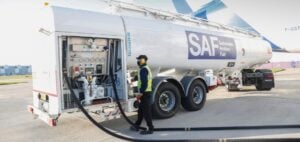
The United States Department of Energy has granted conditional loans to Gevo, Inc. and Montana Renewables to finance the construction and expansion of sustainable aviation fuel (SAF) projects, aiming to reduce emissions in the aviation sector.

Share:

Comprehensive energy news coverage, updated nonstop

Annual subscription

8.25$/month*

*billed annually at 99$/year for the first year then 149,00$/year ​

Unlimited access • Archives included • Professional invoice

OTHER ACCESS OPTIONS

Monthly subscription

Unlimited access • Archives included

5.2$/month*
then 14.90$ per month thereafter

FREE ACCOUNT

3 articles offered per month

FREE

*Prices are excluding VAT, which may vary depending on your location or professional status

Since 2021: 35,000 articles • 150+ analyses per week

Gevo, Inc. and Calumet’s Montana Renewables subsidiary have recently secured loans from the United States Department of Energy (DOE) to support their sustainable aviation fuel (SAF) production initiatives. These financings aim to accelerate the construction and expansion of large-scale SAF production facilities, aligned with the aviation sector’s carbon emission reduction goals.

DOE Loan Objectives and Commitments

The DOE specified that these conditional financial commitments are part of the “SAF Grand Challenge” initiative. This initiative aims to decarbonize the aviation industry by increasing the production of lifecycle emissions-reduced fuel by at least 50% compared to traditional petroleum-derived aviation fuel. The aviation sector accounts for 11% of the U.S. transportation sector’s emissions and 3.3% of the country’s total emissions.

The loans granted to Gevo and Montana Renewables are part of the Biden-Harris administration’s strategy to achieve an annual production of 3 billion gallons of SAF by 2030 and 35 billion gallons by 2050. These projects represent low-carbon alternatives to traditional fuels, focusing on “drop-in” fuels derived from renewable feedstocks.

Gevo’s Net-Zero 1 Project

Gevo secured a conditional financing of $1.46 billion from the DOE for its Net-Zero 1 project located in Lake Preston, South Dakota. This project aims to produce approximately 60 million gallons of SAF per year using 100% U.S.-sourced feedstocks. Net-Zero 1 will be the first large-scale corn starch-to-jet fuel project in the United States to receive a loan from the DOE’s Loan Programs Office (LPO).

The project aims to achieve a net-zero carbon footprint through the use of renewable energy and carbon capture technologies, making the produced fuel not only carbon neutral but potentially carbon negative. Once operational at full capacity, Net-Zero 1 is expected to more than double the total SAF production in the United States in 2023, while also producing renewable diesel and renewable naphtha.

Montana Renewables’ Expansion with MaxSAF

Similarly, Montana Renewables received a $1.44 billion loan guarantee to develop the next phase of its planned MaxSAF facility in Great Falls, Montana. This project is set to increase Montana Renewables’ production capacity to 300 million gallons by 2026, positioning the company among the largest SAF producers in the world.

Unlike Net-Zero 1, the MaxSAF facility will produce SAF from vegetable oils, fats, and greases. According to the DOE, once at full capacity, MaxSAF will represent 10% of the “SAF Grand Challenge” goal of 3 billion annual gallons by 2030. In September, Montana Renewables made the first-ever SAF delivery to Minneapolis airport, supplying Delta Air Lines’ first SAF-fueled flight at New York’s LaGuardia Airport in honor of NYC Climate Week.

Conditions and Future Prospects

Both projects must meet various technical, legal, environmental, and financial conditions before the DOE will finalize and fully fund the loans. Gevo expects to close the deal by 2025 and has already engaged Summit Carbon Solutions LLC to transport the plant’s CO₂ emissions to a permanent storage site in North Dakota. However, Summit has yet to secure all necessary permits for its five-state CO₂ pipeline.

Montana Renewables, on the other hand, aims to align its expansion with strategic national interests in low-emission sustainable alternatives. The expansion of MaxSAF is expected not only to replace fossil fuels but also to contribute to regional economic development by producing more renewable hydrogen and electricity.

These initiatives are part of a global energy transition dynamic aimed at reducing the aviation sector’s carbon footprint while stimulating innovation and local production of sustainable fuels.
Jiaze Group is deploying a green fuel production chain in Heilongjiang, leveraging local agricultural biomass to serve both the domestic market and European mandates through ISCC certification.
Spain’s Solarig is allocating $415mn to build more than 20 biomethane units in Poland through its subsidiary Biorig, with an annual production target equivalent to the consumption of 400,000 households.
Tuas Power aims to eliminate coal in Singapore by converting its TMUC facility to biomass, marking a strategic shift in energy supply for Jurong Island’s industrial base.
The GPCU PB network, powered 95% by low-carbon sources, spans 13 km and serves 55 buildings, with total public and private funding of €22mn ($23.8mn).
Waga Energy has secured $180mn in senior debt over four years to develop its biomethane project portfolio at landfill sites in the United States.
Veolia launches a major project in Pozna aiming to fully replace coal with low-carbon local energy sources in district heating, with a first phase already operational showing 92% efficiency.
Veolia connects its Lapouyade site to RTE's secondary reserve using instant modulation technology, paving the way for rollout across 25 sites.
Erex will end the environmental assessment of a 300MW biomass project developed with ENEOS in Niigata due to rising costs and a weaker yen.
California-based start-up Erg Bio has closed a $6.5mn seed round to industrialise its Aspire™ technology, backed by Azolla Ventures, Chevron Technology Ventures, and Freeflow.
Haffner Energy presents the H6 generation, a biomass‑hydrogen system positioned as competitive against electrolysis, as the company seeks new investors amid financial pressure and a regulatory landscape focused on RFNBO.
Haffner Energy signs its first contract in the United States with OroCarbo to supply two SYNOCA® modules for an integrated biomethanol project scheduled for 2028 in California's Central Valley.
Argentina increased regulated prices for ethanol and biodiesel used in mandatory blending, directly impacting the local industry and domestic fuel market.
80 Mile PLC has completed the full acquisition of Ferrandina in Italy and signed three memorandums of understanding with major energy groups, securing the supply and processing of 120,000 tonnes of biofuels per year.
Fonds Bioénergie acquires a stake in Keridis BioEnergy to accelerate renewable natural gas production from agricultural and food residues across Québec.
The United States recorded a limited 3% increase in its annual biofuels production capacity in 2024, hindered by declining margins and the closure of several facilities.
Enilive aligns conversions in Italy, hubs in Asia and U.S. diversification, with rising HVO margins, integrated pretreatment and HVO/SAF offtakes tied to European requirements, supporting volumes, site utilization and operational guidance.
The Ille-et-Vilaine Departmental Energy Syndicate awarded ENGIE Solutions a €9.5mn ($10.01mn) contract to operate a 4.9 km heating network, scheduled for commissioning in 2027.
Vermont’s energy regulator authorises final review of a 2.2 MW project led by Clean Energy Technologies to convert agricultural waste into renewable electricity.
The increase in Brazil’s biodiesel blend mandate to 15% has reignited calls for stronger regulatory supervision as prices climb and budget constraints limit enforcement.
Waga Energy strengthens its presence in Brazil, betting on a rapidly structuring market where biomethane benefits from an incentive-based regulatory framework and strong industrial investment prospects.

All the latest energy news, all the time

Annual subscription

8.25$/month*

*billed annually at 99$/year for the first year then 149,00$/year ​

Unlimited access - Archives included - Pro invoice

Monthly subscription

Unlimited access • Archives included

5.2$/month*
then 14.90$ per month thereafter

*Prices shown are exclusive of VAT, which may vary according to your location or professional status.

Since 2021: 30,000 articles - +150 analyses/week.