Industrial heat pumps make their mark to reduce CO2 emissions

Skyven Technologies introduces an industrial heat pump capable of generating steam, reducing Western New York Energy's CO2 emissions by 20,000 tons a year.

Share:

Comprehensive energy news coverage, updated nonstop

Annual subscription

8.25€/month*

*billed annually at 99€/year for the first year then 149,00€/year ​

Unlimited access • Archives included • Professional invoice

OTHER ACCESS OPTIONS

Monthly subscription

Unlimited access • Archives included

5.2€/month*
then 14.90€ per month thereafter

FREE ACCOUNT

3 articles offered per month

FREE

*Prices are excluding VAT, which may vary depending on your location or professional status

Since 2021: 35,000 articles • 150+ analyses per week

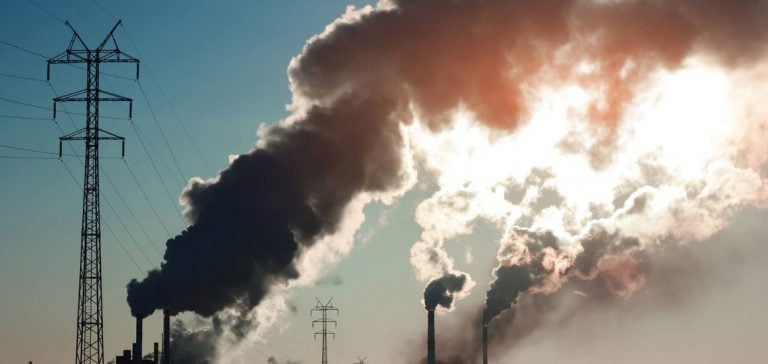
Reducing greenhouse gas emissions has become a strategic focus for the global energy industry.
Industrial processes, particularly those linked to ethanol production, are under increasing pressure to reduce their carbon footprint.
In this context, Skyven Technologies has introduced an innovative heat pump that generates high-temperature steam, aiming to optimize energy consumption while reducing CO2 emissions. Western New York Energy, a key player in ethanol production in the United States, is adopting this technology at its Medina facility.
The aim is to reduce the plant’s CO2 emissions by over 20,000 tonnes a year.
This project highlights the central role that heat recovery technologies can play in decarbonizing industrial processes.

Energy optimization and cost reduction

The heat pump introduced by Skyven Technologies is based on mechanical vapor recompression (MVR).
This technology uses electricity to capture waste heat from industrial processes, enabling the generation of high-temperature steam – up to 215°C – without recourse to fossil fuels.
This ability to generate clean steam from existing heat sources reduces dependence on costly, polluting energy resources.
The integration of this technology at Western New York Energy aims not only to reduce greenhouse gas emissions, but also to cut energy-related production costs.
By recovering and reusing heat already present in processes, the plant optimizes its energy efficiency while making substantial savings.

Reducing carbon intensity

Another key benefit of this project is the reduction in the carbon intensity (CI) of the Medina plant.
By reducing the amount of CO2 emitted per unit of energy produced, the plant positions itself more favorably on the energy and carbon credit markets.
It also enhances Western New York Energy’s competitiveness, particularly in a context of tightening environmental regulations and rising pollution costs.
The US ethanol market is particularly sensitive to these developments, and players like Western New York Energy are under pressure to reduce their carbon footprint while keeping production costs low.
By investing in this new heat pump technology, the company is responding proactively to these challenges, anticipating future market constraints.

Outlook for the ethanol industry

The ethanol industry, traditionally dependent on the combustion of fossil fuels to generate the steam needed for its processes, sees this technology as an opportunity for modernization.
The adoption of heat pumps for steam generation could transform this industry’s production methods, notably by reducing the costs associated with energy consumption.
The example set by Western New York Energy could encourage other ethanol producers, both in the United States and around the world, to consider similar solutions.
Skyven Technologies’ technology offers a viable alternative to traditional systems, reducing CO2 emissions while optimizing energy costs.

Challenges and opportunities for heat pump adoption

The widespread adoption of industrial heat pumps will depend on a number of factors, including installation and maintenance costs, as well as long-term profitability for industrial companies.
If the first installations demonstrate significant energy and economic gains, as anticipated in the case of Western New York Energy, it is likely that other industrial players will follow suit.
The regulatory context will also play a decisive role.
As environmental standards become more stringent, it will be in companies’ best interests to equip themselves with technologies that reduce their environmental impact without affecting their productivity.
Steam-generation heat pumps, such as the one developed by Skyven Technologies, offer an interesting solution in this respect.
The adoption of this technology could also pave the way for new collaborations between players in the energy sector and industry.
The ability of heat pumps to adapt to different industrial environments, while offering substantial energy gains, makes them an attractive solution for a wide range of sectors.

Waga Energy has secured $180mn in senior debt over four years to develop its biomethane project portfolio at landfill sites in the United States.
Veolia launches a major project in Pozna aiming to fully replace coal with low-carbon local energy sources in district heating, with a first phase already operational showing 92% efficiency.
Veolia connects its Lapouyade site to RTE's secondary reserve using instant modulation technology, paving the way for rollout across 25 sites.
Erex will end the environmental assessment of a 300MW biomass project developed with ENEOS in Niigata due to rising costs and a weaker yen.
California-based start-up Erg Bio has closed a $6.5mn seed round to industrialise its Aspire™ technology, backed by Azolla Ventures, Chevron Technology Ventures, and Freeflow.
Haffner Energy presents the H6 generation, a biomass‑hydrogen system positioned as competitive against electrolysis, as the company seeks new investors amid financial pressure and a regulatory landscape focused on RFNBO.
Haffner Energy signs its first contract in the United States with OroCarbo to supply two SYNOCA® modules for an integrated biomethanol project scheduled for 2028 in California's Central Valley.
Argentina increased regulated prices for ethanol and biodiesel used in mandatory blending, directly impacting the local industry and domestic fuel market.
80 Mile PLC has completed the full acquisition of Ferrandina in Italy and signed three memorandums of understanding with major energy groups, securing the supply and processing of 120,000 tonnes of biofuels per year.
Fonds Bioénergie acquires a stake in Keridis BioEnergy to accelerate renewable natural gas production from agricultural and food residues across Québec.
The United States recorded a limited 3% increase in its annual biofuels production capacity in 2024, hindered by declining margins and the closure of several facilities.
Enilive aligns conversions in Italy, hubs in Asia and U.S. diversification, with rising HVO margins, integrated pretreatment and HVO/SAF offtakes tied to European requirements, supporting volumes, site utilization and operational guidance.
The Ille-et-Vilaine Departmental Energy Syndicate awarded ENGIE Solutions a €9.5mn ($10.01mn) contract to operate a 4.9 km heating network, scheduled for commissioning in 2027.
Vermont’s energy regulator authorises final review of a 2.2 MW project led by Clean Energy Technologies to convert agricultural waste into renewable electricity.
The increase in Brazil’s biodiesel blend mandate to 15% has reignited calls for stronger regulatory supervision as prices climb and budget constraints limit enforcement.
Waga Energy strengthens its presence in Brazil, betting on a rapidly structuring market where biomethane benefits from an incentive-based regulatory framework and strong industrial investment prospects.
John Cockerill and Axens launch NesaBTF, an industrial torrefaction technology designed to optimise biomass supply, with targeted ambitions in the growing sustainable aviation fuel market.
A R550mn grant enables Johannesburg to launch a waste-to-energy project with a 28 MW capacity under a 25-year public-private partnership model.
ENGIE signs a 15-year agreement with CVE Biogaz for the purchase of biomethane produced in Ludres, under the Biogas Production Certificates mechanism, marking a structuring step for the sector's development in France.
The first phase of a green methanol project in Inner Mongolia has successfully completed biomass gasifier technical tests, marking a key milestone in Goldwind's industrial deployment.

All the latest energy news, all the time

Annual subscription

8.25€/month*

*billed annually at 99€/year for the first year then 149,00€/year ​

Unlimited access - Archives included - Pro invoice

Monthly subscription

Unlimited access • Archives included

5.2€/month*
then 14.90€ per month thereafter

*Prices shown are exclusive of VAT, which may vary according to your location or professional status.

Since 2021: 30,000 articles - +150 analyses/week.