Russia boosts Sakhalin drilling capacity despite sanctions

A semi-submersible drilling rig will arrive in Sakhalin to drill a well in a field hit by US sanctions, illustrating Russia's energy resilience.

Share:

Sakhalin gas drilling Russia

Comprehensive energy news coverage, updated nonstop

Annual subscription

8.25$/month*

*billed annually at 99$/year for the first year then 149,00$/year ​

Unlimited access • Archives included • Professional invoice

OTHER ACCESS OPTIONS

Monthly subscription

Unlimited access • Archives included

5.2$/month*
then 14.90$ per month thereafter

FREE ACCOUNT

3 articles offered per month

FREE

*Prices are excluding VAT, which may vary depending on your location or professional status

Since 2021: 35,000 articles • 150+ analyses per week

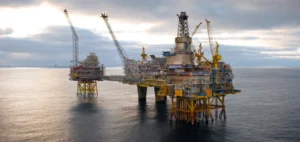
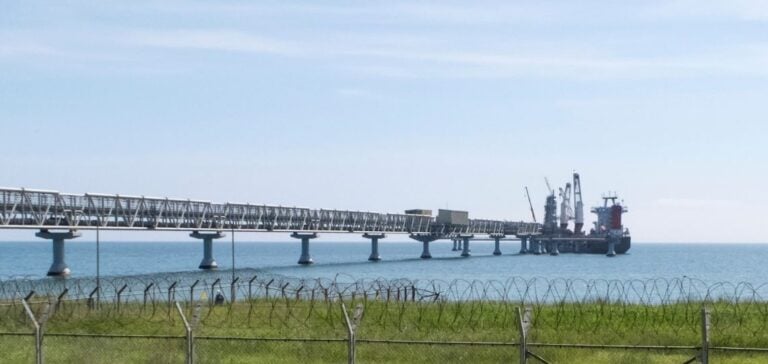
Russia continues to build up its energy production capacity, even under international sanctions. A semi-submersible drilling rig, named Severnoye Siyaniye (Polar Lights), is due to arrive on the Russian island of Sakhalin to begin drilling a well in the Yuzhno-Kirinskoye field. This field, located in the Kirinsky block in the Sea of Okhotsk, has been subject to US sanctions since 2015 due to Moscow’s role in the Ukrainian crisis.

Sanctions context and challenges

Sanctions imposed by Washington prevent foreign companies from participating in oil and gas exploration or production in Russia’s deep waters. Despite these restrictions, Russia has found ways around these obstacles to exploit its energy resources. The Yuzhno-Kirinskoye field has estimated reserves of 711.2 billion cubic meters of natural gas, 111.5 million tonnes of gas condensate and 4.1 million tonnes of oil. Gas production is forecast at 21 billion cubic meters per year.

Sakhalin’s strategic role

The Sakhalin project is crucial for Russia, as it could supply the pipeline to China, a key energy partner. At the start of 2022, Moscow and Beijing agreed to increase Russian gas supplies via a new pipeline, designed to export 10 billion cubic meters of gas a year. Currently, Russia already supplies gas to China via the Power of Siberia pipeline, operational since December 2019, as part of a 30-year contract worth over $400 billion. The pipeline is expected to reach its full capacity of 38 billion cubic meters per year by 2025.

Russian Innovation and Resilience

The Severnoye Siyaniye platform, commissioned in 2011, is a testament to Russian ingenuity in the energy sector. Capable of exploration and production drilling of oil and gas wells to a depth of 7,500 meters, it is suitable for marine depths of up to 500 meters. Prior to its arrival in Sakhalin, the platform underwent scheduled maintenance work at the Chinese port of Zhoushan. Analysts believe that the successful exploitation of energy resources at Yuzhno-Kirinskoye could indicate that Russia has acquired the technological capacity to overcome the restrictions imposed by sanctions. This initiative illustrates Moscow’s determination to continue developing its energy infrastructure, despite the challenges posed by geopolitics. Russia’s progress in exploiting its energy resources despite international sanctions offers a striking example of resilience and innovation in the energy sector. As global energy demand continues to grow, Russia’s ability to maintain and develop its energy projects will become increasingly crucial to global energy stability.

The Adura joint venture merges Shell and Equinor’s UK offshore assets, becoming the leading independent oil and gas producer in the mature North Sea basin.
A Delaware court approved the sale of PDV Holding shares to Elliott’s Amber Energy for $5.9bn, a deal still awaiting a U.S. Treasury licence through OFAC.
A new $100mn fund has been launched to support Nigerian oil and gas service companies, as part of a national target to reach 70% local content by 2027.
Western measures targeting Rosneft and Lukoil deeply reorganise oil trade, triggering a discreet yet massive shift of Russian export routes to Asia without causing global supply disruption.
The Nigerian Upstream Petroleum Regulatory Commission opens bidding for 50 exploration blocks across strategic zones to revitalise upstream investment.
La Nigerian Upstream Petroleum Regulatory Commission ouvre la compétition pour 50 blocs d’exploration, répartis sur plusieurs zones stratégiques, afin de relancer les investissements dans l’amont pétrolier.
Serbia's only refinery, operated by NIS, has suspended production due to a shortage of crude oil, a direct consequence of US sanctions imposed on its majority Russian shareholder.
Crude prices increased, driven by rising tensions between the United States and Venezuela and drone attacks targeting Russian oil infrastructure in the Black Sea.
Amid persistent financial losses, Tullow Oil restructures its governance and accelerates efforts to reduce over $1.8 billion in debt while refocusing operations on Ghana.
The Iraqi government is inviting US oil companies to bid for control of the giant West Qurna 2 field, previously operated by Russian group Lukoil, now under US sanctions.
Two tankers under the Gambian flag were attacked in the Black Sea near Turkish shores, prompting a firm response from President Recep Tayyip Erdogan on growing risks to regional energy transport.
The British producer continues to downsize its North Sea operations, citing an uncompetitive tax regime and a strategic shift towards jurisdictions offering greater regulatory stability.
Dangote Refinery says it can fully meet Nigeria’s petrol demand from December, while requesting regulatory, fiscal and logistical support to ensure delivery.
BP reactivated the Olympic pipeline, critical to fuel supply in the U.S. Northwest, after a leak that led to a complete shutdown and emergency declarations in Oregon and Washington state.
President Donald Trump confirmed direct contact with Nicolas Maduro as tensions escalate, with Caracas denouncing a planned US operation targeting its oil resources.
Zenith Energy claims Tunisian authorities carried out the unauthorised sale of stored crude oil, escalating a longstanding commercial dispute over its Robbana and El Bibane concessions.
TotalEnergies restructures its stake in offshore licences PPL 2000 and PPL 2001 by bringing in Chevron at 40%, while retaining operatorship, as part of a broader refocus of its deepwater portfolio in Nigeria.
Aker Solutions has signed a six-year frame agreement with ConocoPhillips for maintenance and modification services on the Eldfisk and Ekofisk offshore fields, with an option to extend for another six years.
Iranian authorities intercepted a vessel carrying 350,000 litres of fuel in the Persian Gulf, tightening control over strategic maritime routes in the Strait of Hormuz.
North Atlantic France finalizes the acquisition of Esso S.A.F. at the agreed per-share price and formalizes the new name, North Atlantic Energies, marking a key step in the reorganization of its operations in France.

All the latest energy news, all the time

Annual subscription

8.25$/month*

*billed annually at 99$/year for the first year then 149,00$/year ​

Unlimited access - Archives included - Pro invoice

Monthly subscription

Unlimited access • Archives included

5.2$/month*
then 14.90$ per month thereafter

*Prices shown are exclusive of VAT, which may vary according to your location or professional status.

Since 2021: 30,000 articles - +150 analyses/week.