TotalEnergies requests ten more years and $4.5 billion for its Mozambique project

TotalEnergies is asking Mozambique for a licence extension and financial compensation to restart its $20 billion gas project suspended since 2021 following an armed attack.

Share:

Comprehensive energy news coverage, updated nonstop

Annual subscription

8.25$/month*

*billed annually at 99$/year for the first year then 149,00$/year ​

Unlimited access • Archives included • Professional invoice

OTHER ACCESS OPTIONS

Monthly subscription

Unlimited access • Archives included

5.2$/month*
then 14.90$ per month thereafter

FREE ACCOUNT

3 articles offered per month

FREE

*Prices are excluding VAT, which may vary depending on your location or professional status

Since 2021: 35,000 articles • 150+ analyses per week

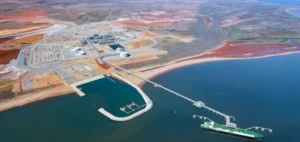
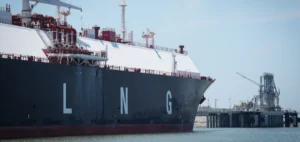
French group TotalEnergies has officially requested a ten-year extension from the Mozambican government for its operating licence on the liquefied natural gas project located in the Cabo Delgado province, in the northeast of the country. The request also includes a claim for $4.5 billion (€4.26bn) in compensation, which the company says corresponds to the cost overruns caused by the project’s suspension since 2021.

The project, valued at $20 billion (€18.9bn), was halted following an armed attack that resulted in over 800 deaths. The French firm considers these events to fall under force majeure, which it argues justifies a revision of the original plan and an extended production period to offset the initial investment.

TotalEnergies adjusts its timeline and budget

In a letter dated October 24 addressed to the President of Mozambique, TotalEnergies stated that the first shipment of gas, originally scheduled for July 2024, is now postponed to the first half of 2029. The company believes this new timeline requires updates to the operational programme, the overall budget and the contractual conditions.

The project, considered the largest in Africa in the liquefied natural gas sector, had been suspended after a jihadist attack in the town of Palma. Despite gradual improvements in security, the company had until now not formally lifted the force majeure clause, which had blocked any effective restart of the works.

A pending decision from the Mozambican government

TotalEnergies indicated that one last step remains: the Mozambican Council of Ministers must approve an addendum to the development plan. This addendum would include the financial and technical adjustments needed to restart the site. The Mozambican government has not yet issued an official response to the request.

Meanwhile, Mozambique’s President Daniel Chapo is currently visiting the United States, where he is scheduled to meet with executives from ExxonMobil. The American group is planning to launch another gas project in the country, Rovuma LNG, but its final investment decision remains contingent on the full lifting of the force majeure at the TotalEnergies-operated site.

A strategic gas market for southern Africa

These projects could position Mozambique among the world’s top ten gas producers by 2040, according to a report published in 2024 by audit firm Deloitte. The country would then account for up to 20% of Africa’s production. Mozambique’s gas potential is attracting strategic competition among major energy companies, although security risks and rising costs remain significant challenges.

The Mozambique LNG project by TotalEnergies, along with ExxonMobil’s Rovuma LNG, forms part of a broader regional effort to exploit large-scale gas resources. Their implementation, however, depends on the ability of local authorities to guarantee the security and regulatory stability required for investments of this magnitude.
Sasol has launched a new gas processing facility in Mozambique to secure fuel supply for the Temane thermal power plant and support the national power grid’s expansion.
With the addition of Nguya FLNG to Tango, Eni secures 3 mtpa of capacity in Congo, locking in non-Russian volumes for Italy and positioning Brazzaville within the ranks of visible African LNG exporters.
Japan’s JERA has signed a liquefied natural gas supply contract with India’s Torrent Power for four cargoes annually from 2027, marking a shift in its LNG portfolio toward South Asia.
The merger of TotalEnergies and Repsol’s UK assets into NEO NEXT+ creates a 250,000 barrels of oil equivalent per day operator, repositioning the majors in response to the UK’s fiscal regime and basin decline.
Climate requirements imposed by the European due diligence directive are complicating trade relations between the European Union and Qatar, jeopardising long-term gas supply as the global LNG market undergoes major shifts.
A report forecasts that improved industrial energy efficiency and residential electrification could significantly reduce Colombia’s need for imported gas by 2030.
Falling rig counts and surging natural gas demand are reshaping the Lower 48 energy landscape, fuelling a rebound in gas-focused mergers and acquisitions.
The Nigerian government has approved a payment of NGN185bn ($128 million) to settle debts owed to gas producers, aiming to secure electricity supply and attract new investments in the energy sector.
Riley Exploration Permian has finalised the sale of its Dovetail Midstream entity to Targa Northern Delaware for $111 million, with an additional conditional payment of up to $60 million. The deal also includes a future transfer of equipment for $10 million.
Stanwell has secured an exclusive agreement with Quinbrook for the development of the Gladstone SDA Energy Hub, combining gas turbines and long-duration battery storage to support Queensland’s electricity grid stability.
The growth of US liquefied natural gas exports could slow if rising domestic costs continue to squeeze margins, as new volumes hit an already saturated global market.
Turkmenistan is leveraging the Global Gas Centre to build commercial links in Europe and South Asia, as it responds to its current dependence on China and a shifting post-Russian gas market.
The Marmara Ereğlisi liquefied natural gas (LNG) terminal operated by BOTAŞ is increasing its regasification capacity, consolidating Türkiye’s role as a regional player in gas redistribution toward the Balkans and Southeast Europe.
Budapest contests the European agreement to ban Russian natural gas imports by 2027, claiming the measure is incompatible with its economic interests and the European Union's founding treaties.
The European Union has enshrined in law a complete ban on Russian gas by 2027, forcing utilities, operators, traders and states to restructure contracts, physical flows and supply strategies under strict regulatory pressure.
The partial exploitation of associated gas from the Badila field by Perenco supplies electricity to Moundou, highlighting the logistical and financial challenges of gas development in Chad.
A new regulation requires gas companies to declare the origin, volume and duration of their contracts, as the EU prepares to end Russian imports.
Saudi Aramco has launched production at the unconventional Jafurah gas field, initiating an investment plan exceeding $100bn to substitute domestic crude and increase exportable flows under OPEC+ constraints.
By mobilising long-term contracts with BP and new infrastructure, PLN is driving Indonesia’s shift toward prioritising domestic LNG use, at the centre of a state-backed investment programme supported by international lenders.
TotalEnergies, TES and three Japanese companies will develop an industrial-scale e-gas facility in the United States, targeting 250 MW capacity and 75,000 tonnes of annual output by 2030.

All the latest energy news, all the time

Annual subscription

8.25$/month*

*billed annually at 99$/year for the first year then 149,00$/year ​

Unlimited access - Archives included - Pro invoice

Monthly subscription

Unlimited access • Archives included

5.2$/month*
then 14.90$ per month thereafter

*Prices shown are exclusive of VAT, which may vary according to your location or professional status.

Since 2021: 30,000 articles - +150 analyses/week.