The European Union seals a $750 billion deal on American energy

The European Union and Washington have finalized an agreement setting $750 billion in U.S. gas, oil and nuclear purchases, complemented by $600 billion in European investments in the United States by 2028.

Share:

Comprehensive energy news coverage, updated nonstop

Annual subscription

8.25$/month*

*billed annually at 99$/year for the first year then 149,00$/year ​

Unlimited access • Archives included • Professional invoice

OTHER ACCESS OPTIONS

Monthly subscription

Unlimited access • Archives included

5.2$/month*
then 14.90$ per month thereafter

FREE ACCOUNT

3 articles offered per month

FREE

*Prices are excluding VAT, which may vary depending on your location or professional status

Since 2021: 35,000 articles • 150+ analyses per week

The European Union and the United States have announced a trade framework of unprecedented scale. The text commits European countries to import $750 billion worth of U.S. energy resources over the coming years, with a distribution focused on liquefied natural gas (LNG), oil, and nuclear products. These volumes will give U.S. exporters multi-year commercial visibility while reshaping the transatlantic balance of energy trade.

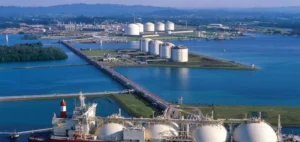
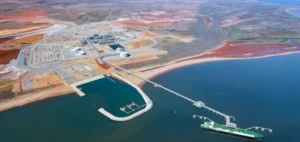
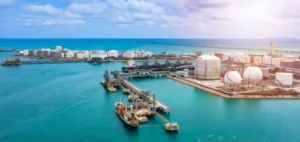
LNG at the heart of European commitments

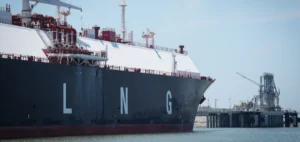
A substantial part of the agreement concerns liquefied natural gas, presented as a pillar of future deliveries to Europe. The text calls for the strengthening of transport and regasification infrastructure to absorb these volumes. U.S. oil imports will add to this framework, while contracts related to nuclear products complete the energy portfolio. Altogether, this represents an unprecedented volume of transactions between the two blocs.

European investments in the United States

In parallel with energy purchases, European companies will invest $600 billion in the U.S. economy. These investments will mainly target industrial and energy infrastructure, as well as digital technologies. A separate component commits European countries to purchase $40 billion worth of semiconductors for data centers dedicated to artificial intelligence. The agreement also includes a cooperation mechanism to limit technological leakage to external actors.

Trade opening and tariff measures

Talks also addressed tariffs. The United States confirmed a 15% cap on European products, combined with a most-favored-nation clause for aerospace, pharmaceutical, and industrial exports. The European Union, for its part, agreed to expand access to the European agricultural market for certain American products, including fish, fruits, vegetables, and nuts.

Strategic issues and bilateral coordination

Both parties announced their intention to act jointly in the event of restrictions imposed by third countries on critical minerals. These resources are considered essential for energy transition and technological supply chains. Finally, Washington indicated that the reduction of automotive tariffs, currently at 27.5%, could take place once the European Union adopts reciprocal trade measures.
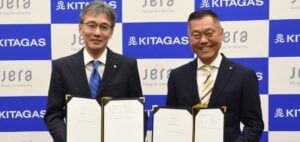

Japanese power producer JERA will deliver up to 200,000 tonnes of liquefied natural gas annually to Hokkaido Gas starting in 2027 under a newly signed long-term sale agreement.
An agreement announced on December 17, 2025 provides for twenty years of deliveries through 2040. The package amounts to 112 billion new Israeli shekels (Israeli shekels) (NIS), with flows intended to support Egyptian gas supply and Israeli public revenues.
Abu Dhabi’s national oil company has secured a landmark structured financing to accelerate the development of the Hail and Ghasha gas project, while maintaining strategic control over its infrastructure.
U.S.-based Sawgrass LNG & Power celebrates eight consecutive years of LNG exports to The Bahamas, reinforcing its position in regional energy trade.
Kinder Morgan restored the EPNG pipeline capacity at Lordsburg on December 13, ending a constraint that had driven Waha prices negative. The move highlights the Permian’s fragile balance, operating near the limits of its gas evacuation infrastructure.
ENGIE activates key projects in Belgium, including an 875 MW gas-fired plant in Flémalle and a battery storage system in Vilvoorde, to strengthen electricity supply security and grid flexibility.
Hungary has signed a contract with US company Chevron to import 400mn m³ of LNG per year, while maintaining a structural dependence on Russian gas through a long-term agreement with Gazprom.
Chevron Australia awards Subsea7 a major contract for subsea installation on the Gorgon Stage 3 project, with offshore operations scheduled for 2028 at 1,350 metres depth.
Ovintiv has entered into an agreement with Pembina Pipeline Corporation to secure 0.5 million tonnes per annum of LNG liquefaction capacity over 12 years, strengthening its export outlook to Asian markets.
TotalEnergies has completed the sale of a minority stake in a Malaysian offshore gas block to PTTEP, while retaining its operator role and a majority share.
The European Union will apply its methane emissions rules more flexibly to secure liquefied natural gas supplies from 2027.
Venezuela has ended all energy cooperation with Trinidad and Tobago after the seizure of an oil tanker carrying crude by the United States, accusing the archipelago of participating in the military operation in the Caribbean.
National Fuel has secured $350mn in a private placement of common stock with accredited investors to support the acquisition of CenterPoint’s regulated gas business in Ohio.
GTT appoints François Michel as CEO starting January 5, separating governance roles after strong revenue and profit growth in 2024.
The United States is requesting a derogation from EU methane rules, citing the Union’s energy security needs and the technical limits of its liquefied natural gas export model.
Falcon Oil & Gas and its partner Tamboran have completed stimulation of the SS2-1H horizontal well in the Beetaloo Sub-basin, a key step ahead of initial production tests expected in early 2026.
Gasunie Netherlands and Gasunie Germany have selected six industrial suppliers under a European tender to supply pipelines for future natural gas, hydrogen and CO₂ networks.
The ban on Russian liquefied natural gas requires a legal re-evaluation of LNG contracts, where force majeure, change-in-law and logistical restrictions are now major sources of disputes and contractual repricing.
The US House adopts a reform that weakens state veto power over gas pipeline projects by strengthening the federal role of FERC and accelerating environmental permitting.
Morocco plans to commission its first liquefied natural gas terminal in Nador by 2027, built around a floating unit designed to strengthen national import capacity.

All the latest energy news, all the time

Annual subscription

8.25$/month*

*billed annually at 99$/year for the first year then 149,00$/year ​

Unlimited access - Archives included - Pro invoice

Monthly subscription

Unlimited access • Archives included

5.2$/month*
then 14.90$ per month thereafter

*Prices shown are exclusive of VAT, which may vary according to your location or professional status.

Since 2021: 30,000 articles - +150 analyses/week.