NatPower Marine and Wah Kwong launch electric port network across 30 Asian ports

NatPower Marine and Wah Kwong create a joint venture to deploy a maritime electric charging network in over 30 Asian ports by 2030, without requiring initial public investment.

Share:

Comprehensive energy news coverage, updated nonstop

Annual subscription

8.25$/month*

*billed annually at 99$/year for the first year then 149,00$/year ​

Unlimited access • Archives included • Professional invoice

OTHER ACCESS OPTIONS

Monthly subscription

Unlimited access • Archives included

5.2$/month*
then 14.90$ per month thereafter

FREE ACCOUNT

3 articles offered per month

FREE

*Prices are excluding VAT, which may vary depending on your location or professional status

Since 2021: 35,000 articles • 150+ analyses per week

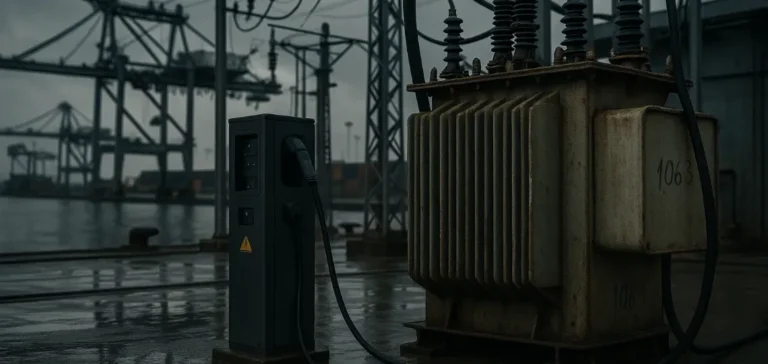
Energy infrastructure developer NatPower Marine and Hong Kong-based shipowner Wah Kwong Maritime Transport have launched a joint venture called Wah Kwong NatPower Holdings. The goal is to develop a network of shore power charging stations for ships across major Asian ports. This project aims to establish grid-connected infrastructure enabling vessels to switch off fossil-fuel auxiliary engines while at berth and charge batteries with low-emission electricity.

The company will be based in Hong Kong, with pilot projects planned as early as 2026. It will prioritise ferry terminals, container berths, and the growing cruise sector. The joint venture will operate under a Charge Point Operator (CPO) model, ensuring full private funding for the construction and operation of facilities, with no financial requirement from port authorities.

A connected clean charging corridor in Asia

The target is to cover more than 30 ports by 2030 and establish the first clean maritime charging corridor in Asia, linked to shipping routes to Europe and the United Kingdom. Each site will include substations, battery energy storage systems, and smart grid interfaces, enabling cold ironing and near-shore propulsion charging.

Wah Kwong NatPower Holdings builds on the model already implemented by NatPower Marine in Europe. In the United Kingdom and Ireland, the company is investing £100 million ($126 million) in partnership with Peel Ports Group to electrify key terminals along the Irish Sea, serving over 3,000 vessel calls annually.

A global programme targeting 120 ports by 2030

Alongside this Asian partnership, NatPower Marine plans to unlock up to £10bn ($12.6bn) in global investment to develop a network of 120 electrified ports by 2030. These infrastructures aim to support compliance with tightening regulations, including the International Maritime Organization’s (IMO) Carbon Intensity Indicator (CII) and regional Emission Control Areas (ECAs).

Founded in 1952, Wah Kwong has broad experience in managing technically advanced vessels, including China’s first LNG bunkering ship and green methanol-fuelled vessels. NatPower Marine is part of NatPower Group, based in Luxembourg, which develops over 30 GW of solar, wind, battery storage, and hydrogen projects across several continents.

An Asian platform for electrified maritime transport

One of the first objectives of Wah Kwong NatPower Holdings is to deliver immediately operational technical solutions to ports in Hong Kong. Company executives state that this infrastructure will strengthen port competitiveness and help anticipate future regulatory changes in the regional maritime sector.

Parent company NatPower Group is also behind NatPower H, a hydrogen refuelling network for recreational boats already deployed in Monaco, Venice, and La Spezia. This parallel development reflects a broader strategy to create an integrated energy infrastructure for the global maritime transport sector.
The European Union faces a €30bn public funding gap for cross-border electricity interconnections, jeopardising supply security and market integration by 2040.
The new Vunumoya station, built for over $58mn in 18 months, marks a strategic step toward integrating 900 MW of renewable energy in the mining region of Mpumalanga.
A joint vehicle between RWE and Apollo injects €3.2bn into the 25.1% stake in Amprion to support a €36.4bn investment plan in German power grids by 2029, consolidating a hybrid public-private model.
Türkiye enters advanced negotiations with the World Bank for $6bn in funding to strengthen its electricity transmission network, a key condition for expanding its renewable and nuclear capacity.
The Government of Ontario has tasked Hydro One with developing a strategic power line between Bowmanville and the Greater Toronto Area, offering equity participation to nearby First Nations.
China Southern Power Grid continues its network modernisation operations in Africa, introducing its technologies in Cairo and training local technicians to support long-term energy cooperation with the continent.
Avangrid has obtained the final regulatory approval for the NECEC project, a 1,200-megawatt cross-border transmission line connecting Québec hydropower to New England.
The European hydrogen interconnection project H2med reaches a key milestone with the technical validation of the BarMar route between Barcelona and Marseille, confirming the viability of the subsea corridor for expected operation in 2032.
Vattenfall has signed an agreement to sell its Independent Distribution Network Operator in the UK to Eclipse Power, a subsidiary of Octopus Sky Fund, marking a strategic refocus of its energy investments.
Shanghai Electric signed a framework agreement with Siemens to develop medium- and low-voltage equipment, aiming to modernise China’s power grids and support national decarbonisation targets.
Germany allocates a €7.6bn ($8.14bn) ceiling to acquire a minority interest in TenneT Germany, bolstering control over strategic grid infrastructure without a full buyout of the Dutch-owned subsidiary.
Naturgy secures major financing from the European Investment Bank to modernise Panama’s power infrastructure, in a strategic project supporting grid reliability and regional integration.
A $430mn funding package will be allocated by the World Bank to Tunisia to modernise its electrical grid and strengthen its integration with renewable capacity, aiming to attract $2.8bn in private investments.
German grid operator 50Hertz commits to nearly 30 GW of new connection capacity by 2029, amid network saturation and calls for reforming access procedures.
Thailand’s pending approval of transmission fees is holding back progress on an energy project linking Laos to Singapore via Malaysia, amid political uncertainty.
Amman says it is ready to provide electricity and natural gas to Lebanon using its already operational infrastructure, pending the completion of regional procedures.
Jordan can export electricity if three conditions align: fuel availability for its power plants, measurable system surplus, and a functional transit framework via Syria to Lebanon with clear metering and settlement rules.
The Egyptian government and UAE-based K&K have signed an agreement to finalise studies for an electricity interconnection project linking Egypt to Europe via Italy.
AEP Transmission will finance the upgrade of high-voltage lines across five states through a federal loan, aiming to meet a sharp rise in industrial electricity demand.
Israeli company Prisma Photonics has raised $30mn in a funding round led by Protego Ventures to develop its artificial intelligence-based detection system for power grids and critical infrastructure.

All the latest energy news, all the time

Annual subscription

8.25$/month*

*billed annually at 99$/year for the first year then 149,00$/year ​

Unlimited access - Archives included - Pro invoice

Monthly subscription

Unlimited access • Archives included

5.2$/month*
then 14.90$ per month thereafter

*Prices shown are exclusive of VAT, which may vary according to your location or professional status.

Since 2021: 30,000 articles - +150 analyses/week.