Kenya raises $311mn to upgrade high-voltage transmission lines

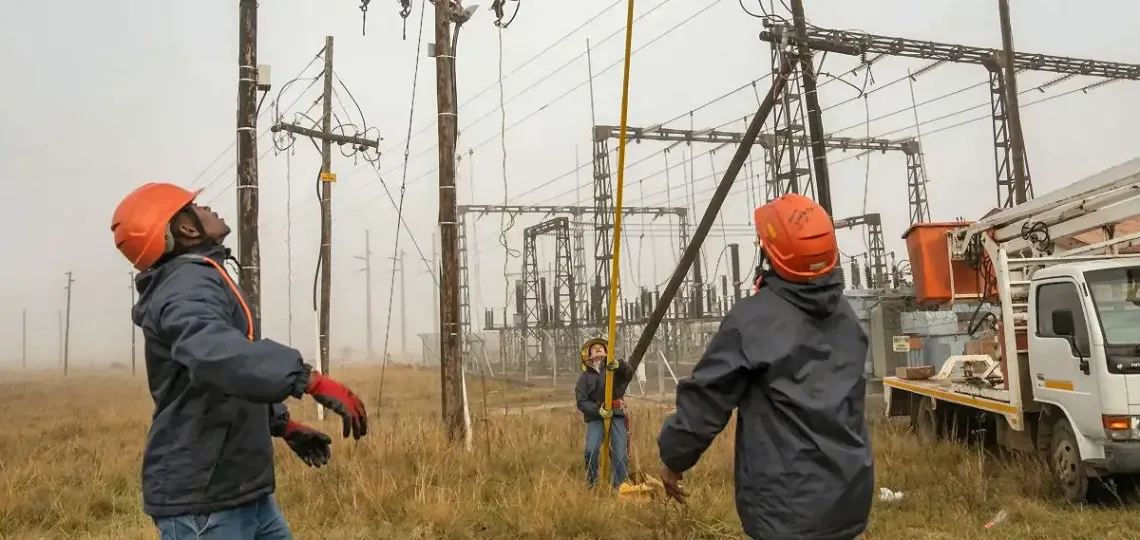
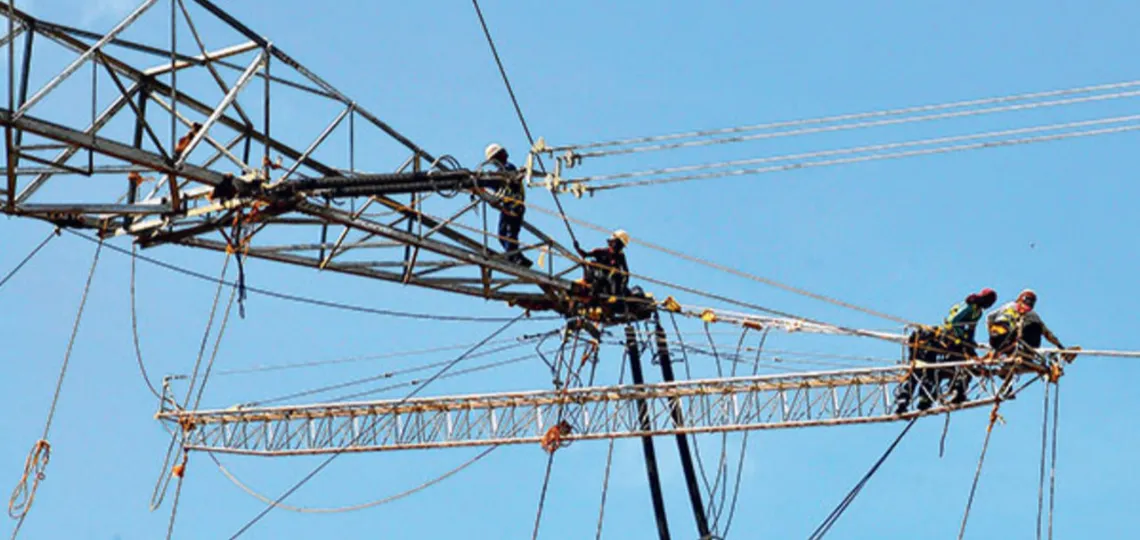
The Kenyan government has secured $311mn to construct two high-voltage transmission lines, aiming to meet growing demand and reduce losses across the national power grid.
Share:

Comprehensive energy news coverage, updated nonstop

Annual subscription

8.25$/month*

*billed annually at 99$/year for the first year then 149,00$/year ​

Unlimited access • Archives included • Professional invoice

OTHER ACCESS OPTIONS

Monthly subscription

Unlimited access • Archives included

5.2$/month*
then 14.90$ per month thereafter

FREE ACCOUNT

3 articles offered per month

FREE

*Prices are excluding VAT, which may vary depending on your location or professional status

Since 2021: 35,000 articles • 150+ analyses per week

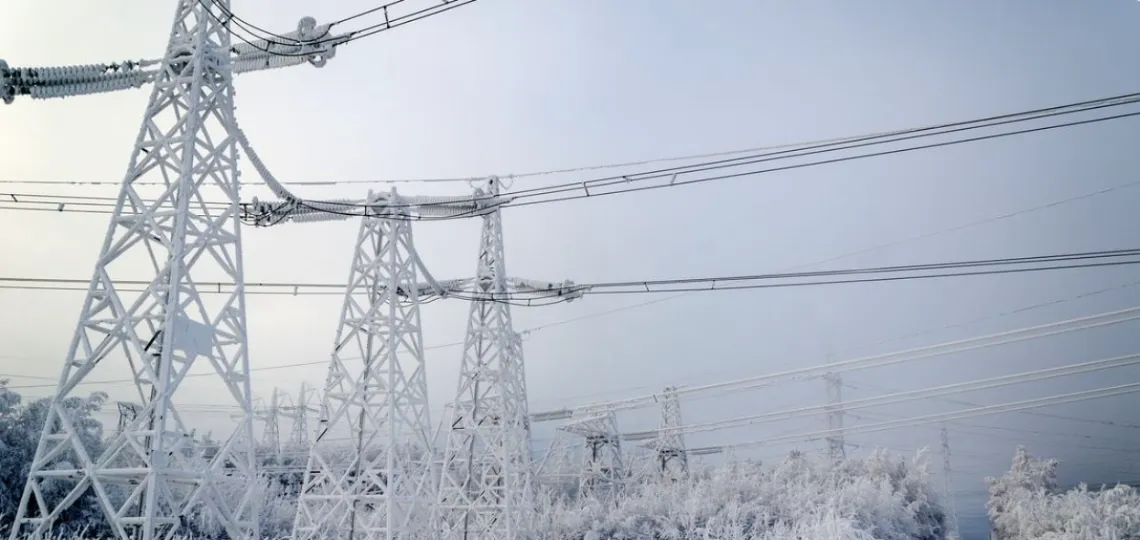
Kenya Electricity Transmission Company Limited, the state-owned transmission system operator, has signed a $311mn investment deal to strengthen the country’s electricity transmission infrastructure. The project covers the design, financing, construction, and operation of two new high-voltage transmission lines and their associated substations.

A public-private partnership focused on strategic infrastructure

The agreement involves a public-private partnership with Africa50, a pan-African infrastructure fund based in Casablanca, and PowerGrid Corporation of India Limited, a state-owned Indian transmission company. These entities will implement and operate the project under a 30-year concession. The new lines, operating at 400 kilovolts (kV) and 220 kV, are intended to maximise long-distance transmission capacity and improve network stability.

The government sees this partnership as a way to reduce technical losses and secure power supply, as the network frequently faces local congestion and outdated infrastructure.

A response to rising domestic demand

This initiative comes amid increasing pressure on Kenya’s electricity system. In early December, Kenya Power and Lighting Company, the public distribution utility, reported a peak demand of 2,439.06 megawatts (MW), the highest ever recorded in the country. This rise is attributed to continued growth in both domestic and industrial consumption.

With over 9,400 kilometres of high-voltage transmission lines (132 kV and above), the grid must also support regional electricity trade, particularly with members of the Common Market for Eastern and Southern Africa (COMESA). Infrastructure modernisation is thus aimed at securing national delivery reliability while strengthening regional energy integration.

A reform framework to attract private capital

The project forms part of a broader reform strategy in Kenya’s energy sector. Authorities are pursuing various initiatives to attract private investment in critical infrastructure while reorganising institutional frameworks. Regulatory adjustments have recently been introduced to tighten oversight of contracts signed with foreign partners, especially in generation and distribution.

State-owned companies such as Kenya Electricity Generating Company are also part of this strategy to improve operational efficiency and build investor confidence. The approach reflects a broader effort to rebalance public and private participation in Kenya’s energy infrastructure without relinquishing national control over strategic assets.

Facing a rapid increase in demand across industrial corridors, the Kenyan government is restructuring its power grid to accelerate connections, reduce technical losses and integrate new digital tools.
The European Commission enforces a new governance of electricity grids through eight energy highways, putting pressure on France as Spain and Portugal push to triple interconnection capacity by 2040.
The European Commission is set to launch a massive plan to modernise electricity transmission networks, including eight key projects, reinforced storage capacity, and the creation of cross-border hydrogen corridors.
The European Commission launches a reform to centralise infrastructure decisions and accelerate permitting in order to unblock renewable capacities currently constrained by grid congestion.
The UK regulator has approved a £28bn investment plan for electricity and gas networks from 2026 to 2031, setting strict performance conditions for operators while increasing household energy bills.
Brussels validates a new list of 235 PCI/PMI infrastructure projects, prioritising electricity, hydrogen and CO₂ corridors, while locking in access conditions to European funding through 2040.
Azerbaijan is developing Nakhchivan into a key electricity export hub with interconnection projects to Türkiye, boosting regional integration into the European energy market.
The European Union faces a €30bn public funding gap for cross-border electricity interconnections, jeopardising supply security and market integration by 2040.
The new Vunumoya station, built for over $58mn in 18 months, marks a strategic step toward integrating 900 MW of renewable energy in the mining region of Mpumalanga.
A joint vehicle between RWE and Apollo injects €3.2bn into the 25.1% stake in Amprion to support a €36.4bn investment plan in German power grids by 2029, consolidating a hybrid public-private model.
Türkiye enters advanced negotiations with the World Bank for $6bn in funding to strengthen its electricity transmission network, a key condition for expanding its renewable and nuclear capacity.
The Government of Ontario has tasked Hydro One with developing a strategic power line between Bowmanville and the Greater Toronto Area, offering equity participation to nearby First Nations.
China Southern Power Grid continues its network modernisation operations in Africa, introducing its technologies in Cairo and training local technicians to support long-term energy cooperation with the continent.
Avangrid has obtained the final regulatory approval for the NECEC project, a 1,200-megawatt cross-border transmission line connecting Québec hydropower to New England.
The European hydrogen interconnection project H2med reaches a key milestone with the technical validation of the BarMar route between Barcelona and Marseille, confirming the viability of the subsea corridor for expected operation in 2032.
Vattenfall has signed an agreement to sell its Independent Distribution Network Operator in the UK to Eclipse Power, a subsidiary of Octopus Sky Fund, marking a strategic refocus of its energy investments.
Shanghai Electric signed a framework agreement with Siemens to develop medium- and low-voltage equipment, aiming to modernise China’s power grids and support national decarbonisation targets.
Germany allocates a €7.6bn ($8.14bn) ceiling to acquire a minority interest in TenneT Germany, bolstering control over strategic grid infrastructure without a full buyout of the Dutch-owned subsidiary.
Naturgy secures major financing from the European Investment Bank to modernise Panama’s power infrastructure, in a strategic project supporting grid reliability and regional integration.
A $430mn funding package will be allocated by the World Bank to Tunisia to modernise its electrical grid and strengthen its integration with renewable capacity, aiming to attract $2.8bn in private investments.

All the latest energy news, all the time

Annual subscription

8.25$/month*

*billed annually at 99$/year for the first year then 149,00$/year ​

Unlimited access - Archives included - Pro invoice

Monthly subscription

Unlimited access • Archives included

5.2$/month*
then 14.90$ per month thereafter

*Prices shown are exclusive of VAT, which may vary according to your location or professional status.

Since 2021: 30,000 articles - +150 analyses/week.