Kenya launches grid reform to meet the rise of economic zones

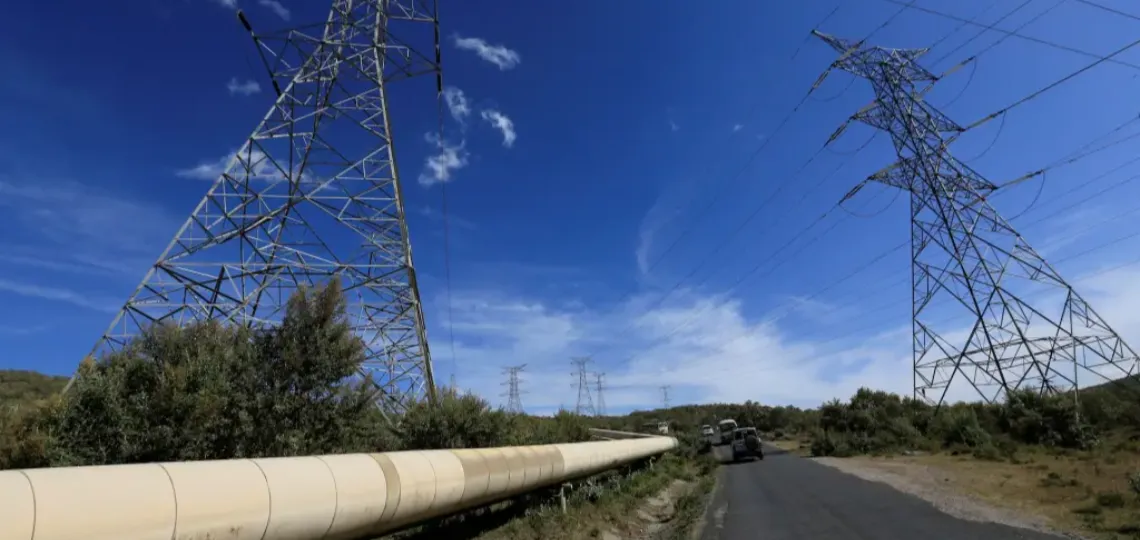
Facing a rapid increase in demand across industrial corridors, the Kenyan government is restructuring its power grid to accelerate connections, reduce technical losses and integrate new digital tools.
Share:

Comprehensive energy news coverage, updated nonstop

Annual subscription

8.25$/month*

*billed annually at 99$/year for the first year then 149,00$/year ​

Unlimited access • Archives included • Professional invoice

OTHER ACCESS OPTIONS

Monthly subscription

Unlimited access • Archives included

5.2$/month*
then 14.90$ per month thereafter

FREE ACCOUNT

3 articles offered per month

FREE

*Prices are excluding VAT, which may vary depending on your location or professional status

Since 2021: 35,000 articles • 150+ analyses per week

Kenya’s Ministry of Energy has announced a series of measures to modernise the national power infrastructure, with a particular focus on special economic zones and fast-growing industrial hubs. Kenya’s installed capacity stands at approximately 3,000 megawatts, with nearly 90% sourced from renewables such as geothermal, hydropower and wind. However, technical losses on the grid exceed 20%, affecting the competitiveness of newly developed industrial sites. The official target is to reduce these losses to below 15% by 2027 through substation upgrades and reinforcement of transmission lines.


New industrial hubs and localised demand

The government is targeting the Naivasha, Konza Technopolis and Mombasa corridors, where demand is rising faster than distribution capacity. The programme aims to connect at least 12 special economic zones to a priority network by 2026. Authorities state that these hubs could eventually generate over 1,000 megawatts of combined demand, concentrated in specific time windows, creating local stability challenges. A KES42bn ($270mn) funding package has been approved to accelerate the associated infrastructure.

Co-financing agreements are underway with multilateral institutions to incorporate Smart Grid technologies, including remote monitoring and control systems and next-generation smart meters. These tools are designed to anticipate congestion, reduce maintenance delays and better respond to load fluctuations, particularly during industrial production cycles.

Digital integration and data governance

The Kenya Electricity Transmission Company (KETRACO) is leading the integration of digital platforms to monitor power flows in real time and automate coordination between dispatch centres and local units. Deployment of an Advanced Distribution Management System (ADMS) is being piloted in two counties. At the same time, Kenya Power is developing demand modelling tools in partnership with the University of Nairobi to optimise investments in the most critical areas.

The transition also relies on strengthened energy data governance. A centralised portal project for all network data is underway, aimed at improving transparency, facilitating access for industrial investors and enhancing the Energy Regulatory Commission’s planning capabilities. The reference text emphasises the need for standardised exchange formats and clear regulation regarding data responsibility in the event of disputes or technical failures.

Investment costs and operational risks

The plan includes a total investment estimated at KES210bn ($1.35bn) over five years, financed through public-private partnerships, concessional loans and tariff reforms. An initial KES18bn ($115mn) tranche is allocated to the immediate reinforcement of 45 strategic substations. The ministry specified that all new infrastructure must incorporate flexibility criteria, including the ability to host distributed sources and adapt to variable industrial consumption profiles.

Cyber vulnerability is identified as a growing risk factor. The report cites several intrusions targeting operators in other East African countries and notes that new digital systems must meet enhanced cybersecurity standards. An audit of critical infrastructure is underway to define priority intervention zones. Authorities also plan to revise the operator remuneration framework, allocating a greater share to technical performance and reduced outage times.

The European Commission enforces a new governance of electricity grids through eight energy highways, putting pressure on France as Spain and Portugal push to triple interconnection capacity by 2040.
The European Commission is set to launch a massive plan to modernise electricity transmission networks, including eight key projects, reinforced storage capacity, and the creation of cross-border hydrogen corridors.
The European Commission launches a reform to centralise infrastructure decisions and accelerate permitting in order to unblock renewable capacities currently constrained by grid congestion.
The UK regulator has approved a £28bn investment plan for electricity and gas networks from 2026 to 2031, setting strict performance conditions for operators while increasing household energy bills.
Brussels validates a new list of 235 PCI/PMI infrastructure projects, prioritising electricity, hydrogen and CO₂ corridors, while locking in access conditions to European funding through 2040.
Azerbaijan is developing Nakhchivan into a key electricity export hub with interconnection projects to Türkiye, boosting regional integration into the European energy market.
The European Union faces a €30bn public funding gap for cross-border electricity interconnections, jeopardising supply security and market integration by 2040.
The new Vunumoya station, built for over $58mn in 18 months, marks a strategic step toward integrating 900 MW of renewable energy in the mining region of Mpumalanga.
A joint vehicle between RWE and Apollo injects €3.2bn into the 25.1% stake in Amprion to support a €36.4bn investment plan in German power grids by 2029, consolidating a hybrid public-private model.
Türkiye enters advanced negotiations with the World Bank for $6bn in funding to strengthen its electricity transmission network, a key condition for expanding its renewable and nuclear capacity.
The Government of Ontario has tasked Hydro One with developing a strategic power line between Bowmanville and the Greater Toronto Area, offering equity participation to nearby First Nations.
China Southern Power Grid continues its network modernisation operations in Africa, introducing its technologies in Cairo and training local technicians to support long-term energy cooperation with the continent.
Avangrid has obtained the final regulatory approval for the NECEC project, a 1,200-megawatt cross-border transmission line connecting Québec hydropower to New England.
The European hydrogen interconnection project H2med reaches a key milestone with the technical validation of the BarMar route between Barcelona and Marseille, confirming the viability of the subsea corridor for expected operation in 2032.
Vattenfall has signed an agreement to sell its Independent Distribution Network Operator in the UK to Eclipse Power, a subsidiary of Octopus Sky Fund, marking a strategic refocus of its energy investments.
Shanghai Electric signed a framework agreement with Siemens to develop medium- and low-voltage equipment, aiming to modernise China’s power grids and support national decarbonisation targets.
Germany allocates a €7.6bn ($8.14bn) ceiling to acquire a minority interest in TenneT Germany, bolstering control over strategic grid infrastructure without a full buyout of the Dutch-owned subsidiary.
Naturgy secures major financing from the European Investment Bank to modernise Panama’s power infrastructure, in a strategic project supporting grid reliability and regional integration.
A $430mn funding package will be allocated by the World Bank to Tunisia to modernise its electrical grid and strengthen its integration with renewable capacity, aiming to attract $2.8bn in private investments.
German grid operator 50Hertz commits to nearly 30 GW of new connection capacity by 2029, amid network saturation and calls for reforming access procedures.

All the latest energy news, all the time

Annual subscription

8.25$/month*

*billed annually at 99$/year for the first year then 149,00$/year ​

Unlimited access - Archives included - Pro invoice

Monthly subscription

Unlimited access • Archives included

5.2$/month*
then 14.90$ per month thereafter

*Prices shown are exclusive of VAT, which may vary according to your location or professional status.

Since 2021: 30,000 articles - +150 analyses/week.