India’s Adani to build three million mt/yr renewable Gujarat hydrogen plant

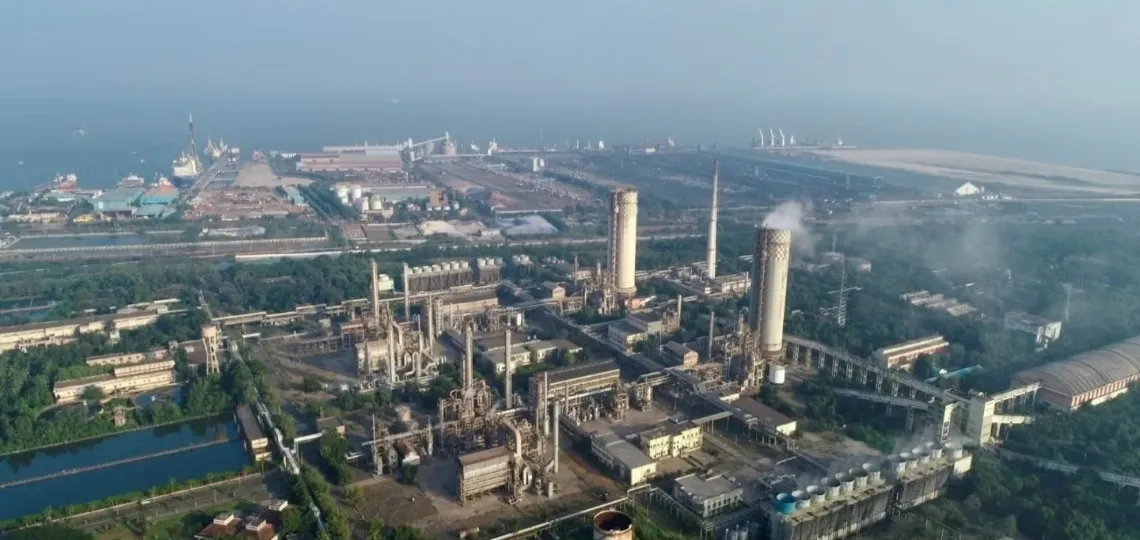
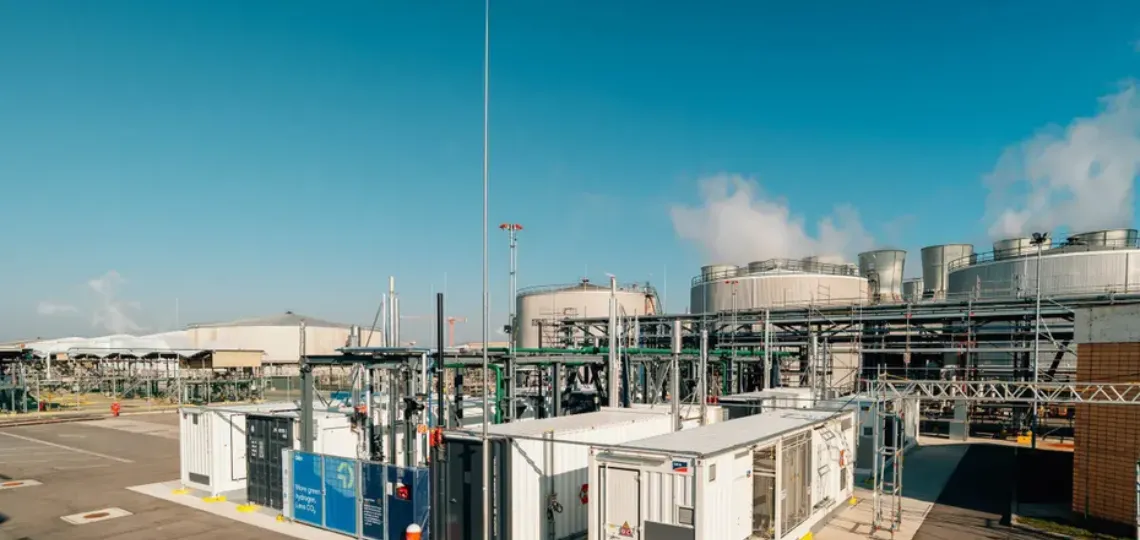
Despite the suspension of the partnership with TotalEnergies, India's Adani Group remains determined to build a three-million-tonne-per-year renewable hydrogen plant in Gujarat, with investments of $300-400 million this year and a $70 billion energy expansion strategy committed to 2021.
Share:

Comprehensive energy news coverage, updated nonstop

Annual subscription

8.25$/month*

*billed annually at 99$/year for the first year then 149,00$/year ​

Unlimited access • Archives included • Professional invoice

OTHER ACCESS OPTIONS

Monthly subscription

Unlimited access • Archives included

5.2$/month*
then 14.90$ per month thereafter

FREE ACCOUNT

3 articles offered per month

FREE

*Prices are excluding VAT, which may vary depending on your location or professional status

Since 2021: 35,000 articles • 150+ analyses per week

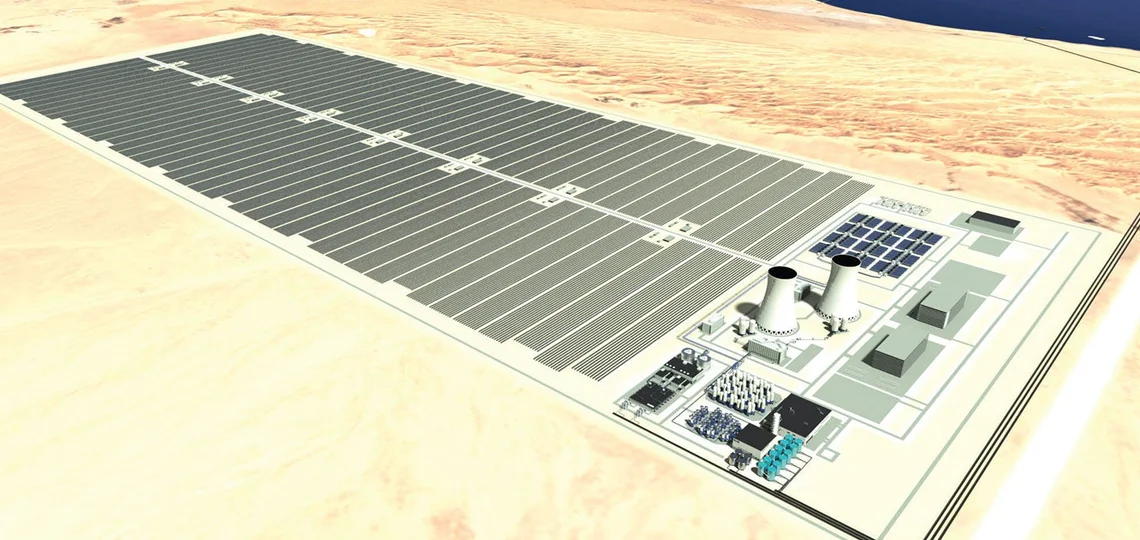
India’s Adani Group is still planning to build a 3 million ton/year renewable hydrogen plant in Gujarat. Despite the suspension of its partnership by TotalEnergies, according to CFO Robbie Singh in a recent call to analysts, the transcript of which was published on August 11. The mining logistics conglomerate has committed $70 billion to its new energy strategy for 2021.

Renewable hydrogen hub in Gujarat: Adani’s strategic expansion plans

In 2022, TotalEnergies agreed to buy a 25% stake in subsidiary Adani New Industries, but put the acquisition on hold on February 8.

“Investment plans don’t change for an asset like green hydrogen,” said Singh, adding that the plant would be a “full three million ton facility [at a cost of around] $50 billion, as we’ve described [auparavant]… so that plan continues to move forward as it is. ”

“The $300-$400 million investment in the project this year will grow rapidly in 2024 and 2025,” said Singh.

Adani’s hydrogen capacity in the state of Gujarat was an important part of a hub with upstream and downstream operations, according to a presentation at the group’s annual general meeting on July 18.

“The renewable hydrogen will be used in the Mundra Special Economic Zone, focused on ammonia and urea users, and will be transported by pipeline,” he said.

Singh said integration was continuing, with silicon ingot and solar wafer manufacturing under development, and a wind technology facility moving into commercial production.

For an integrated cell plant, “all the technology agreements are in place, and we expect to start development and construction work towards the end of this quarter or early in the third quarter”, he said.

A memorandum of understanding with TotalEnergies still existed, with the French company required to perform due diligence, Singh said.
The renewable hydrogen project, however, “didn’t depend on this equity because we’re going ahead with the project as it is and at the same pace,” he said.

A report by Hindenburg Research accused Adani Group of stock manipulation and inappropriate use of tax havens.
In March, India’s Supreme Court ordered a committee to examine any regulatory failings on the part of the group, which denied the allegations. Platts, part of S&P Global Commodity Insights, valued Qatar’s alkaline electrolysis hydrogen (including capital expenditure) at $2.61/kg on August 11, little changed month-on-month. He valued Japanese hydrogen produced by alkaline electrolysis (including capital expenditure) at $4.65/kg on August 11, down 5% month-on-month.
European Energy increases the capacity of its Måde Power-to-X site to 8.1 MW, with a new electrolyser in service and ongoing tests for commercial production in 2026.
Lhyfe aims to double its revenue next year, refocuses industrial priorities and plans a 30% cost reduction starting in 2026 to accelerate profitability.
Plug Power has completed the installation of a 5 MW PEM electrolyzer for Cleanergy Solutions Namibia, marking the launch of Africa’s first fully integrated green hydrogen production and distribution site.
Indian group AM Green has signed a memorandum of understanding with Japanese conglomerate Mitsui to co-finance a one million tonne per year integrated low-carbon aluminium production platform.
Next Hydrogen completes a $20.7mn private placement led by Smoothwater Capital, boosting its ability to commercialise alkaline electrolysers at scale and altering the company’s control structure.
Primary Hydrogen plans to launch its initial drilling programme at the Wicheeda North site upon receiving its permit in early 2026, while restructuring its internal exploration functions.
Gasunie and Thyssengas have signed an agreement to convert existing gas pipelines into hydrogen conduits between the Netherlands and Germany, facilitating integration of Dutch ports with German industrial regions.
The conditional power supply agreement for the Holmaneset project is extended to 2029, covering a ten-year electricity delivery period, as Fortescue continues feasibility studies.
HDF Energy partners with ABB to design a multi-megawatt hydrogen fuel cell system for vessel propulsion and auxiliary power, strengthening their position in the global maritime market.
SONATRACH continues its integration strategy into the green hydrogen market, with the support of European partners, through the Algeria to Europe Hydrogen Alliance (ALTEH2A) and the SoutH2 Corridor, aimed at supplying Europe with clean energy.
Operator GASCADE has converted 400 kilometres of gas pipelines into a strategic hydrogen corridor between the Baltic Sea and Saxony-Anhalt, now operational.
Lummus Technology and Advanced Ionics have started construction of a pilot unit in Pasadena to test a new high-efficiency electrolysis technology, marking a step toward large-scale green hydrogen production.
Nel ASA launches the industrial phase of its pressurised alkaline technology, with an initial 1 GW production capacity and EU support of up to EUR135mn ($146mn).
Peregrine Hydrogen and Tasmania Energy Metals have signed a letter of intent to install an innovative electrolysis technology at the future nickel processing site in Bell Bay, Tasmania.
Elemental Clean Fuels will develop a 10-megawatt green hydrogen production facility in Kamloops, in partnership with Sc.wén̓wen Economic Development and Kruger Kamloops Pulp L.P., to replace part of the natural gas used at the industrial site.
Driven by green hydrogen demand and state-backed industrial plans, the global electrolyser market could reach $42.4bn by 2034, according to the latest forecast by Future Market Insights.
Driven by mobility and alkaline electrolysis, the global green hydrogen market is projected to grow at a rate of 60 % annually, reaching $74.81bn in 2032 from $2.79bn in 2025.
Plug Power will supply a 5MW PEM electrolyser to Hy2gen’s Sunrhyse project in Signes, marking a key step in expanding RFNBO-certified hydrogen in southern France.
The cross-border hydrogen transport network HY4Link receives recognition from the European Commission as a project of common interest, unlocking access to funding and integration into Europe’s energy infrastructure.
The withdrawal of Stellantis weakens Symbio, which is forced to drastically reduce its workforce at the Saint-Fons plant, despite significant industrial investment backed by both public and private stakeholders.

All the latest energy news, all the time

Annual subscription

8.25$/month*

*billed annually at 99$/year for the first year then 149,00$/year ​

Unlimited access - Archives included - Pro invoice

Monthly subscription

Unlimited access • Archives included

5.2$/month*
then 14.90$ per month thereafter

*Prices shown are exclusive of VAT, which may vary according to your location or professional status.

Since 2021: 30,000 articles - +150 analyses/week.