RESourceEU marks a structural shift in the European Union’s policy on critical raw materials. The plan does not primarily aim to subsidise projects but rather to reshape the physical and contractual flows across the internal market. It builds on the Critical Raw Materials Act (CRMA) and adds operational instruments allowing the EU to act directly on supply, demand and final destination of materials.

A response to Chinese restrictions and coercive risk
The trigger behind RESourceEU was China’s restrictions on certain rare earths and associated technologies, which disrupted the automotive sector and manufacturers reliant on permanent magnets. These measures highlighted the extreme upstream concentration, with China controlling the majority of global rare earth refining and separation capacity. The EU plan explicitly acknowledges the risk of material-based economic coercion, now integrated into its broader economic security doctrine.
From regulatory framework to state market capacity
RESourceEU converts the CRMA’s resilience objective into market-shaping capability. The plan introduces EU-wide joint purchasing, price floor options, and strategic stockpiling. These tools enable the Union to act as a structuring buyer, introducing non-commercial public demand capable of influencing volumes and pricing. This approach aligns the EU more closely with industrial strategies already used by other global powers.
Stockpiling from 2026 and partial opacity of volumes
Strategic reserves will begin to be built from 2026 for several critical materials, including those linked to defence and sensitive industries. The plan allows for differentiated stock management depending on the intended end-use, implying variable levels of transparency. The entry of a public stockpiling entity adds a new layer of price volatility, especially if volumes and purchasing timelines are not made public.
The European Critical Raw Materials Centre as operational core
The European Critical Raw Materials Centre is the central operational mechanism of RESourceEU. It will coordinate investments, manage joint purchasing, and oversee strategic stocks. The centre will also allocate resources to priority projects, sectors or end-uses. This signals a shift from a regulatory framework to an active allocation-based industrial policy with clear trade-offs between civil, industrial and defence priorities.
Export restrictions on secondary materials
One of the plan’s most immediate levers concerns recycled materials. RESourceEU plans to restrict exports of strategic secondary flows — including black mass from batteries and magnet waste — to non-OECD (Organisation for Economic Co-operation and Development) countries. This measure aims to retain feedstock within Europe, where it is critical to cathode, magnet and alloy production. It directly impacts the economic models of recyclers and traders.
Upstream mining, permits and structural constraints
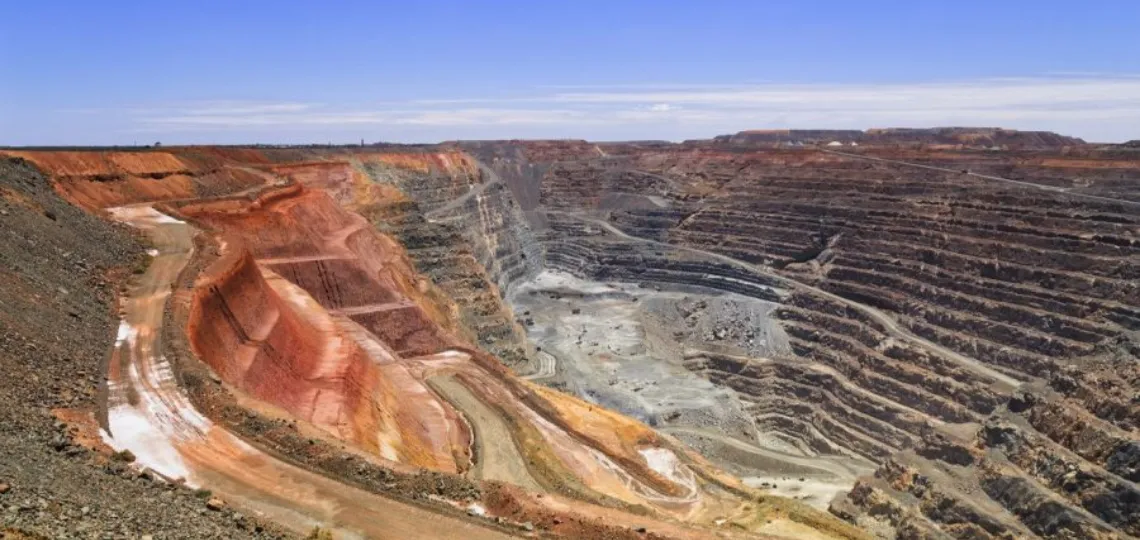
On extraction and refining, RESourceEU reinforces CRMA’s binding objectives, notably capping dependency on a single country at 65% by 2030. The plan calls for faster permitting — 12 months for exploration and 36 months for production — on strategic projects. However, implementation depends on national procedures and public acceptance, which is flagged as the main bottleneck across the EU’s project pipeline.
Recycling prioritised over delayed mining impacts
The plan acknowledges that significant mining output will not materialise in the short term. Therefore, RESourceEU prioritises recycling, deemed the fastest source of additional volumes. This raises pressure on recycled materials and reshapes short-term investment hierarchies within the European value chain.
Downstream dependency and structural contradiction
RESourceEU identifies a risk of downstream dependency if the main European buyers remain Chinese-owned gigafactories based in the EU. In this scenario, upstream EU projects could become economically dependent on actors linked to the very geopolitical risk the plan seeks to mitigate. This contradiction remains unresolved and points to future decisions regarding access to stockpiled or jointly purchased volumes.
Impact on contracts, pricing and governance
The EU’s direct intervention reshapes offtake agreements. These contracts will increasingly include destination clauses and compliance with EU localisation priorities. Project value shifts toward the ability to secure permits, access feedstock and align with joint purchasing and stockpiling mechanisms.
Strategic control without a sanctions regime
RESourceEU is not a sanctions framework in the sense of the US Office of Foreign Assets Control (OFAC), but rather a form of strategic export control. Through export restrictions, stockpiling and resource allocation, the EU creates an intermediate regime between industrial policy and economic control. This opens up new areas of geopolitical friction, notably with China, on pricing, processing technology and expert mobility.