Global renewable capacity to reach 793 GW in 2025 despite limited political ambitions

Global solar and wind additions will hit a new record in 2025, but the lack of ambitious national targets creates uncertainty around achieving a tripling by 2030.
Share:

Comprehensive energy news coverage, updated nonstop

Annual subscription

8.25$/month*

*billed annually at 99$/year for the first year then 149,00$/year ​

Unlimited access • Archives included • Professional invoice

OTHER ACCESS OPTIONS

Monthly subscription

Unlimited access • Archives included

5.2$/month*
then 14.90$ per month thereafter

FREE ACCOUNT

3 articles offered per month

FREE

*Prices are excluding VAT, which may vary depending on your location or professional status

Since 2021: 35,000 articles • 150+ analyses per week

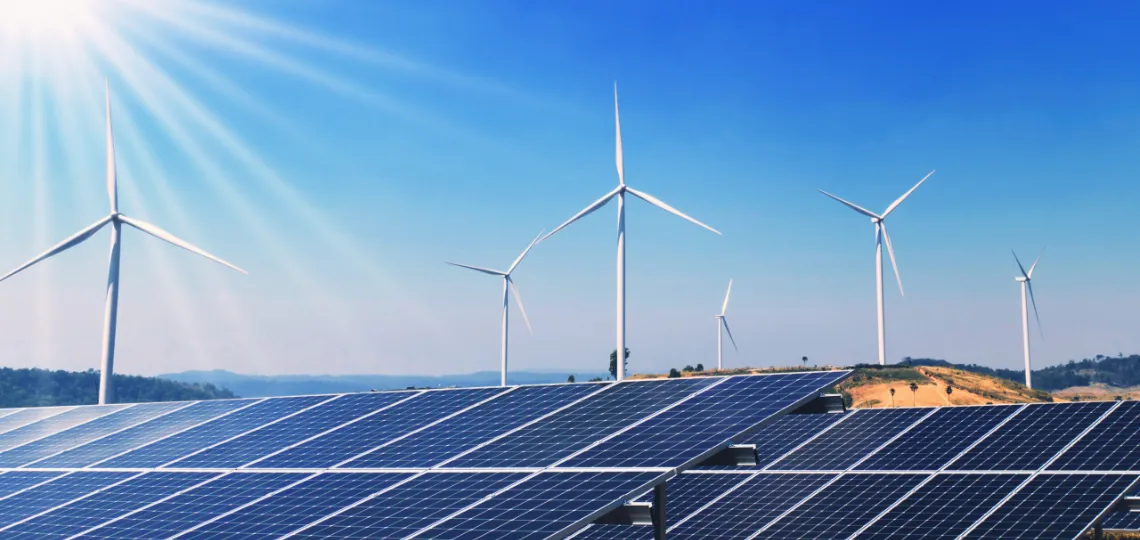
Global renewable energy capacity is expected to grow by 11% in 2025, reaching 793 gigawatts (GW), marking another record year for the sector. This growth follows an upward trend that began in 2022, driven primarily by photovoltaic solar and wind projects in China.

China leads global solar and wind additions

According to deployment data collected through September, solar installations are set to grow by 9% in 2025, while wind is expected to rise by 21%. In absolute terms, solar will account for the bulk of the expansion, although wind delivers more electricity per installed unit. China is projected to be the dominant contributor, accounting for 66% of global solar additions and 69% of wind capacity growth.

This strong pace has already exceeded initial growth targets. To achieve a global tripling of capacity by 2030, an average annual increase of 21% from 2023 to 2030 was required. With the sector having already grown by an average of 29% per year between 2023 and 2025, future additions only need to rise by 12% annually for the remainder of the period.

National targets out of step with market momentum

Despite industrial momentum, national commitments remain limited. Current government targets aim only for a doubling of capacity by 2030. Since 2022, the total of global national targets has increased by just 8%, reaching 7,793 GW. This rise is mainly due to China updating its ambition under its 2025 Nationally Determined Contribution (NDC), while the assumed target for the United States has declined.

Updated forecasts from the International Energy Agency (IEA) indicate a 15% gap between projected capacity and the levels needed to reach the tripling target. However, the shortfall in electricity generation is estimated at 28%, due to an underrepresentation of higher-yield technologies like wind and hydropower in the new installed capacity.

Political signals misaligned with deployment acceleration

With less than five years to go until the 2030 deadline, the gap between market dynamics and political intent complicates medium-term energy planning. Official targets guide network operators, investors and industry players. Their current underestimation makes it more difficult to coordinate infrastructure and resources required to integrate additional capacity.

While deployment levels are rising faster than anticipated, the lack of alignment between political ambition and on-the-ground activity introduces uncertainty around the next phase of the global energy system’s transformation.
The Canadian government introduces major legislative changes to the Energy Efficiency Act to support its national strategy and adapt to the realities of digital commerce.
Quebec becomes the only Canadian province where a carbon price still applies directly to fuels, as Ottawa eliminated the public-facing carbon tax in April 2025.
New Delhi launches a 72.8 bn INR incentive plan to build a 6,000-tonne domestic capacity for permanent magnets, amid rising Chinese export restrictions on critical components.
The rise of CfDs, PPAs and capacity mechanisms signals a structural shift: markets alone no longer cover 10–30-year financing needs, while spot prices have surged 400% in Europe since 2019.
Germany plans to finalise the €5.8bn ($6.34bn) purchase of a 25.1% stake in TenneT Germany to strengthen its control over critical national power grid infrastructure.
The Ghanaian government is implementing a reform of its energy system focused on increasing the use of local natural gas, aiming to reduce electricity production costs and limit the sector's financial imbalance.
On the 50th anniversary of its independence, Suriname announced a national roadmap including major public investment to develop its offshore oil reserves.
China's power generation capacity recorded strong growth in October, driven by continued expansion of solar and wind, according to official data from the National Energy Administration.
The 2026–2031 offshore programme proposes opening over one billion acres to oil exploration, triggering a regulatory clash between Washington, coastal states and legal advocacy groups.
The government of Mozambique is consolidating its gas transport and regasification assets under a public vehicle, anchoring the strategic Beira–Rompco corridor to support Rovuma projects and respond to South Africa’s gas dependency.
The British system operator NESO initiates a consultation process to define the methodology of eleven upcoming regional strategic plans aimed at coordinating energy needs across England, Scotland and Wales.
The Belém summit ends with a technical compromise prioritising forest investment and adaptation, while avoiding fossil fuel discussions and opening a climate–trade dialogue likely to trigger new regulatory disputes.
The Asian Development Bank and the Kyrgyz Republic have signed a financing agreement to strengthen energy infrastructure, climate resilience and regional connectivity, with over $700mn committed through 2027.
A study from the Oxford Institute for Energy Studies finds that energy-from-waste with carbon capture delivers nearly twice the climate benefit of converting waste into aviation fuel.
Signed for 25 years, the new concession contract between Sipperec, EDF and Enedis covers 87 municipalities in the Île-de-France region and commits the parties to managing and developing the public electricity distribution network until 2051.
The French Energy Regulatory Commission publishes its 2023–2024 report, detailing the crisis impact on gas and electricity markets and the measures deployed to support competition and rebuild consumer trust.
Gathered in Belém, states from Africa, Asia, Latin America and Europe support the adoption of a timeline for the gradual withdrawal from fossil fuels, despite expected resistance from several producer countries.
The E3 and the United States submit a resolution to the IAEA to formalise Iran's non-cooperation following the June strikes, consolidating the legal basis for tougher energy and financial sanctions.
The United Kingdom launches a taskforce led by the Energy Minister to strengthen the security of the national power grid after a full shutdown at Heathrow Airport caused by a substation fire.
New Delhi is seeking $68bn in Japanese investment to accelerate gas projects, develop hydrogen and expand LNG import capacity amid increased openness to foreign capital.

All the latest energy news, all the time

Annual subscription

8.25$/month*

*billed annually at 99$/year for the first year then 149,00$/year ​

Unlimited access - Archives included - Pro invoice

Monthly subscription

Unlimited access • Archives included

5.2$/month*
then 14.90$ per month thereafter

*Prices shown are exclusive of VAT, which may vary according to your location or professional status.

Since 2021: 30,000 articles - +150 analyses/week.