France, Spain and Portugal seek to speed up electricity interconnectors

The three countries will hold a meeting in October to unlock interconnector projects, following a major blackout that exposed the fragility of the Iberian Peninsula’s electricity integration.
Share:

Comprehensive energy news coverage, updated nonstop

Annual subscription

8.25$/month*

*billed annually at 99$/year for the first year then 149,00$/year ​

Unlimited access • Archives included • Professional invoice

OTHER ACCESS OPTIONS

Monthly subscription

Unlimited access • Archives included

5.2$/month*
then 14.90$ per month thereafter

FREE ACCOUNT

3 articles offered per month

FREE

*Prices are excluding VAT, which may vary depending on your location or professional status

Since 2021: 35,000 articles • 150+ analyses per week

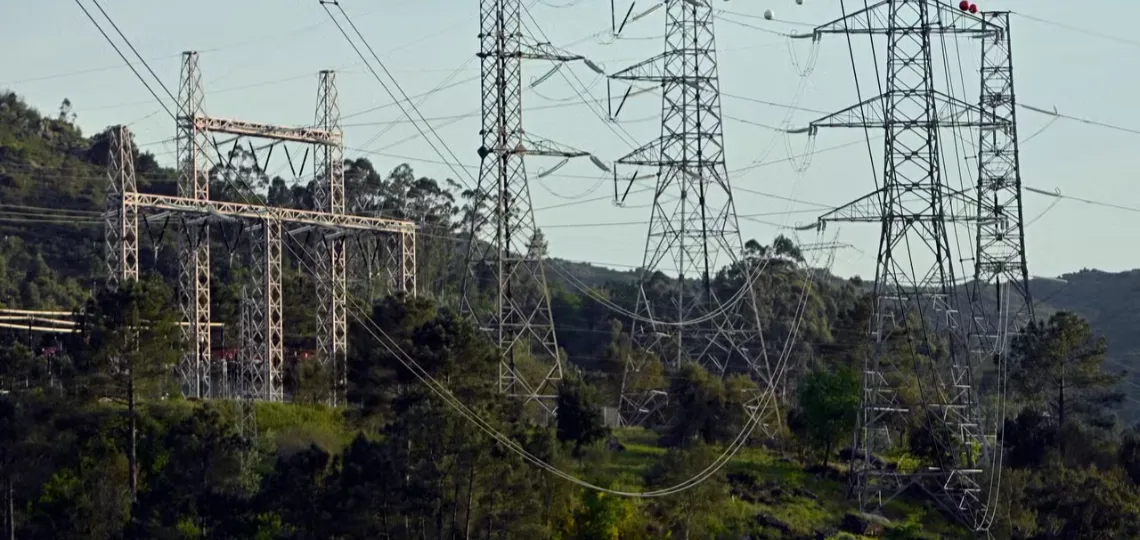
France, Spain and Portugal will meet in October to discuss ways to accelerate electricity interconnector projects. The initiative follows a massive power outage in April that highlighted the lack of connections between the Iberian Peninsula and the wider European grid.

Franco-Iberian coordination set to resume

Portuguese Minister of Energy Maria da Graça Carvalho stated that France requested a tripartite meeting after exchanges between the three countries and the European Commission. She noted that the talks are scheduled to begin in early October.

The April blackout, described as unprecedented by grid operators, revealed the limits of a poorly integrated Iberian power system. According to several industry experts, the impact of the incident could have been mitigated by stronger electricity exchange capacity with other EU member states.

Bay of Biscay project faces regulatory conditions

The Bay of Biscay subsea interconnector project between France and Spain is backed by €1.6bn ($1.88bn) in financing from the European Investment Bank. However, an environmental assessment remains pending, which is a required step before construction can proceed.

Meanwhile, works to reinforce an existing land-based interconnector between France and Spain are expected to be completed this year. Two other projects crossing the Pyrenees are under review, but according to French grid operator Réseau de Transport d’Électricité (RTE), most of the benefits from these lines would be located outside France.

EU targets still far off

As of now, Portugal and Spain have only 3% of their electricity capacity connected to neighbouring countries, well below the European Union’s 15% target for 2030. This structural gap limits electricity trade flows, increases grid imbalance risks and restricts access to a more competitive market.

The Spanish and French energy ministries declined to comment on the ongoing talks. The European Network of Transmission System Operators for Electricity (ENTSO-E) is expected to release part of its technical analysis on the causes of the April blackout later this week.


A joint vehicle between RWE and Apollo injects €3.2bn into the 25.1% stake in Amprion to support a €36.4bn investment plan in German power grids by 2029, consolidating a hybrid public-private model.
Türkiye enters advanced negotiations with the World Bank for $6bn in funding to strengthen its electricity transmission network, a key condition for expanding its renewable and nuclear capacity.
The Government of Ontario has tasked Hydro One with developing a strategic power line between Bowmanville and the Greater Toronto Area, offering equity participation to nearby First Nations.
China Southern Power Grid continues its network modernisation operations in Africa, introducing its technologies in Cairo and training local technicians to support long-term energy cooperation with the continent.
Avangrid has obtained the final regulatory approval for the NECEC project, a 1,200-megawatt cross-border transmission line connecting Québec hydropower to New England.
The European hydrogen interconnection project H2med reaches a key milestone with the technical validation of the BarMar route between Barcelona and Marseille, confirming the viability of the subsea corridor for expected operation in 2032.
Vattenfall has signed an agreement to sell its Independent Distribution Network Operator in the UK to Eclipse Power, a subsidiary of Octopus Sky Fund, marking a strategic refocus of its energy investments.
Shanghai Electric signed a framework agreement with Siemens to develop medium- and low-voltage equipment, aiming to modernise China’s power grids and support national decarbonisation targets.
Germany allocates a €7.6bn ($8.14bn) ceiling to acquire a minority interest in TenneT Germany, bolstering control over strategic grid infrastructure without a full buyout of the Dutch-owned subsidiary.
Naturgy secures major financing from the European Investment Bank to modernise Panama’s power infrastructure, in a strategic project supporting grid reliability and regional integration.
A $430mn funding package will be allocated by the World Bank to Tunisia to modernise its electrical grid and strengthen its integration with renewable capacity, aiming to attract $2.8bn in private investments.
German grid operator 50Hertz commits to nearly 30 GW of new connection capacity by 2029, amid network saturation and calls for reforming access procedures.
Thailand’s pending approval of transmission fees is holding back progress on an energy project linking Laos to Singapore via Malaysia, amid political uncertainty.
Amman says it is ready to provide electricity and natural gas to Lebanon using its already operational infrastructure, pending the completion of regional procedures.
Jordan can export electricity if three conditions align: fuel availability for its power plants, measurable system surplus, and a functional transit framework via Syria to Lebanon with clear metering and settlement rules.
The Egyptian government and UAE-based K&K have signed an agreement to finalise studies for an electricity interconnection project linking Egypt to Europe via Italy.
AEP Transmission will finance the upgrade of high-voltage lines across five states through a federal loan, aiming to meet a sharp rise in industrial electricity demand.
Israeli company Prisma Photonics has raised $30mn in a funding round led by Protego Ventures to develop its artificial intelligence-based detection system for power grids and critical infrastructure.
A report estimates $2.3 billion in avoidable economic losses by 2040 if Southeast Asia strengthens its electricity infrastructure through smart grids.
The New Providence power grid modernisation project is progressing 28% faster than expected, with Bahamas Grid Company reporting measurable gains in service quality and network reliability.

All the latest energy news, all the time

Annual subscription

8.25$/month*

*billed annually at 99$/year for the first year then 149,00$/year ​

Unlimited access - Archives included - Pro invoice

Monthly subscription

Unlimited access • Archives included

5.2$/month*
then 14.90$ per month thereafter

*Prices shown are exclusive of VAT, which may vary according to your location or professional status.

Since 2021: 30,000 articles - +150 analyses/week.