ExxonMobil in advanced talks to acquire Lukoil’s stake in West Qurna-2

Iraq is preparing a managed transition at the West Qurna-2 oil field, following US sanctions against Lukoil, by prioritising a transfer to players deemed reliable by Washington, including ExxonMobil.

Share:

Comprehensive energy news coverage, updated nonstop

Annual subscription

8.25$/month*

*billed annually at 99$/year for the first year then 149,00$/year ​

Unlimited access • Archives included • Professional invoice

OTHER ACCESS OPTIONS

Monthly subscription

Unlimited access • Archives included

5.2$/month*
then 14.90$ per month thereafter

FREE ACCOUNT

3 articles offered per month

FREE

*Prices are excluding VAT, which may vary depending on your location or professional status

Since 2021: 35,000 articles • 150+ analyses per week

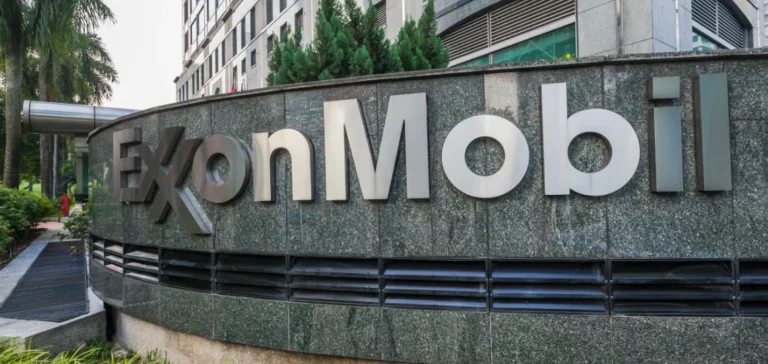
The Iraqi government is accelerating talks to organise the sale of the 75% stake held by Lukoil in the West Qurna-2 oil field, following sanctions imposed by the United States on the Russian major. The Ministry of Oil is negotiating with ExxonMobil, which could acquire the strategic asset located in the south of the country, producing around 460,000 barrels per day—nearly 10% of Iraq’s national output.

A core asset in Iraq’s oil equation

With recoverable reserves estimated at nearly 13 billion barrels, West Qurna-2 is among the world’s largest oil fields. Designed to eventually reach a capacity of 800,000 barrels per day, it represents one of Baghdad’s identified growth levers for boosting exports within the Organisation of the Petroleum Exporting Countries and its allies (OPEC+). Lukoil currently operates the field under a service contract, in partnership with the state-owned North Oil Company.

Since late October, Lukoil has been officially designated as a Specially Designated National (SDN) by the US Treasury’s Office of Foreign Assets Control (OFAC), freezing its assets and limiting its operational capabilities. Financial, logistical and commercial flows linked to West Qurna-2 are now strictly governed by general licences, authorising only transactions required for operational safety and asset divestment.

A legal window to reconfigure governance

Baghdad used Lukoil’s force majeure declaration—following a pipeline leak—to temporarily transfer operational control of the field to Basra Oil Company and Maysan Oil Company. This shift ensures continuity of exports through the Tuba terminal without abrupt contractual termination, while preparing for the entry of a new operator acceptable to US authorities.

Talks are focused on a gradual governance transfer to a player combining technical expertise, regional ties, and compliance with OFAC regulations. In addition to ExxonMobil, firms such as Chevron, Carlyle Group and Abu Dhabi’s International Holding Company (IHC) are also mentioned as potential candidates. Regulatory constraints, however, require a transaction structure pre-approved by Washington.

Impact on global supply and US strategy

Production resumed at the field in late November, restoring output of about 460,000 barrels per day and contributing to a drop in international oil prices. Brent crude fell by over $1 per barrel as markets absorbed the rapid resumption of Iraqi exports as a signal of short-term stability. Nevertheless, infrastructure vulnerability and the geopolitical complexity of the case continue to weigh on perceptions of delivery reliability.

For the United States, the field serves as a test case in its sanctions strategy: deprive Russia of oil revenues without disrupting markets. By promoting a sale to a Western major or an aligned regional consortium, Washington aims to consolidate its role in the Middle East while reshaping the energy landscape amid prolonged tensions with Moscow.

Iraq’s OPEC+ position and production outlook

Iraq, often exceeding its OPEC+ quotas, could face renewed pressure within the alliance if West Qurna-2’s output ramps up. Once governance transfer is completed, the Iraqi state plans to renegotiate the service contract with the incoming operator, including investment commitments for critical infrastructure such as pipelines and storage facilities.

The field’s future trajectory will also depend on the financing and engineering capacity of its new operator. OFAC-imposed constraints, market expectations, and internal OPEC+ dynamics will all influence the pace and scope of the planned expansion toward 800,000 barrels per day.

The rehabilitation cost of Sonara, Cameroon’s only refinery, has now reached XAF300bn (USD533mn), with several international banks showing growing interest in financing the project.
China imported 12.38 million barrels per day in November, the highest level since August 2023, driven by stronger refining margins and anticipation of 2026 quotas.
The United States reaffirmed its military commitment to Guyana, effectively securing access to its rapidly expanding oil production amid persistent border tensions with Venezuela.
Sanctioned tanker Kairos, abandoned after a Ukrainian drone attack, ran aground off Bulgaria’s coast, exposing growing legal and operational risks tied to Russia’s shadow fleet in the Black Sea.
The United States is temporarily licensing Lukoil’s operations outside Russia, blocking all financial flows to Moscow while facilitating the supervised sale of a portfolio valued at $22bn, without disrupting supply for allied countries.
Libya’s state oil firm NOC plans to launch a licensing round for 20 blocks in early 2026, amid mounting legal, political and financial uncertainties for international investors.
European sanctions on Russia and refinery outages in the Middle East have sharply reduced global diesel supply, driving up refining margins in key markets.
L’arrêt de la raffinerie de Pancevo, frappée par des sanctions américaines contre ses actionnaires russes, menace les recettes fiscales, l’emploi et la stabilité énergétique de la Serbie.
Oil prices climbed, driven by Ukrainian strikes on Russian infrastructure and the lack of diplomatic progress between Moscow and Washington over the Ukraine conflict.
Chevron has announced a capital expenditure range of $18 to $19 billion for 2026, focusing on upstream operations in the United States and high-potential international offshore projects.
ExxonMobil is shutting down its oldest ethylene steam cracker in Singapore, reducing local capacity to invest in its integrated Huizhou complex in China, amid regional overcapacity and rising operational costs.
Brazil, Guyana, Suriname and Argentina are expected to provide a growing share of non-OPEC+ oil supply, backed by massive offshore investments and continued exploration momentum.
The revocation of US licences limits European companies’ operations in Venezuela, triggering a collapse in crude oil imports and a reconfiguration of bilateral energy flows.
Bourbon has signed an agreement with ExxonMobil for the charter of next-generation Crewboats on Angola’s Block 15, strengthening a strategic cooperation that began over 15 years ago.
Faced with tighter legal frameworks and reinforced sanctions, grey fleet operators are turning to 15-year-old VLCCs and scrapping older vessels to secure oil routes to Asia.
Reconnaissance Energy Africa completed drilling at the Kavango West 1X onshore well in Namibia, where 64 metres of net hydrocarbon pay were detected in the Otavi carbonate section.
CNOOC Limited has started production at the Weizhou 11-4 oilfield adjustment project and its satellite fields, targeting 16,900 barrels per day by 2026.
The Adura joint venture merges Shell and Equinor’s UK offshore assets, becoming the leading independent oil and gas producer in the mature North Sea basin.
A Delaware court approved the sale of PDV Holding shares to Elliott’s Amber Energy for $5.9bn, a deal still awaiting a U.S. Treasury licence through OFAC.
A new $100mn fund has been launched to support Nigerian oil and gas service companies, as part of a national target to reach 70% local content by 2027.

All the latest energy news, all the time

Annual subscription

8.25$/month*

*billed annually at 99$/year for the first year then 149,00$/year ​

Unlimited access - Archives included - Pro invoice

Monthly subscription

Unlimited access • Archives included

5.2$/month*
then 14.90$ per month thereafter

*Prices shown are exclusive of VAT, which may vary according to your location or professional status.

Since 2021: 30,000 articles - +150 analyses/week.