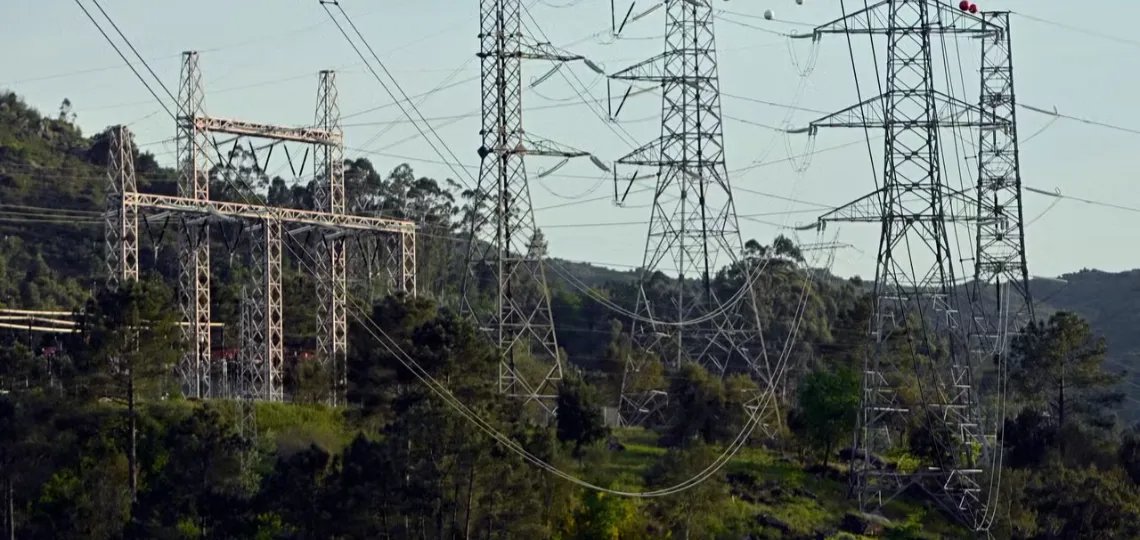
The European Commission has prioritised two new electricity interconnections between France and Spain as part of a group of eight designated “Energy Highways”, forming the foundation of a pan-European network project. The goal is to raise the France–Iberian Peninsula exchange capacity to 8 GW by 2040, up from around 2.5 GW currently, to improve renewable energy integration and enhance energy security.
A €1,200bn infrastructure plan
The entire project, estimated at €1,200bn ($1,296bn), involves transmission system operators (TSOs) such as RTE (France), Red Eléctrica de España (REE) and Redes Energéticas Nacionais (REN). The RTE–REE joint venture Inelfe is managing the cross-border interconnections, including those crossing the Pyrenees. Financial backing is provided by the Connecting Europe Facility for Energy (CEF-E), which allocates a proposed €29.9bn ($32.3bn) budget for 2028–2034 to projects of common interest (PCI).
The Iberian blackout as political catalyst
The April blackout that affected the entire Spanish and Portuguese grid, resulting in 8 deaths and a sudden loss of 15 GW, has been treated as a wake-up call in Brussels. Investigations pointed to failures in voltage management by REE and the unexpected disconnection of the Franco-Spanish interconnection. Madrid and Lisbon have used the incident to pressure France, accused of delaying the peninsula’s integration into the continental market.
Lowering prices through cross-border arbitrage
The European Commission aims to leverage these infrastructures to reduce the electricity price gap between Europe and global competitors. The goal is to export Iberian renewable energy surpluses, especially during solar peaks. The interconnections are expected to enable the recovery of up to 310 TWh of production by 2040 that would otherwise be curtailed.
Hydrogen, cybersecurity and strategic control
Two of the eight corridors concern low-carbon hydrogen transport, placing the Iberian Peninsula at the centre of an export axis to Germany via France. The new EU regulations introduce stricter cybersecurity and investment control requirements to protect strategic infrastructure, potentially limiting access for foreign entities deemed high-risk.
Impact on transmission operators
REE, weakened by the technical findings of the blackout, nonetheless benefits from shared responsibility with Brussels under the PCI framework. RTE is caught between European commitments to double its interconnections by 2035 and domestic political resistance, especially in the Pyrenees. The pressure to meet Commission-imposed deadlines could turn interconnections into politically monitored obligations.
Industry, flexibility and supply security
For renewable electricity producers, increased export capacity offers new business models focused on intra-European trade. On the French side, the reinforced interconnections offer a flexibility buffer to balance peaks in nuclear or hydro output while enhancing security of supply in southwestern Europe.