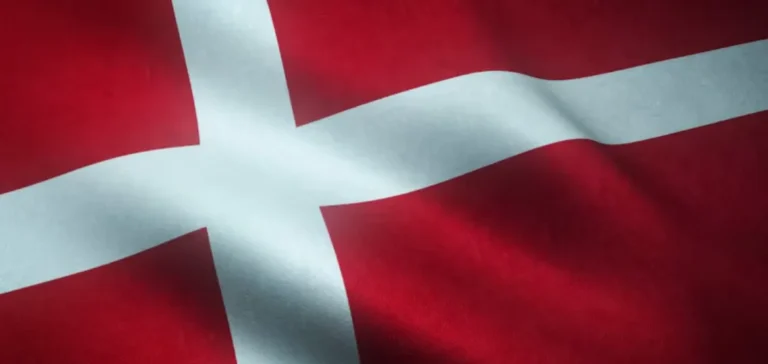
Denmark forms industrial alliance to prepare for a civil nuclear comeback

A coalition of Danish industry groups, unions and investors launches a platform in support of modular nuclear power, aiming to develop firm low-carbon capacity to sustain industrial competitiveness.

Share:

Comprehensive energy news coverage, updated nonstop

Annual subscription

8.25€/month*

*billed annually at 99€/year for the first year then 149,00€/year ​

Unlimited access • Archives included • Professional invoice

OTHER ACCESS OPTIONS

Monthly subscription

Unlimited access • Archives included

5.2€/month*
then 14.90€ per month thereafter

FREE ACCOUNT

3 articles offered per month

FREE

*Prices are excluding VAT, which may vary depending on your location or professional status

Since 2021: 35,000 articles • 150+ analyses per week

The creation of the Nuclear Power Alliance in Denmark marks a strategic shift in a country historically opposed to civil nuclear energy. The group brings together major industrial actors, a trade union, a research foundation and an investment fund. They share a common goal: to integrate small modular reactors (SMRs) into Denmark’s future energy mix, with a clearly stated industrial objective.

A softened legal framework under economic pressure

Since 1985, a parliamentary resolution has prohibited the construction of nuclear power plants in Denmark. This non-constitutional ban could be lifted by a simple majority. In May 2025, a majority of members of parliament approved the formal examination of the nuclear option as part of the 2020 Climate Act, which mandates yearly climate planning through to 2045.

The Nuclear Power Alliance aims to contribute from this early stage as a technical interlocutor for the government. Its declared aim is to anchor the nuclear debate within an industrial, economic and scientific framework, rather than leaving it solely in the ideological domain.

A coalition structured around industrial interests

The Confederation of Danish Industry (DI) is coordinating the initiative, with a focus on controlling energy costs for electricity-intensive industries. The Dansk Metal trade union supports the move due to the skilled job opportunities it would generate in nuclear engineering. Topsoe, a technology provider for the hydrogen sector, views SMRs as a stable power source to secure supply for its industrial customers.

The Novo Nordisk Foundation acts as a research financier, with plans to support SMR demonstration projects and related academic programmes. Engineering firm Niras aims to compete for future studies, design and decommissioning contracts. Investment fund 92 Capital, already active in Sweden and Finland, is positioning itself as a Nordic nuclear project backer.

A tool to strengthen power supply security

Denmark’s power mix is heavily reliant on wind and solar, but remains structurally dependent on regional interconnectors. SMRs are seen as a flexible solution to stabilise the production of green hydrogen, which is currently exposed to electricity price volatility on the spot market.

The combination of offshore wind, SMRs and electrolysis could enable the signing of long-term corporate PPA (Power Purchase Agreement) contracts, complementing existing renewables-based deals. This approach aims to reduce the energy price risk premium that burdens industrial investment decisions.

Strategic positioning within the European SMR alliance

Beyond its domestic energy agenda, the alliance seeks to position Denmark as a key player in the European SMR value chain. The European Industrial Alliance on SMRs, led by the European Commission, aims to build a joint industrial offering by the early 2030s. Denmark is seeking to host research centres, engineering offices and joint ventures with technology developers.

Alignment with EURATOM standards, compliance with international sanctions, and the selection of Western partners enhance Denmark’s attractiveness as a neutral platform for cross-border nuclear projects. Initial deployments could take place abroad, particularly in the Baltic or Nordic regions.

Implications for Nordic power markets

Introducing nuclear capacity in Denmark would directly affect electricity flows in Northern Europe. It would reduce the need for forced wind exports during periods of overproduction and for imports during low production, thus strengthening autonomy and stabilising regional spot prices.

SMRs offer the level of granularity needed to participate in Nordic capacity and reserve markets. Their integration into these systems would help provide flexibility that is difficult to achieve with renewables alone. Danish industrial clusters would benefit from more diversified options to secure long-term power supply.

A political signal for Europe’s energy value chain

The support of core economic actors for this initiative sends a clear message to suppliers and regulators across Europe. By positioning itself as a potential host or partner for SMR projects, Denmark aims to influence upcoming decisions on investment allocation, technology standards and governance of the nuclear supply chain.

This repositioning could also act as leverage in European discussions on green taxonomy, low-carbon industrial policy and access to EU infrastructure funding. A Danish nuclear engagement would strengthen the bloc of countries supporting technological diversification in the path to net zero.
The Japanese government plans to fund up to 30% of loans required for nuclear projects, aiming to accelerate reactor restarts and double the share of nuclear energy in its energy mix by 2040.
French nuclear reactor developer Newcleo has submitted its lead-cooled small modular reactor design to Euratom, initiating the first regulatory phase to integrate nuclear non-proliferation safeguards at the European level.
French state utility EDF has increased the maximum estimated cost for building six new nuclear reactors to €72.8 billion ($85.29 billion), representing a 40% rise over the original figure.
US-based Holtec has signed a memorandum of understanding with Hungary’s energy group MVM to assess the deployment of its SMR-300 technology, strengthening bilateral nuclear cooperation and opening prospects for a new market in Central Europe.
California-based startup Radiant has secured $300mn to build its first factory in Tennessee and prepare for the mass production of miniature nuclear reactors for off-grid applications.
Terra Innovatum has increased its interactions with the Nuclear Regulatory Commission to advance licensing of its SOLO™ micro-modular reactor, despite the partial shutdown of the US federal government.
The US nuclear regulator has extended the operating licences of three Illinois reactors by 20 years, strengthening Constellation's long-term industrial outlook for the Clinton and Dresden sites.
The SATURNE Industrial Chair aims to develop innovative uranium extraction methods, with joint funding from Orano and the National Research Agency over a four-year period.
US-based X-energy has signed a reservation agreement with South Korea's Doosan Enerbility to secure key components for its small modular nuclear reactors.
Samsung Heavy Industries has received Approval in Principle for a floating nuclear plant featuring two SMART100 reactors, marking a step toward the commercialisation of offshore small modular reactors.
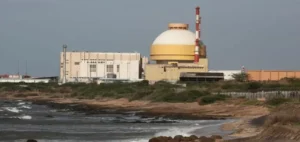
The Indian government proposes a unified legal framework for nuclear energy, aiming to boost private investment and increase installed capacity to 100 GW by 2047.
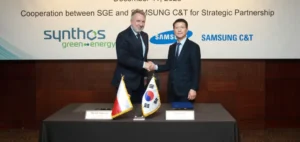
Samsung C&T strengthens its presence in modular nuclear energy in Europe by signing an agreement with Synthos Green Energy to develop up to 24 SMRs in Poland and several Central European countries.
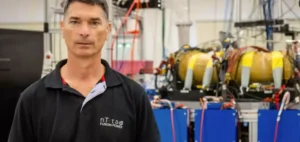
Israeli firm nT-Tao and Ben-Gurion University have developed a nonlinear control system that improves energy stability in fusion plasmas, strengthening the technical foundation of their future compact reactors.
The Indian government has introduced a bill allowing private companies to build and operate nuclear power plants, ending a state monopoly in place for over five decades.
Natura Resources enters a new regulatory phase for its molten salt reactor MSR-1, following the signing of a framework agreement with the US Department of Energy under the Reactor Pilot Program.
Norwegian Nuclear Decommissioning is surveying 22 localities to assess their interest in hosting storage facilities for radioactive waste from the country’s former research reactors.
Electricité de France's Flamanville 3 reactor has reached full power for the first time, marking a key industrial milestone in the deployment of EPRs in Europe, despite cost overruns reaching EUR23.7bn ($25.7bn).
GE Vernova Hitachi’s BWRX-300 small modular reactor has passed a key regulatory hurdle in the United Kingdom, opening the door to potential commercial deployment, despite no current plans for construction.
Molten salt reactor developer Natura Resources has acquired Shepherd Power and partnered with NOV to scale up modular reactor manufacturing by the next decade.
China National Nuclear Corporation expects commercial operation in 2026 for its ACP100 reactor, following successful cold testing and completion of critical structures in 2025.

All the latest energy news, all the time

Annual subscription

8.25€/month*

*billed annually at 99€/year for the first year then 149,00€/year ​

Unlimited access - Archives included - Pro invoice

Monthly subscription

Unlimited access • Archives included

5.2€/month*
then 14.90€ per month thereafter

*Prices shown are exclusive of VAT, which may vary according to your location or professional status.

Since 2021: 30,000 articles - +150 analyses/week.