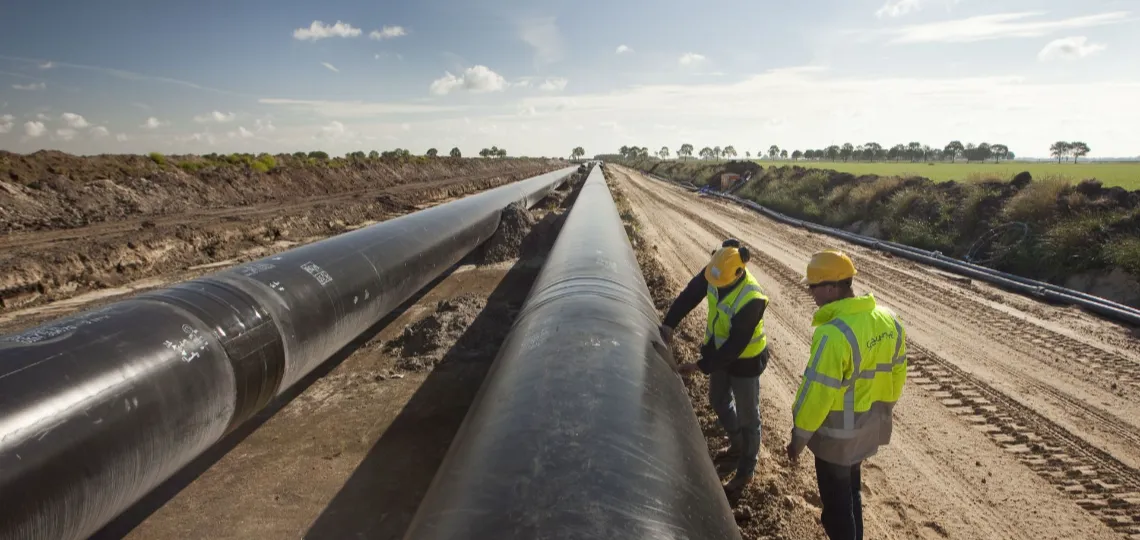
Gasunie Netherlands and Gasunie Germany have completed a large-scale European tendering process for the supply of onshore pipelines for next-generation energy infrastructure. The process concluded with the signing of framework contracts with six industrial groups. The total value of the agreements reaches up to €2.5bn ($2.69bn), including a €1bn option for carbon dioxide transport projects.
Six companies to secure the supply chain
The framework contracts have been awarded to Cimolai, Corinth Pipeworks, Mannesmann Grossrohr, Europipe, Mannesmann Line Pipe and EEW. Each contract runs for an initial period of four years, with two possible two-year renewals, for a maximum duration of eight years. The contracts are divided into lots based on the length and diameter of the pipelines to be supplied, tailored to the specific needs of upcoming projects.
Procurement strategy managed directly by Gasunie
Gasunie has opted to purchase materials directly from the manufacturers before delivering them to construction contractors. This “management delivery” system aims to anticipate logistical needs and ensure the availability of strategic components for onshore infrastructure. The method is designed to optimise construction timelines and reduce the risk of supply disruptions on key projects.
Targeted projects in the Netherlands and Germany
The pipelines supplied under these contracts will be used for several ongoing and upcoming projects, including the northern section of the Dutch national hydrogen network, the Delta Rhine Corridor, and various German transport infrastructures. The flexible structure of the contracts allows Gasunie to launch mini-tenders to adjust supply volumes according to each project development phase.
Selection criteria focused on environmental impact
According to Bart Leenders, Chief Technical Officer at Gasunie, the selected industrial groups were evaluated on cost-quality balance while including emissions reduction targets in material production. Producing one tonne of steel generates an average of 2.2 tonnes of CO₂, but using scrap-based steel can reduce emissions by over 80 %. This requirement is maintained throughout the duration of the contracts to ensure a consistent standard.