Congo’s export quotas tighten global cobalt supply

The Democratic Republic of Congo imposes strict cobalt export limits for 2026, tightening global supply amid sustained demand and paving the way for Indonesia and recycling to play a larger role.
Share:

Comprehensive energy news coverage, updated nonstop

Annual subscription

8.25$/month*

*billed annually at 99$/year for the first year then 149,00$/year ​

Unlimited access • Archives included • Professional invoice

OTHER ACCESS OPTIONS

Monthly subscription

Unlimited access • Archives included

5.2$/month*
then 14.90$ per month thereafter

FREE ACCOUNT

3 articles offered per month

FREE

*Prices are excluding VAT, which may vary depending on your location or professional status

Since 2021: 35,000 articles • 150+ analyses per week

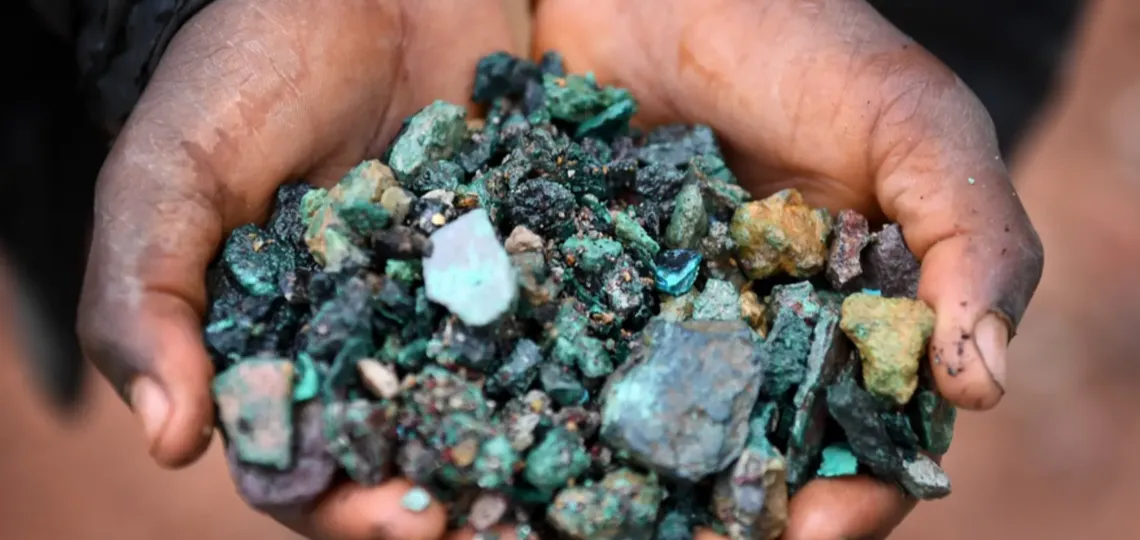
The Democratic Republic of Congo, the world’s leading cobalt producer, has imposed new export restrictions for 2026, replacing a previous ban with an annual quota system capped at 96,600 metric tons. This volume represents less than half of the country’s 2024 production, which accounted for 74.5% of global supply, according to S&P Global Market Intelligence data.


The decision has been seen by market participants as a major disruption. The announced quotas fall well short of industry expectations and risk triggering a structural cobalt deficit, leading to upward price pressure. Following the announcement, the cobalt hydroxide CIF China price surged 69.9% between September 21 and December 9, reaching $54,674.58 per metric ton. S&P Global CERA analysts forecast European metal prices to peak in the first quarter of 2026 before gradually easing under the new export regime.

Restricted supply and market stress

The Congolese restrictions have caused a sharp drop in shipments to China, the country’s main customer. In October, China’s imports of Congolese cobalt hydroxide fell 86.9% to 6,346 metric tons, down from 48,608 metric tons in May. Most shipments remain undelivered, intensifying pressure on global stockpiles.

Meanwhile, producers are withholding sales in anticipation of higher prices, fuelling widespread destocking. Uncertainty over available volumes is increasing price volatility and complicating planning for industries dependent on cobalt, especially battery and electronics manufacturers.

Indonesia’s gradual emergence

Amid the disruption, Indonesia is emerging as a potential supply centre. The country’s mined cobalt output is projected to rise 39.1% in 2026 to reach 53,318 metric tons, with a further 25.3% increase expected in 2027. This growth is tied to the phased commissioning of high-pressure acid leach nickel facilities, with 658,000 metric tons of annual capacity under construction.

However, with refined nickel prices falling to $14,073.74 per metric ton in December, investment incentives remain limited. Actual output may therefore fall short of targets.

Recycling and technology alternatives

Simultaneously, China’s recent approval of black mass imports has boosted recycling prospects as a means to offset shortages. According to a 2024 report by S&P Global Mobility, cobalt recovery rates from recycled materials can exceed 95%, depending on the technology used.

Prolonged high prices are also driving the shift toward lower-cobalt or cobalt-free technologies. Automaker Tesla has reduced the cobalt content in its batteries since 2020. Lithium iron phosphate batteries, which contain no cobalt, are increasingly adopted in electric vehicles.

In 2025, the battery sector accounted for 70% of global cobalt consumption, divided between consumer electronics (37%) and vehicle batteries (33%). Cobalt usage in electric vehicles fell short of expectations as nickel-cobalt-manganese batteries were increasingly replaced by lithium iron phosphate alternatives.

JX Advanced Metals has sold its share in the Quechua project in Peru to Glencore, confirming its withdrawal from mining operations in favour of materials used in semiconductors and electronic infrastructure.
GE Vernova is working with the US government to increase its yttrium stockpiles, a critical metal now facing export restrictions from China, disrupting global industrial supply chains.
Brasília links a major tax fraud investigation to talks with Washington, combining demands for financial transparency with negotiations over U.S. access to Brazilian rare earths.
The European Union criticises China's export licence procedure on rare earths, arguing that it increases the dependency of European manufacturers on a coercive mechanism central to critical industrial supply chains.
London deploys a regulatory framework to secure critical mineral supplies by 2035, limiting dependence on single-country sourcing while developing a domestic lithium and tungsten industry.
Mining group BHP has re-entered talks to acquire Anglo American, months after the latter announced a copper-focused merger with Canadian firm Teck Resources.
80 Mile PLC has reached a binding Heads of Terms agreement with USFM Corporation for a $30 million investment in exchange for 51% of the Disko-Nuussuaq project in Greenland, a key step in developing this strategic resource.
Ramaco Resources and the U.S. Department of Energy’s National Energy Technology Laboratory partner to develop extraction and processing technologies for rare earth elements from the Brook Mine in Wyoming.
Brazilian producer Sigma Lithium has been included in a thematic index by Morgan Stanley grouping US-listed companies considered essential to national security and strategic supply chains.
First Lithium Minerals begins a field programme at its Lidstone project, aiming to identify gold or base metal drilling targets in a historically underexplored greenstone belt.
CMSI launches a public consultation until 17 November to finalise a common mining standard designed to simplify industrial requirements and strengthen global adoption.
The Canadian government supports a pilot phosphorus purification project in Quebec with public funding aimed at strengthening the national strategic minerals supply chain.
Energy Fuels has completed a $700mn fundraising through 0.75% convertible notes, aimed at supporting its rare earth and uranium projects.
Kinshasa replaces export ban with a quota system covering just half of its output, triggering a price surge and global supply tensions.
TETRA Technologies announces a sharp increase in mineral resources in Arkansas, including bromine, lithium, and for the first time magnesium and manganese, across its 40,000 acres of brine concessions.
US-based EnergyX will install its lithium pilot plant in Texarkana, investing $20mn on the TexAmericas Center industrial site and announcing the creation of over 40 skilled jobs.
TexPower entrusts its strategy to reindustrialise lithium iron phosphate in the United States to Bader Almonawer, appointed president to lead the company’s industrial and operational development from Houston.
The Barroso project, considered strategic for the European Union, faces a new delay due to administrative setbacks involving a pending land easement approval.
Piedmont Lithium has completed its merger with Sayona Mining, giving birth to Elevra Lithium, a new mining group focused on hard-rock lithium with an expanded presence in North America and Australia.
Canada and Germany have signed a joint declaration of intent to secure their supply chains for strategic minerals such as lithium, nickel and rare earths.

All the latest energy news, all the time

Annual subscription

8.25$/month*

*billed annually at 99$/year for the first year then 149,00$/year ​

Unlimited access - Archives included - Pro invoice

Monthly subscription

Unlimited access • Archives included

5.2$/month*
then 14.90$ per month thereafter

*Prices shown are exclusive of VAT, which may vary according to your location or professional status.

Since 2021: 30,000 articles - +150 analyses/week.