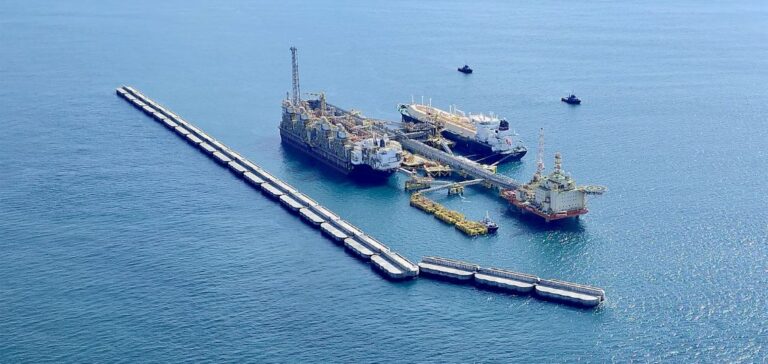
bp successfully loads first LNG cargo from Greater Tortue Ahmeyim project

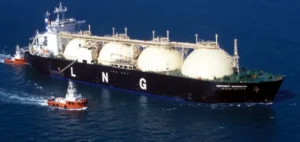
bp has safely loaded the first liquefied natural gas (LNG) cargo from the Greater Tortue Ahmeyim (GTA) Phase 1 project, marking Mauritania and Senegal’s entry into the global LNG export market.

Share:

Comprehensive energy news coverage, updated nonstop

Annual subscription

8.25$/month*

*billed annually at 99$/year for the first year then 149,00$/year ​

Unlimited access • Archives included • Professional invoice

OTHER ACCESS OPTIONS

Monthly subscription

Unlimited access • Archives included

5.2$/month*
then 14.90$ per month thereafter

FREE ACCOUNT

3 articles offered per month

FREE

*Prices are excluding VAT, which may vary depending on your location or professional status

Since 2021: 35,000 articles • 150+ analyses per week

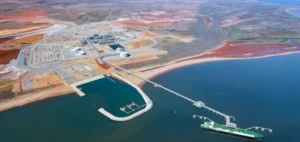
On April 17, 2025, bp announced the successful loading of its first liquefied natural gas (LNG) cargo from the offshore Greater Tortue Ahmeyim (GTA) project, located between Mauritania and Senegal. This first LNG export marks a key milestone for both countries as new LNG exporters, while also confirming the strategic progress of the GTA Phase 1 project, which aligns with bp’s goals to develop its upstream operations.

The export of this first cargo, transferred from the floating liquefied natural gas (FLNG) vessel located 10 kilometres offshore, represents a significant step for bp, marking one of its first major initiatives in 2025. This project is one of ten major start-ups expected by the company by 2027, as part of its growth strategy in the oil and gas sector. Gordon Birrell, bp’s Executive Vice President of Production and Operations, celebrated this achievement, highlighting the importance of the project for global energy markets.

The GTA project is one of Africa’s deepest offshore developments, with gas resources located at depths of 2,850 metres. It has been designated as a “project of strategic national importance” by the governments of Mauritania and Senegal. Once completed, GTA Phase 1 is expected to produce around 2.4 million tonnes of LNG per year, contributing to meeting global energy needs, while also providing some gas volumes for domestic markets in both countries once their infrastructure is ready.

The launch of LNG exports also marks a major development for bp, which established its presence in Mauritania and Senegal in 2017. The project has generated over 3,000 local jobs and engaged nearly 300 local companies. Additionally, bp actively supports local economic development through social investment programmes, particularly in sectors such as fishing, health, vocational training, and local entrepreneurship.

A strategic project for host countries

The governments of Mauritania and Senegal have welcomed this launch, which marks a significant milestone in diversifying their economies through offshore energy resources. Dave Campbell, Senior Vice President for Mauritania and Senegal at bp, expressed pride in the partnership, emphasising the strong relationships established with local authorities and communities. He also noted that the project had trained 47 apprentice technicians, contributing to the development of local skills for future offshore operators.

A long-term vision for the region

The GTA project is part of a long-term development strategy for the region, with investments in areas such as microfinance, women’s cooperatives, health, education, and business management training. These initiatives aim to improve the quality of life for local communities while creating sustainable economic opportunities.
With the addition of Nguya FLNG to Tango, Eni secures 3 mtpa of capacity in Congo, locking in non-Russian volumes for Italy and positioning Brazzaville within the ranks of visible African LNG exporters.
Japan’s JERA has signed a liquefied natural gas supply contract with India’s Torrent Power for four cargoes annually from 2027, marking a shift in its LNG portfolio toward South Asia.
The merger of TotalEnergies and Repsol’s UK assets into NEO NEXT+ creates a 250,000 barrels of oil equivalent per day operator, repositioning the majors in response to the UK’s fiscal regime and basin decline.
Climate requirements imposed by the European due diligence directive are complicating trade relations between the European Union and Qatar, jeopardising long-term gas supply as the global LNG market undergoes major shifts.
A report forecasts that improved industrial energy efficiency and residential electrification could significantly reduce Colombia’s need for imported gas by 2030.
Falling rig counts and surging natural gas demand are reshaping the Lower 48 energy landscape, fuelling a rebound in gas-focused mergers and acquisitions.
The Nigerian government has approved a payment of NGN185bn ($128 million) to settle debts owed to gas producers, aiming to secure electricity supply and attract new investments in the energy sector.
Riley Exploration Permian has finalised the sale of its Dovetail Midstream entity to Targa Northern Delaware for $111 million, with an additional conditional payment of up to $60 million. The deal also includes a future transfer of equipment for $10 million.
Stanwell has secured an exclusive agreement with Quinbrook for the development of the Gladstone SDA Energy Hub, combining gas turbines and long-duration battery storage to support Queensland’s electricity grid stability.
The growth of US liquefied natural gas exports could slow if rising domestic costs continue to squeeze margins, as new volumes hit an already saturated global market.
Turkmenistan is leveraging the Global Gas Centre to build commercial links in Europe and South Asia, as it responds to its current dependence on China and a shifting post-Russian gas market.
The Marmara Ereğlisi liquefied natural gas (LNG) terminal operated by BOTAŞ is increasing its regasification capacity, consolidating Türkiye’s role as a regional player in gas redistribution toward the Balkans and Southeast Europe.
Budapest contests the European agreement to ban Russian natural gas imports by 2027, claiming the measure is incompatible with its economic interests and the European Union's founding treaties.
The European Union has enshrined in law a complete ban on Russian gas by 2027, forcing utilities, operators, traders and states to restructure contracts, physical flows and supply strategies under strict regulatory pressure.
The partial exploitation of associated gas from the Badila field by Perenco supplies electricity to Moundou, highlighting the logistical and financial challenges of gas development in Chad.
A new regulation requires gas companies to declare the origin, volume and duration of their contracts, as the EU prepares to end Russian imports.
Saudi Aramco has launched production at the unconventional Jafurah gas field, initiating an investment plan exceeding $100bn to substitute domestic crude and increase exportable flows under OPEC+ constraints.
By mobilising long-term contracts with BP and new infrastructure, PLN is driving Indonesia’s shift toward prioritising domestic LNG use, at the centre of a state-backed investment programme supported by international lenders.
TotalEnergies, TES and three Japanese companies will develop an industrial-scale e-gas facility in the United States, targeting 250 MW capacity and 75,000 tonnes of annual output by 2030.
The UK government has ended its financial support for TotalEnergies' liquefied natural gas project in Mozambique, citing increased risks and a lack of national interest in continuing its involvement.

All the latest energy news, all the time

Annual subscription

8.25$/month*

*billed annually at 99$/year for the first year then 149,00$/year ​

Unlimited access - Archives included - Pro invoice

Monthly subscription

Unlimited access • Archives included

5.2$/month*
then 14.90$ per month thereafter

*Prices shown are exclusive of VAT, which may vary according to your location or professional status.

Since 2021: 30,000 articles - +150 analyses/week.