Declining demand for LPG in Europe

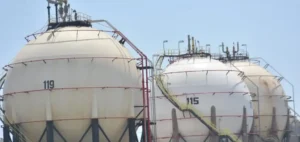
Despite an abundant supply of LPG, market trends in Europe are giving rise to many uncertainties, following two winters of low demand.

Share:

Baisse demande GPL Europe

Comprehensive energy news coverage, updated nonstop

Annual subscription

8.25$/month*

*billed annually at 99$/year for the first year then 149,00$/year ​

Unlimited access • Archives included • Professional invoice

OTHER ACCESS OPTIONS

Monthly subscription

Unlimited access • Archives included

5.2$/month*
then 14.90$ per month thereafter

FREE ACCOUNT

3 articles offered per month

FREE

*Prices are excluding VAT, which may vary depending on your location or professional status

Since 2021: 35,000 articles • 150+ analyses per week

The liquefied petroleum gas (LPG) market remains plagued by double uncertainty, after a relatively quiet heating season. On the one hand, price fluctuations in the natural gas and LNG markets. On the other, potential variations in demand in the Asian petrochemical sector. This follows two consecutive winters of weak heating demand, despite an abundant supply of LPG, mainly from US exports and refinery production. This abundance, combined with sluggish demand, exerted little pressure on prices. It has maintained them at a moderate level compared with previous years, according to data provided by Platts, a division of S&P Global Commodity Insights.

CIF NWE propane cargoes were valued at $551.75/mt on March 7, down $3.50/mt on the day but up $6.50/mt on the week. This price level, although up slightly over the week, remains below the peaks reached in February. It is also well below the September peak, marking the start of the heating season. This situation reflects the volatility of the market, influenced not only by seasonal demand but also by changes in the global geopolitical and economic context.

The focus is now on the future, with particular concern about the potential increase in demand for petrochemicals in Asia and turbulence in gas markets, which could reduce supply in Europe. The expansion of propane dehydrogenation facilities in Asia could, in the event of stronger demand, direct LPG flows from the United States eastwards, exacerbating pressure on European supply. “Persistent weakness in global petrochemical demand is a cause for concern,” commented S&P Global analysts. However, low LPG prices in the USA could exacerbate the competition, in the face of equally low naphtha and ethane values on both the US and world olefins markets.

Market Challenges and Medium-Term Outlook

The future of the petrochemical industry remains unclear, with few expectations of improved margins for the rest of the year. The outlook brightened slightly in Europe at the end of February, mainly for naphtha, but demand for LPG remains marginal. This complex dynamic raises questions about the future balance between supply and demand, with uncertainties linked to climatic conditions and changes in global energy markets.

Faced with these challenges, the LPG market is adjusting, with increased vigilance over the coming heating seasons. Market players are concerned about the possibility of rising demand in Asia and increased volatility in natural gas prices. The latter are preparing adaptive strategies, scrutinizing US supply and European storage and regasification capacities.
Pipeline natural gas deliveries from Russia to the European Union dropped by 44% in 2025, reaching their lowest level in five decades following the end of transit via Ukraine.
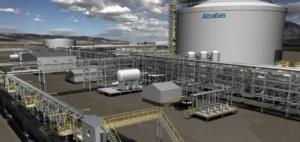
AltaGas has finalised a labour agreement with union ILWU Local 523B, ending a 28-day strike at its Ridley Island propane terminal, a key hub for Canadian exports to Asia.
Amber Grid has signed an agreement to maintain gas transit to Russia’s Kaliningrad exclave, with a daily capacity cap of 10.5 mn m³ until the end of 2030, under a framework regulated by the European Union.
Lebanon engages in a memorandum of understanding with Egypt to import natural gas and support its electricity production, with infrastructure rehabilitation and active funding searches required to secure delivery.
Australian producer Woodside has signed a binding agreement with Turkish state-owned company BOTAŞ for the delivery of 5.8 billion cubic metres of LNG starting in 2030.
Condor Energies has completed a $13.65mn private financing to deploy a second drilling rig and intensify a 12-well gas programme in Uzbekistan scheduled for 2026.
After a hiatus of more than four years, Myanmar has resumed liquefied natural gas deliveries, receiving a half-cargo in November to supply two state-funded power generation projects.
The Australian government will require up to 25% of gas extracted on the east coast to be reserved for the domestic market from 2027, in response to supply tensions and soaring prices.
Baker Hughes will deliver six gas refrigeration trains for Commonwealth LNG’s 9.5 mtpa export project in Louisiana, under a contract with Technip Energies.
Shanghai Electric begins a combined-cycle expansion project across four Iraqi provinces, aiming to boost energy efficiency by 50% without additional fuel consumption.
Zefiro Methane, through its subsidiary Plants & Goodwin, completes an energy conversion project in Pennsylvania and plans a new well decommissioning operation in Louisiana, expanding its presence to eight US states.
The Council of State has cancelled the authorisation to exploit coalbed methane in Lorraine, citing risks to the region's main aquifer and bringing an end to a legal battle that began over a decade ago.
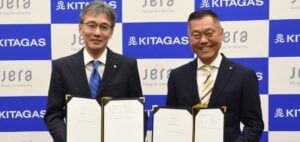
Japanese power producer JERA will deliver up to 200,000 tonnes of liquefied natural gas annually to Hokkaido Gas starting in 2027 under a newly signed long-term sale agreement.
An agreement announced on December 17, 2025 provides for twenty years of deliveries through 2040. The package amounts to 112 billion new Israeli shekels (Israeli shekels) (NIS), with flows intended to support Egyptian gas supply and Israeli public revenues.
Abu Dhabi’s national oil company has secured a landmark structured financing to accelerate the development of the Hail and Ghasha gas project, while maintaining strategic control over its infrastructure.
U.S.-based Sawgrass LNG & Power celebrates eight consecutive years of LNG exports to The Bahamas, reinforcing its position in regional energy trade.
Kinder Morgan restored the EPNG pipeline capacity at Lordsburg on December 13, ending a constraint that had driven Waha prices negative. The move highlights the Permian’s fragile balance, operating near the limits of its gas evacuation infrastructure.
ENGIE activates key projects in Belgium, including an 875 MW gas-fired plant in Flémalle and a battery storage system in Vilvoorde, to strengthen electricity supply security and grid flexibility.
Hungary has signed a contract with US company Chevron to import 400mn m³ of LNG per year, while maintaining a structural dependence on Russian gas through a long-term agreement with Gazprom.
Chevron Australia awards Subsea7 a major contract for subsea installation on the Gorgon Stage 3 project, with offshore operations scheduled for 2028 at 1,350 metres depth.

All the latest energy news, all the time

Annual subscription

8.25$/month*

*billed annually at 99$/year for the first year then 149,00$/year ​

Unlimited access - Archives included - Pro invoice

Monthly subscription

Unlimited access • Archives included

5.2$/month*
then 14.90$ per month thereafter

*Prices shown are exclusive of VAT, which may vary according to your location or professional status.

Since 2021: 30,000 articles - +150 analyses/week.