Stellantis and Samsung invest in new battery plant

Stellantis and Samsung's investment in a second battery plant for electric vehicles in the USA is having a considerable impact on the automotive industry.

Share:

nouvelle-usine-batteries

Comprehensive energy news coverage, updated nonstop

Annual subscription

8.25$/month*

*billed annually at 99$/year for the first year then 149,00$/year ​

Unlimited access • Archives included • Professional invoice

OTHER ACCESS OPTIONS

Monthly subscription

Unlimited access • Archives included

5.2$/month*
then 14.90$ per month thereafter

FREE ACCOUNT

3 articles offered per month

FREE

*Prices are excluding VAT, which may vary depending on your location or professional status

Since 2021: 35,000 articles • 150+ analyses per week

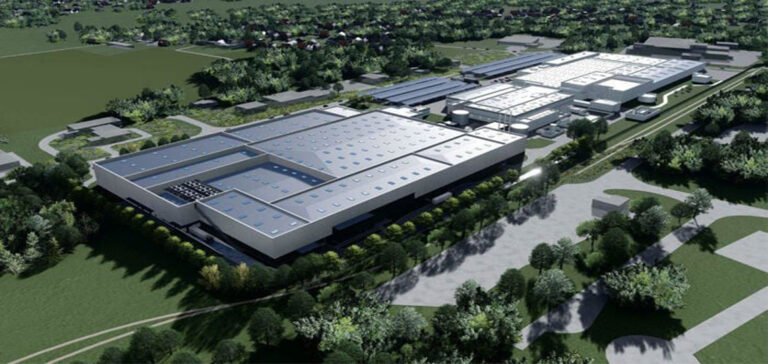
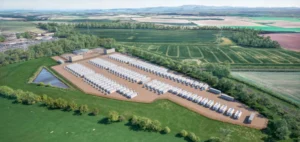
Stellantis and Samsung invest over $3.2 billion in the construction of its second gigafactory for electric car batteries in the USA.

A strategic partnership for automotive electrification

The joint venture, named StarPlus Energy, is committed to locating this new plant on the same site as its first “gigafactory” currently under construction in Kokomo, Indiana. This first plant had already attracted interest because of its initial investment, estimated at between $2.5 and $3.1 billion. However, with the addition of this new plant, the total investment planned for the two sites will reach over 6.3 billion dollars, or around 5.5 billion euros. What’s more, this expansion will create 2,800 jobs, strengthening the automotive industry and contributing to the local economy.

Increased production capacity

Scheduled to come on stream in early 2027, the new plant will have an annual production capacity of 34 gigawatt-hours (GWh). This capacity will be added to that of the first plant, bringing the total annual production capacity of the two sites to 67 GWh. These batteries will power Stellantis brand vehicles and play a key role in the transition to clean, safe and affordable mobility solutions.

A step towards carbon neutrality

Mark Stewart, Director of Operations for North America, explains that these investments are essential if we are to achieve our goal of carbon neutrality by 2038. Stellantis plans to sell 50% electric cars in the United States by 2030, with 25 new vehicle launches on the program. To achieve this, the company is committed to providing around 400 GWh of battery capacity over this period. This investment is in line with our vision of sustainable, environmentally-friendly mobility.

It is important to note that this announcement comes at a time when Stellantis and other carmakers in the USA are facing a large-scale strike, launched in mid-September by the United Auto Workers (UAW) union to demand better pay conditions. This complex situation underlines the challenges facing the automotive industry as it pursues major investments in electric mobility.

In conclusion, Stellantis and Samsung’s investment in this new battery plant for electric cars reflects a commitment to cleaner mobility and the goal of reducing carbon emissions. This will have a significant impact on the automotive industry in the United States, and shows that manufacturers are ready to meet the challenges of shaping the future of sustainable mobility.

 

Canadian company Vision Lithium has completed a private placement of 14 mn flow-through shares totalling $209,000 to support its mineral exploration projects in Québec.
Matrix Renewables has signed a turnkey agreement with Tesla to develop a 1 GWh battery energy storage system in Scotland, marking its first standalone project of this kind in the UK.
China's electricity market overhaul improves the profitability of energy storage, supporting a rapid increase in battery exports as global demand rises with data centres and power grids.
South Korea’s Tilda accelerates its entry into Vietnam with an artificial intelligence-based energy optimisation solution for solar and energy storage systems in the manufacturing sector.
Aegis Critical Energy Defence Corp. and Seetel New Energy have created Cordelia BESS to respond to Ontario’s LT2 call for proposals, aimed at strengthening energy capacity through battery storage.
esVolta finalises investment tax credit transfer for its Black Walnut storage project to Computacenter, marking a first-of-its-kind operation within its California energy portfolio.
Peregrine Energy Solutions has begun construction on a 500 MWh storage project in Texas, relying on Wärtsilä's technology and WHC's engineering expertise to enhance ERCOT grid flexibility.
The world's largest battery energy storage system enters service in Saudi Arabia, with an annual capacity of 2.2 billion kWh spread across three strategic sites in the southwest of the country.
Masdar begins commercial operations at a Stockport battery storage unit and announces two more UK projects, part of a £1bn ($1.25bn) plan for 3GWh of BESS capacity.
Australia-based storage platform Akaysha Energy has launched its first operational project, a 155 MW battery in Queensland, while confirming its expansion to over 1 GWh.
LehmanSoft Japan connected a 2MW/8.1MWh energy storage facility to the grid in Chichibu City, marking its entry into the Japanese stationary storage market.
Akuo launches a large-scale electricity storage project in Boulouparis, with a 200 MWh capacity, to support New Caledonia’s grid stability and reinforce the integration of renewable energies.
Spie and Tesla have signed a framework agreement to install battery electricity storage systems in Europe, focusing on France, Poland and Germany.
The group has won a strategic project with operator Amprion to deploy five 50 MW batteries to ease pressure on the German power grid and optimise electricity transmission.
Vena Energy has begun construction of a 408 MWh battery energy storage system in Tailem Bend, marking a new phase in the deployment of its infrastructure in Australia.
The explosion of battery storage applications in Germany is causing grid congestion and pushing Berlin to revise its regulatory framework to prevent market saturation.
The collapse in storage costs positions batteries as a key lever for dispatchable solar, but dependence on Chinese suppliers creates growing tension between competitiveness and supply chain security.
JA Solar has launched a microgrid combining 5.2 MW of solar and 2.61 MWh of storage at an industrial site in Sicily, marking its first application of the "PV+Storage+X" model in Italy.
Sinexcel has installed a 2MW/8MWh energy storage system in Matsusaka, marking a breakthrough in a regulated market after five years of technical partnerships and gradual deployment in Japan.
Inlyte Energy has successfully completed factory validation testing of its first full-scale iron-sodium battery, witnessed by Southern Company, paving the way for a pilot installation in the United States in early 2026.

All the latest energy news, all the time

Annual subscription

8.25$/month*

*billed annually at 99$/year for the first year then 149,00$/year ​

Unlimited access - Archives included - Pro invoice

Monthly subscription

Unlimited access • Archives included

5.2$/month*
then 14.90$ per month thereafter

*Prices shown are exclusive of VAT, which may vary according to your location or professional status.

Since 2021: 30,000 articles - +150 analyses/week.