SolarinBlue: A floating offshore solar power plant in the port of Sète-Frontignan

SolarinBlue has launched its first two floating solar units to supply renewable electricity to the port of Sète-Frontignan. This innovative technology is distinguished by its eco-friendly, lightweight, robust and recyclable nature.

Share:

Comprehensive energy news coverage, updated nonstop

Annual subscription

8.25€/month*

*billed annually at 99€/year for the first year then 149,00€/year ​

Unlimited access • Archives included • Professional invoice

OTHER ACCESS OPTIONS

Monthly subscription

Unlimited access • Archives included

5.2€/month*
then 14.90€ per month thereafter

FREE ACCOUNT

3 articles offered per month

FREE

*Prices are excluding VAT, which may vary depending on your location or professional status

Since 2021: 35,000 articles • 150+ analyses per week

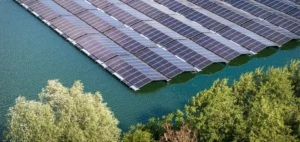
SolarinBlue has launched its first floating offshore solar power plant in the Mediterranean. Specially designed for the maritime environment, it will supply the port of Sète-Frontignan (34) with renewable electricity. This new technology is ahead of offshore wind power and is part of the decarbonization strategy of the port of Sète. SolarinBlue aims to be the world leader in floating offshore solar PV.

First floating offshore solar power plant in the Mediterranean

The technology startup SolarinBlue has launched the first two units of its Sun’Sète project in the Mediterranean. They are specially designed for the maritime environment and will supply the port of Sète-Frontignan with renewable electricity.

The Sun’Sète project has been developed from 2021 and has obtained the approval of the port authorities and all the necessary administrative authorizations in 2022. It will be composed of 25 floating units for a total power of 300 kWp on 0.5 hectare. The energy produced will be transported by a submarine cable and will supply the infrastructures of the port of Sète-Frontignan with renewable electricity.

The floating offshore solar power plant, an economic and ecological project

The SolarinBlue float is distinguished by four major innovations that make it robust and competitive. It is lightweight, making it easy to build, assemble and operate at sea. It is also eco-designed and 95% recyclable thanks to a treated steel frame and recyclable High Density Polyethylene (HDPE) floats. The technology withstands 12-meter troughs and 200 km/h winds, making it robust and lightweight. It also has a lifespan of 30 years. Finally, SolarinBlue has developed a rapid installation system for environmentally friendly helical anchors that minimize the impact on the seabed.

The objective is to meet the massive needs for decarbonized electricity in populated areas

More than 3.8 billion people reside within 150 km of a coastline, making it an ideal location for offshore floating solar photovoltaic power generation. Indeed, it allows to meet the massive needs of decarbonized electricity in populated areas thanks to these untapped photovoltaic production deposits. The floating offshore solar power plant developed by SolarinBlue thus enables this vast decarbonization potential to be realized.

Offshore floating photovoltaic is considered as the answer to the land constraint of terrestrial photovoltaic. Indeed, it does not require large land areas, which avoids the competition of use that limits the expansion of solar energy. In addition, floating offshore photovoltaic is very competitive. It is free from land use conflicts while being economically profitable.

Decarbonizing port facilities

The deployment of floating photovoltaic farms at sea is also a response to the decarbonization of port, industrial or recreational facilities, as well as island systems. The European Union has foreseen an increasing electrification of port uses in the framework of the Green Pact for Europe and “Fit for 55”. This is an opportunity for offshore floating photovoltaic farms to develop and contribute to the reduction of carbon emissions.

Possible synergies with offshore wind power

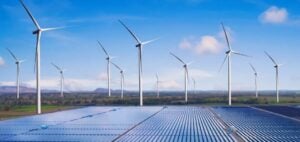
Offshore floating photovoltaics can benefit from synergies with offshore wind farms, whether they are installed or floating. This is made possible through connection pooling. Indeed, photovoltaic and wind power benefit from a favorable abundance, because the sun produces more in summer, against wind power in winter.

The floating offshore solar power plant, a made-in-Occitania project

The SolarinBlue technology is designed in France and developed by about 20 people, including mechanical engineers, hydro-dynamicists, naval architects and roboticists. Tests in the basin preceded the launching of the demonstrator. The project was manufactured and assembled in the port of Sète by local companies. About thirty companies from Occitania have been mobilized for the environmental studies, the supply of materials, the assembly, the logistics and the tests of an innovative and ecological anchorage.


T1 Energy will supply Treaty Oak with 900MW of solar modules over three years, leveraging domestically produced cells from Austin to meet increasing regulatory requirements.
Solarpro commissions Hungary’s largest photovoltaic plant using 700,000 advanced modules supplied by LONGi, with an expected annual output of 470 GWh.
UK-based manufacturer Awendio Solaris plans to build a 2.5 GW solar industrial platform, expandable to 5 GW, in Quebec, targeting North American markets with a 100% regional supply chain.
Technique Solaire has secured €40mn ($43.5mn) in junior debt from BNP Paribas Asset Management to structure two solar portfolios totalling 392 MWp across France, Spain and the Netherlands.
EDF Power Solutions UK has appointed METLEN to lead engineering and construction for the 400MW Longfield solar farm in Essex, with commissioning scheduled for 2030.
Independent power producer Neoen has secured six agrivoltaic projects totalling 124 MWp, reinforcing its position as the leading winner in French solar tenders since 2021.
As the photovoltaic industry enters a phase of deep restructuring, the duel between TOPCon 4.0 and heterojunction technologies is redefining manufacturers’ margins. In 2026, reducing production costs becomes the primary strategic lever for global market leaders.
JA Solar and Trinasolar top Wood Mackenzie’s latest semiannual ranking despite a sector-wide net loss of $2.2 billion. Industrial leaders are strengthening their grip on global photovoltaic module supply through rigorous financial discipline.
BayWa r.e. has finalised the sale of a 46 MW floating solar park, the country’s largest, to a Dutch public-local consortium, marking a new step in the decentralised structuring of the solar market in the Netherlands.
The ATUM Solar industrial complex, located in Ain Sokhna, will include three factories—two of 2 GW capacity—backed by a $220mn investment from an international consortium.
AMEA Power has completed the commercial commissioning of a 120 MWp solar project in Kairouan, marking a national first in Tunisia for a renewable energy installation of this scale.
The Gerus plant becomes the first solar installation in Namibia to sell electricity directly on the Southern African Power Pool regional market.
Japanese conglomerate Tokyu teams up with Global Infrastructure Management and Clean Energy Connect to build 800 low-voltage solar plants totalling 70MWDC, under an off-site power purchase agreement for its facilities.
Pivot Energy has secured $225mn in funding from three banking partners to support a portfolio of 60 community solar power plants across nine US states.
Masdar’s exit ends ReNew Energy's privatisation attempt, despite offer rising to $8.15 per share.
California surpassed 52.3% of electricity from renewables and large hydro in 2024, marking a major energy milestone while increasing pressure on storage, permitting and curtailed production.
European Energy France has secured two wins in tenders issued by the French Energy Regulatory Commission for its agrivoltaic parks in Saint-Voir, with a combined capacity of 14.3 MWp and commissioning expected by late 2027.
TotalEnergies will supply Google with 1TWh of renewable electricity from a 20MW solar plant in Malaysia under a 21-year power purchase agreement.
Enviromena secured approval for its Fillongley solar farm after a local council’s refusal was overturned, despite conflicts of interest tied to public funds used to oppose the project.
According to Wood Mackenzie, the global solar inverter market will face two consecutive years of contraction after record shipments in 2024, driven by regulatory tensions in China, Europe and the United States.

All the latest energy news, all the time

Annual subscription

8.25€/month*

*billed annually at 99€/year for the first year then 149,00€/year ​

Unlimited access - Archives included - Pro invoice

Monthly subscription

Unlimited access • Archives included

5.2€/month*
then 14.90€ per month thereafter

*Prices shown are exclusive of VAT, which may vary according to your location or professional status.

Since 2021: 30,000 articles - +150 analyses/week.