New oil: Hydrogen as a competitor in Saudi Arabia

Saudi Arabia is banking on green hydrogen as an alternative to oil to fuel its futuristic Néom project, investing heavily in plants powered by renewable energy. However, despite its potential as a clean energy source, green hydrogen faces obstacles such as high production costs and storage and transport challenges.

Share:

Comprehensive energy news coverage, updated nonstop

Annual subscription

8.25€/month*

*billed annually at 99€/year for the first year then 149,00€/year ​

Unlimited access • Archives included • Professional invoice

OTHER ACCESS OPTIONS

Monthly subscription

Unlimited access • Archives included

5.2€/month*
then 14.90€ per month thereafter

FREE ACCOUNT

3 articles offered per month

FREE

*Prices are excluding VAT, which may vary depending on your location or professional status

Since 2021: 35,000 articles • 150+ analyses per week

The new oil could be green hydrogen in Saudi Arabia. This energy is currently booming worldwide, seen as one of the solutions for achieving decarbonization objectives. Saudi Arabia is betting on this resource to create its new futuristic city: Neom.

New oil to power the city of Neom

The new city of Neom is to be built along the Red Sea, on the edge of the Saudi Arabian desert. The state has invested over $500 billion to develop a city based on advanced technologies that will accommodate a million people. Saudi Arabia is betting not on oil, but ongreen, carbon-neutralhydrogen to power this electricity-hungry project.
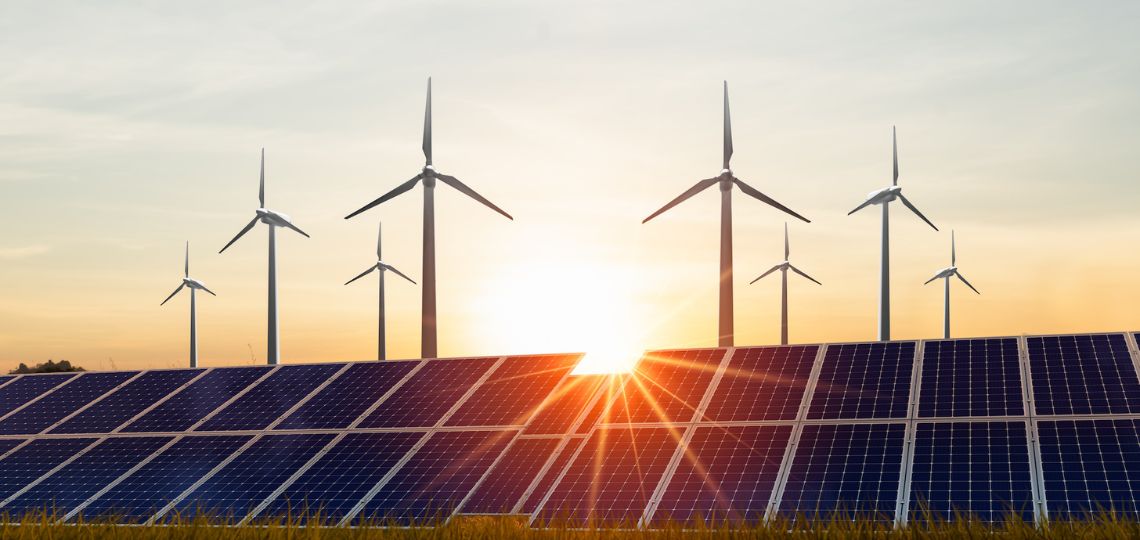
Green hydrogen: the new oil?
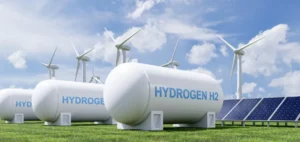
Green hydrogen is produced from renewable energies.

A new hydrogen plant to power Neom

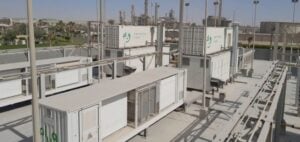
The major American gas company, Air Products & Chemicals, announced that it had been building agreen hydrogen production plant in Saudi Arabia for four years as part of this project. The plant is powered by four gigawatts of electricity from wind and solar projects stretching across the desert. However, other projects are under study.

The Middle East currently has high-quality, low-cost wind and solar energy resources, such as the 300 MW Sakaka site. An opportunity for this new project, which could propel Saudi Arabia to the forefront of green hydrogen.

Koch Blank, head of the Rocky Mountain Institute’s Breakthrough Technology program, said:

“Saudi Arabia has ridiculously cheap renewable energy. The sun shines pretty reliably every day and the wind blows pretty reliably every night. It’s hard to beat.”
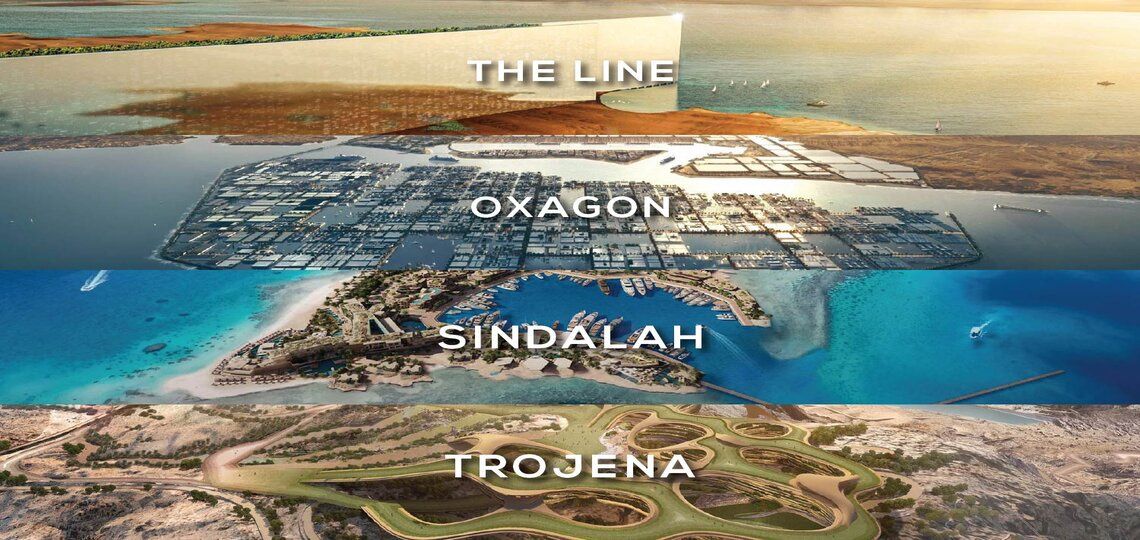
NEOM, future capital of new oil?
NEOM project for a $500 billion megalopolis in Saudi Arabia along the Red Sea coast.

An important energy source for the energy transition

Green hydrogen could be an ideal energy source for energy-intensive industries such as concrete and steel manufacturing, as well as for sea and air transport. However, Airbus has highlighted the many storage problems associated with using this energy. He believes, however, thathydrogen could be flying airplanes by 2035. Roxana

Bekemohammadi, Executive Director of the Western States Hydrogen Alliance pointed out:

“Hydrogen fuel cells will power the future of emissions-free mobility in these heavy, hard-to-elect vehicle sectors. This fact is indisputable. ”

The new oil for a new green hydrogen “rush

Many countries are currently interested in this type of energy. The European Union and Germany, in particular, have allocated major investments to develop this energy on their territory.

An Australian consortium has also developedhydrogen businesses to Singapore, thanks to 1,743 large wind turbines and 30 square miles of solar panels. However, for the Asian Renewable Energy Hub, ammonia gas could be easier to export than hydrogen. Japan has also developed its own green hydrogen company at Fukushima.

Only the USA is lagging behind in this area, despite the development of hydrogen projects in Utah, California and Nevada. In fact, natural gas is still much cheaper and more attractive.

Hydrogen: A new oil, but still limited

At present,hydrogen production still relies on fossil fuels and is therefore not climate-friendly. Indeed, to power the electrolysis plants that separate water into hydrogen and oxygen, we’d need to massively expand renewable energy production. BloombergNEF estimates that producing enough green hydrogen to meet a quarter of the world’s energy needs would require an $11 billion investment in production and storage.

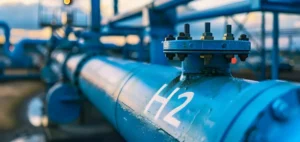
Hydrogen is also difficult to store and transport without a pipeline. Michael Liebreich, UK analyst at Bloomberg New Energy Finance said:

“It doesn’t exist in nature, so energy is needed to separate it. Its storage requires compression to 700 times atmospheric pressure, refrigeration to -253C… It carries a quarter of the energy per unit volume of natural gas… It can embrittle metal, it escapes through the smallest leaks and yes, it really is explosive”.

Finally, even if hydrogen appears to have great potential as a substitute for oil, its use remains limited by a number of obstacles, not least production costs.
Lhyfe aims to double its revenue next year, refocuses industrial priorities and plans a 30% cost reduction starting in 2026 to accelerate profitability.
Plug Power has completed the installation of a 5 MW PEM electrolyzer for Cleanergy Solutions Namibia, marking the launch of Africa’s first fully integrated green hydrogen production and distribution site.
Indian group AM Green has signed a memorandum of understanding with Japanese conglomerate Mitsui to co-finance a one million tonne per year integrated low-carbon aluminium production platform.
Next Hydrogen completes a $20.7mn private placement led by Smoothwater Capital, boosting its ability to commercialise alkaline electrolysers at scale and altering the company’s control structure.
Primary Hydrogen plans to launch its initial drilling programme at the Wicheeda North site upon receiving its permit in early 2026, while restructuring its internal exploration functions.
Gasunie and Thyssengas have signed an agreement to convert existing gas pipelines into hydrogen conduits between the Netherlands and Germany, facilitating integration of Dutch ports with German industrial regions.
The conditional power supply agreement for the Holmaneset project is extended to 2029, covering a ten-year electricity delivery period, as Fortescue continues feasibility studies.
HDF Energy partners with ABB to design a multi-megawatt hydrogen fuel cell system for vessel propulsion and auxiliary power, strengthening their position in the global maritime market.
SONATRACH continues its integration strategy into the green hydrogen market, with the support of European partners, through the Algeria to Europe Hydrogen Alliance (ALTEH2A) and the SoutH2 Corridor, aimed at supplying Europe with clean energy.
Operator GASCADE has converted 400 kilometres of gas pipelines into a strategic hydrogen corridor between the Baltic Sea and Saxony-Anhalt, now operational.
Lummus Technology and Advanced Ionics have started construction of a pilot unit in Pasadena to test a new high-efficiency electrolysis technology, marking a step toward large-scale green hydrogen production.
Nel ASA launches the industrial phase of its pressurised alkaline technology, with an initial 1 GW production capacity and EU support of up to EUR135mn ($146mn).
Peregrine Hydrogen and Tasmania Energy Metals have signed a letter of intent to install an innovative electrolysis technology at the future nickel processing site in Bell Bay, Tasmania.
Elemental Clean Fuels will develop a 10-megawatt green hydrogen production facility in Kamloops, in partnership with Sc.wén̓wen Economic Development and Kruger Kamloops Pulp L.P., to replace part of the natural gas used at the industrial site.
Driven by green hydrogen demand and state-backed industrial plans, the global electrolyser market could reach $42.4bn by 2034, according to the latest forecast by Future Market Insights.
Driven by mobility and alkaline electrolysis, the global green hydrogen market is projected to grow at a rate of 60 % annually, reaching $74.81bn in 2032 from $2.79bn in 2025.
Plug Power will supply a 5MW PEM electrolyser to Hy2gen’s Sunrhyse project in Signes, marking a key step in expanding RFNBO-certified hydrogen in southern France.
The cross-border hydrogen transport network HY4Link receives recognition from the European Commission as a project of common interest, unlocking access to funding and integration into Europe’s energy infrastructure.
The withdrawal of Stellantis weakens Symbio, which is forced to drastically reduce its workforce at the Saint-Fons plant, despite significant industrial investment backed by both public and private stakeholders.
German steelmaker Thyssenkrupp plans to cut 11,000 jobs and reduce capacity by 25% as a condition to enable the sale of its steel division to India’s Jindal Steel.

All the latest energy news, all the time

Annual subscription

8.25€/month*

*billed annually at 99€/year for the first year then 149,00€/year ​

Unlimited access - Archives included - Pro invoice

Monthly subscription

Unlimited access • Archives included

5.2€/month*
then 14.90€ per month thereafter

*Prices shown are exclusive of VAT, which may vary according to your location or professional status.

Since 2021: 30,000 articles - +150 analyses/week.