South Korean decarbonization: an “extremely ambitious and daunting” project

President Moon Jae-in announces that South Korea will end its dependence on coal by 2050 in favor of renewable energies. Despite challenges such as the construction of new coal-fired power plants, the country is committed to achieving carbon neutrality through a plan that includes measures such as a carbon tax and the rapid electrification of the transport sector.

Share:

Comprehensive energy news coverage, updated nonstop

Annual subscription

8.25$/month*

*billed annually at 99$/year for the first year then 149,00$/year ​

Unlimited access • Archives included • Professional invoice

OTHER ACCESS OPTIONS

Monthly subscription

Unlimited access • Archives included

5.2$/month*
then 14.90$ per month thereafter

FREE ACCOUNT

3 articles offered per month

FREE

*Prices are excluding VAT, which may vary depending on your location or professional status

Since 2021: 35,000 articles • 150+ analyses per week

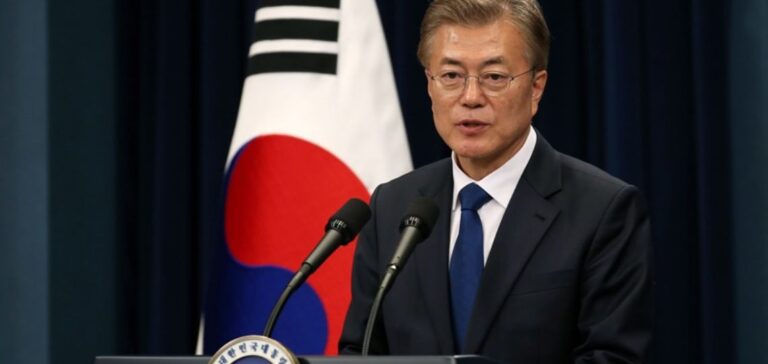
President Moon Jae-in has declared that South Korea, which relies heavily on fossil fuels to power its electricity grid, will end its dependence on coal.

South Korea targets 2050 for total decarbonization

President Moon Jae-in made this commitment in a speech to the National Assembly on Wednesday October 28.

He said the East Asian country relies heavily on fossil fuels to power its electricity grid. The aim is to end the country’s dependence on coal before 2050, and to begin the process of decarbonizing the country. Fossil fuels will be replaced by renewable energies as part of the Green New Deal announced last July, making it possible to achieve carbon neutrality.

South Korea’s commitment has followed in the footsteps of neighboring Japan. On Monday October 26, Prime Minister Yoshihide Suga also announced his ambition of carbon neutrality by 2050.

UN Secretary General “very encouraging” about South Korea’s decarbonization process

According to energy researcher Wood Mackenzie, the two countries have a similar fuel mix. In fact, this blend accounts for 80% of hydrocarbons in their primary energy supply. Nuclear and renewable energies account for 15% and 2% respectively.

Speaking of South Korea and Japan’s net zero commitments, Prakash Sharma, Wood Mackenzie’s Head of Markets and Transitions for Asia-Pacific, said the targets are “extremely ambitious and daunting”. While South Korea – the world’s seventh biggest polluter – plans to phase out nuclear power and shut down coal-fired plants in the long term, Sharma said the timetable is “unclear”.

He adds:

“This means that deep decarbonization in South Korea will rely on faster adoption of new technologies. LNG is likely to play a crucial role in South Korea’s transition.”
South Korean decarbonization
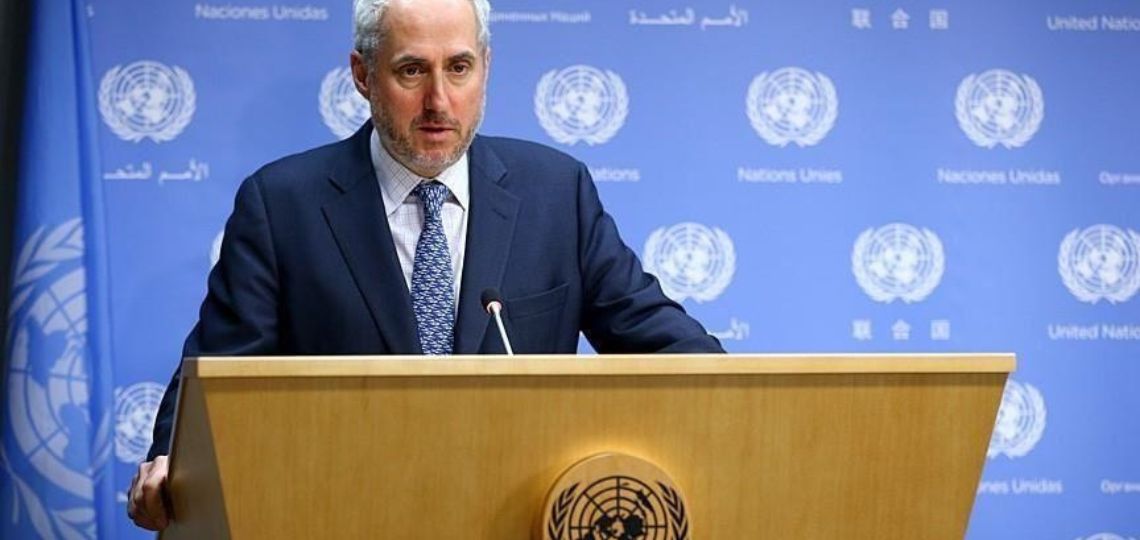
Stéphane Dujarric, spokesman for the UN Secretary-General © Anadolu Agency

Stéphane Dujarric, spokesman for the UN Secretary-General, reacted to the South Korean announcement:

“This is a very positive announcement. South Korea is on the right track after the announcement, last July, of Korea’s exemplary new green pact. The Republic of Korea is the world’s 11th largest economy and 6th largest exporter. With this announcement, it joins a growing group of major economies that have pledged to lead by example in building a sustainable, carbon-neutral and climate-resilient world by 2050.”

Renewable energies as a substitute for decarbonizing coal

This commitment places South Korea among a number of countries that have pledged to achieve total decarbonization by 2050. In September, China – the world’s biggest polluter – set a target date of 2060. President Moon’s announcement comes after his party put forward a proposal in April to commit to total decarbonization.

In his speech to the National Assembly, President Moon said, “The government has pushed for firm policies to transform energy sources so far, but we still need to improve many things.”

“We will move towards total decarbonization by 2050, taking action to combat climate change. We will replace coal power with renewables, creating new markets and industries, as well as jobs.”

Kim Joo-jin, CEO of Climate Solutions, declared that this commitment finally brings South Korea closer to the path compatible with the objectives set out in the Paris Agreement. It’s an international climate pact that aims to limit the rise in global temperatures to “well below” 2°C by 2100.

“However, there is much to be done to make this declaration truly meaningful. The most urgent tasks are to improve its 2030 emissions reduction target. The aim is also to present a clear roadmap for phasing out coal by 2030 and to put a complete end to coal financing.”

Coal is currently the main resource used in South Korea’s power supply. It accounts for around 40% of the country’s total energy mix. In addition, seven new coal-fired power plants are still under construction, which will inevitably make the decarbonization challenge a little more difficult.
 

South Korean decarbonization
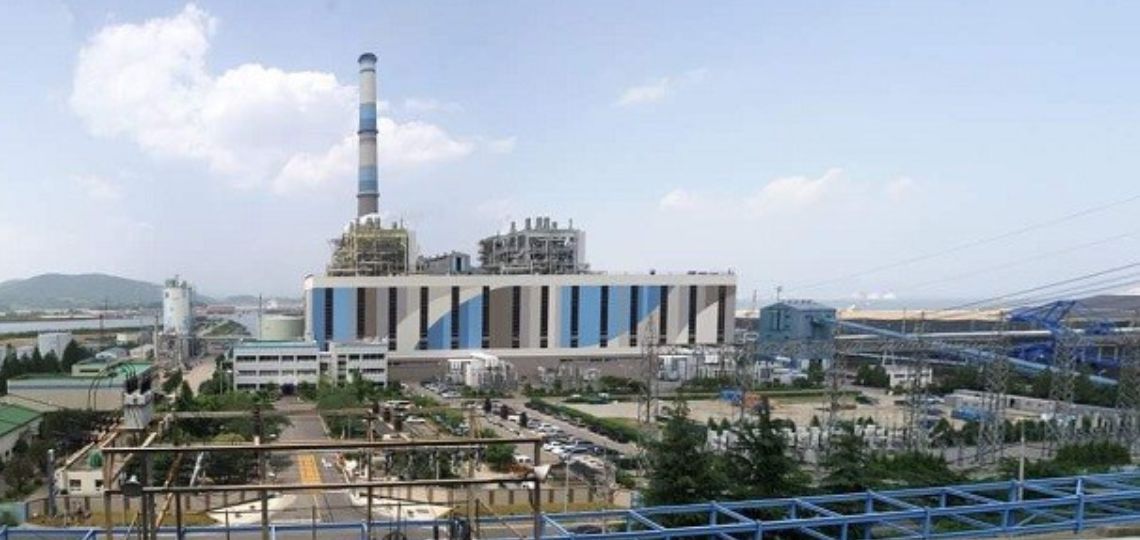
Honam power plant, South Korea’s oldest coal-fired power station (source: Yonhap).

However, South Korea’s New Deal, financed to the tune of 7 billion euros, will introduce various measures to help the country achieve carbon neutrality. Such as the carbon tax or the end of funding for coal-fired power plants. Charging stations for electric vehicles and hydrogen will also be installed to support this emerging transition.

Emissions trading scheme offers “advantage” to South Korea South Korea

Wood Mackenzie detailed a model scenario that would enable South Korea to achieve total decarbonization over the next 30 years. In this scenario, electrification would develop rapidly and be increasingly powered by renewable energies, battery storage, hydrogen and carbon, CO2 capture and storage (CCUS). Wood Mackenzie also forecasts that the transport sector will be entirely decarbonized by 2050, using electric and fuel cell vehicles. While the share of hydrocarbons is set to fall to around 40% by 2050.

“South Korea has already set up an emissions trading scheme.

“This is an important mechanism for making the changes required in the electricity and industrial sectors, on a cost and carbon basis, to achieve net zero emissions.”

“The price of carbon in South Korea is currently around 20 euros per tonne. We expect it to rise to more than 75 euros per tonne.”

South Korea joins the list of countries complying with the Paris agreements with a structured plan that will certainly enable it to achieve its targets by 2050.

The federation of the electricity sector proposes a comprehensive plan to reduce dependence on fossil fuels by replacing their use in transport, industry and housing with locally produced electricity.
The new Czech Minister of Industry wants to block the upcoming European emissions trading system, arguing that it harms competitiveness and threatens national industry against global powers.
Several scenarios are under review to regain control of CEZ, a key electricity provider in Czechia, through a transaction estimated at over CZK200bn ($9.6bn), according to the Minister of Industry.
The government has postponed the release of the new Multiannual Energy Programme to early 2026, delayed by political tensions over the balance between nuclear and renewables.
Indonesia plans $31bn in investments by 2030 to decarbonise captive power, but remains constrained by coal dependence and uncertainty over international financing.
The Bolivian government eliminates subsidies on petrol and diesel, ending a system in place for twenty years amid budgetary pressure and dwindling foreign currency reserves.
Poland’s financial watchdog has launched legal proceedings over suspicious transactions involving Energa shares, carried out just before Orlen revealed plans to acquire full ownership.
The Paris Council awards a €15bn, 25-year contract to Dalkia, a subsidiary of EDF, to operate the capital’s heating network, replacing long-time operator Engie amid political tensions ahead of municipal elections.
Norway’s energy regulator plans a rule change mandating grid operators to prepare for simultaneous sabotage scenarios, with an annual cost increase estimated between NOK100 and NOK300 per household.
The State of São Paulo has requested the termination of Enel Distribuição São Paulo’s concession, escalating tensions between local authorities and the federal regulator amid major political and energy concerns three years before the contractual expiry.
Mauritania secures Saudi financing to build a key section of the “Hope Line” as part of its national plan to expand electricity transmission infrastructure inland.
RESourceEU introduces direct European Union intervention on critical raw materials via stockpiling, joint purchasing and export restrictions to reduce external dependency and secure strategic industrial chains.
The third National Low-Carbon Strategy enters its final consultation phase before its 2026 adoption, defining France’s emissions reduction trajectory through 2050 with sector-specific and industrial targets.
Germany will allow a minimum 1.4% increase in grid operator revenues from 2029, while tightening efficiency requirements in a compromise designed to unlock investment without significantly increasing consumer tariffs.
Facing a structural electricity surplus, the government commits to releasing a new Multiannual Energy Programme by Christmas, as aligning supply, demand and investments becomes a key industrial and budgetary issue.
A key scientific report by the United Nations Environment Programme failed to gain state approval due to deep divisions over fossil fuels and other sensitive issues.
RTE warns of France’s delay in electrifying energy uses, a key step to limiting fossil fuel imports and supporting its reindustrialisation strategy.
India’s central authority has cancelled 6.3 GW of grid connections for renewable projects since 2022, marking a tightening of regulations and a shift in responsibility back to developers.
The Brazilian government has been instructed to define within two months a plan for the gradual reduction of fossil fuels, supported by a national energy transition fund financed by oil revenues.
The German government may miss the January 2026 deadline to transpose the RED III directive, creating uncertainty over biofuel mandates and disrupting markets.

All the latest energy news, all the time

Annual subscription

8.25$/month*

*billed annually at 99$/year for the first year then 149,00$/year ​

Unlimited access - Archives included - Pro invoice

Monthly subscription

Unlimited access • Archives included

5.2$/month*
then 14.90$ per month thereafter

*Prices shown are exclusive of VAT, which may vary according to your location or professional status.

Since 2021: 30,000 articles - +150 analyses/week.