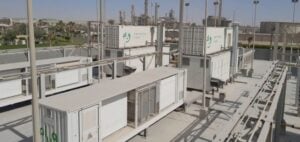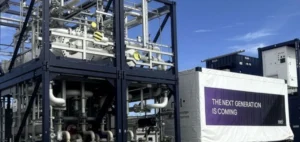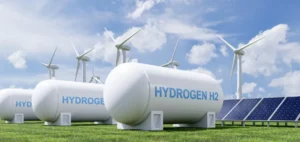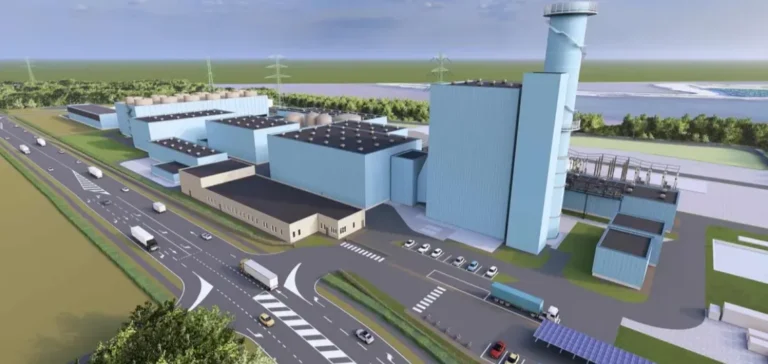

RWE has begun commissioning Europe’s largest renewable hydrogen production site in Lingen, Germany. This marks the first phase of the GET H2 Nukleus project, which is planned to reach a total capacity of 300 megawatts (MW). The initial 100 MW electrolyser, already undergoing technical testing, is expected to begin commercial operations in 2026.
A site designed to supply the Leuna refinery
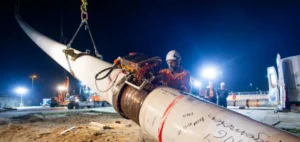
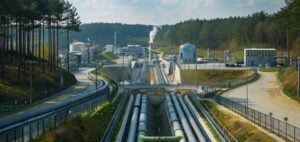
The plant’s output will be transported to the Leuna refinery, operated by TotalEnergies in eastern Germany, through a 600-kilometre pipeline that will form part of the country’s future core hydrogen network, currently under construction. The supply agreement between RWE and TotalEnergies covers an annual delivery of 30,000 tonnes of green hydrogen starting in 2030 under a 15-year offtake contract.
This volume is intended to replace fossil-based hydrogen currently used in fuel production processes. To ensure stable delivery during periods of low solar and wind availability, RWE will rely on underground storage capacity in Gronau-Epe, which is scheduled to come online in 2027.
Operational head start through early planning
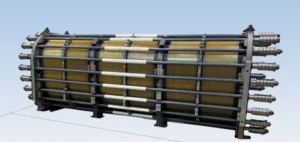
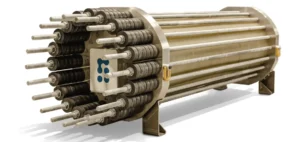
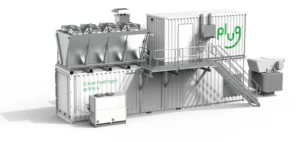
RWE placed initial equipment orders in 2022, prior to receiving public funding commitments. The first two 100 MW electrolysers were ordered from the Linde/ITM Power consortium, while a third, based on alkaline technology, was ordered from German manufacturer Sunfire.
This strategy allowed the company to accelerate its project timeline, with the full 300 MW capacity in Lingen expected to be operational in 2027. At that point, the plant would significantly surpass other ongoing projects in Europe, including BASF’s 54 MW electrolyser commissioned in Ludwigshafen in March.
Production cost remains high
The cost of producing EU-compliant green hydrogen via alkaline electrolysis in Germany, based on renewable power purchase agreements, was assessed at EUR7.54/kg ($8.86/kg) in mid-December. This pricing highlights the economic challenges facing the sector, despite the commitment to large-scale developments such as the Lingen project.
According to RWE, the technical maturity of the GET H2 Nukleus project and the associated storage site enabled the company to secure the long-term agreement with TotalEnergies under favourable conditions.