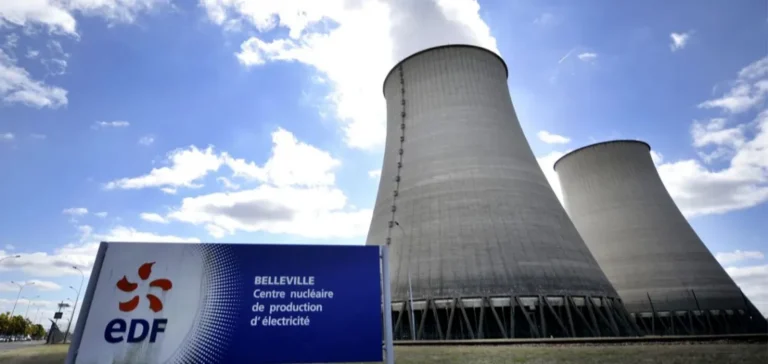

France’s electricity market reform will take effect on January 1, 2026 with the disappearance of the regulated access to historical nuclear electricity mechanism, known as Arenh. Created in 2011, this system required Électricité de France (EDF) to sell part of its nuclear output at a fixed price to competitors and industrial users. It will be replaced by a new system under which EDF will be able to sell all of its production at market prices.
According to the Ministry of the Economy, this pricing transition will not result in a significant increase in bills for 75% of residential consumers and very small businesses. These customers currently benefit from the regulated electricity sales tariff, or from a market offer indexed to that tariff, which will continue to reflect the low prices observed on France’s wholesale electricity markets.
A conditional redistribution mechanism
To limit the effects of market volatility, a new regulatory tool known as the universal nuclear payment is being introduced. This system provides for a levy on EDF’s revenues when market prices exceed certain thresholds, with partial redistribution to consumers. From 78 euros per megawatt hour, 50% of excess revenues will be redistributed, rising to 90% above 110 euros per megawatt hour.
The decree setting out these thresholds is due to be published by early 2026. However, given current wholesale electricity price levels, the ministry does not expect this redistribution mechanism to be activated in 2026.
Fiscal measures under review to support the reform
At the same time, the government is considering additional measures to reduce bills, including a review of electricity taxation. This option is being discussed as part of the 2026 finance bill. The aim is to support consumers during this new phase of the market while maintaining a degree of price visibility.
According to the Energy Regulatory Commission, no generalised price increase is expected for consumers on market-based offers. In September, nearly half of such offers were priced below the regulated tariff, confirming the current competitive dynamics.
A balance between investment and protection
The government presents this reform as a compromise between consumer protection and the need for EDF to strengthen its investment capacity. By removing price controls, the state-owned utility will be able to improve its margins and help finance its nuclear programme, including the construction of six new reactors.
This new framework has nonetheless raised questions. A parliamentary report published in October highlighted a lack of guarantees in the event of a sharp fall in prices, which could weaken EDF’s revenues. It also noted that the system does not fully protect consumers against extreme market fluctuations, despite the safeguards introduced.