
The timeline for publishing the Multiannual Energy Programme (Programmation pluriannuelle de l’énergie, PPE), a strategic document outlining France’s energy policy over ten years, remains uncertain. The Prime Minister’s office confirmed that the text would not be released before early 2026, without giving a specific date, despite earlier announcements of decisions expected before the end of the year.
A delayed calendar amid political trade-offs
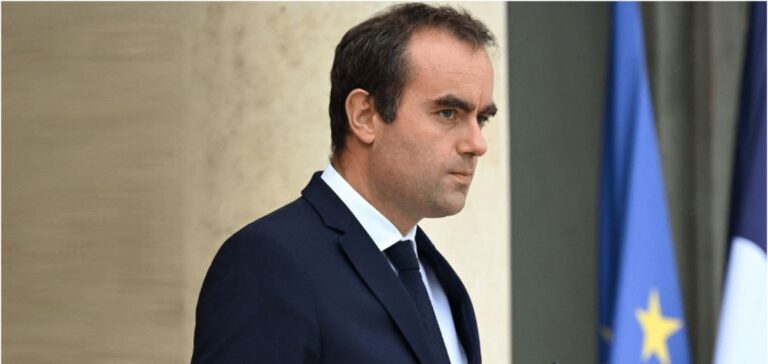
Initially scheduled for 2023, the text has been repeatedly postponed. The delay is mainly due to disagreements between political parties over how to balance the expansion of the nuclear fleet with support for renewable energies. The Rassemblement National, in particular, opposes the expansion of wind and solar power, complicating efforts to reach a consensus. Prime Minister Sébastien Lecornu, who had pledged in November to make decisions before Christmas, has opted to delay.
In a speech delivered on December 12, he stated that releasing the PPE in the current political climate would diminish its impact. The government wants the plan to serve as a key moment to initiate a broader national dialogue on energy choices. The dossier remains a top priority, according to the Prime Minister’s office.
Content nearly finalised, according to Economy Ministry
The Ministry for the Economy, which also oversees energy matters, indicated that the core content is close to completion. Minister Roland Lescure has conducted consultations with all parliamentary groups, including the Libertés, indépendants, outre-mer et territoires (Liot) group, which is yet to be met.
This consultation phase precedes the release of a document that will align the French energy strategy with several recent reports, such as the National Low-Carbon Strategy (Stratégie nationale bas carbone, SNBC) and updated projections from the electricity transmission system operator Réseau de transport d’électricité (RTE) on power supply and demand by 2035.
Acceleration of electrification expected
The forthcoming PPE is expected to outline a trajectory tied to increased electrification of uses in transport, housing and industry. These sectors remain heavily reliant on fossil fuels, despite France’s electricity mix being 95% carbon-free. The government aims to include this electrification effort in a broader plan, supported by specific targets for onshore renewable installations.
RTE recently lowered its electricity consumption forecasts for 2035, highlighting France’s slow progress in scaling up electricity usage, despite stated ambitions. The ministry views these developments as milestones for aligning the PPE with long-term carbon neutrality commitments.