Ashgabat brings together Russia, Turkey and Iran around new regional gas partnerships

At an international forum, Turkmenistan hosted several regional leaders to discuss commercial cooperation, with a strong focus on gas and alternative export corridors.

Share:

Comprehensive energy news coverage, updated nonstop

Annual subscription

8.25$/month*

*billed annually at 99$/year for the first year then 149,00$/year ​

Unlimited access • Archives included • Professional invoice

OTHER ACCESS OPTIONS

Monthly subscription

Unlimited access • Archives included

5.2$/month*
then 14.90$ per month thereafter

FREE ACCOUNT

3 articles offered per month

FREE

*Prices are excluding VAT, which may vary depending on your location or professional status

Since 2021: 35,000 articles • 150+ analyses per week

Turkmenistan hosted a summit in Ashgabat gathering the presidents of Russia, Turkey and Iran, within a diplomatic framework based on the country’s permanent neutrality. This setup enabled bilateral and trilateral exchanges focused on regional commercial cooperation, particularly in the natural gas sector. The forum is part of a broader strategy to multiply dialogue formats outside traditional Western venues.

Turkmen neutrality as a driver of partnerships

Turkmenistan’s permanent neutrality, recognised by the United Nations (UN), serves as a legal foundation for hosting leaders facing diplomatic constraints. This status allows the country to position itself as a meeting platform for commercial discussions with limited political exposure. Talks held in Ashgabat focused on bilateral cooperation agreements, with no public figures disclosed but a clear orientation towards strengthening regional trade.

Turkmen authorities aim to capitalise on this position to diversify their commercial relationships, particularly in energy. Natural gas remains the country’s main source of foreign income, and its exports are heavily concentrated among a limited number of partners.

Gas at the heart of envisioned cooperation

Exchanges between delegations highlighted planned commercial partnerships involving Turkmen gas. Swap mechanisms involving Iran were discussed as practical solutions to deliver volumes to Turkey. These setups rely on contractual compensations rather than immediate construction of new cross-border infrastructure.

The state-owned company Turkmengaz remains the central player in these discussions on the Turkmen side. In Turkey, state-owned BOTAŞ could act as buyer and aggregator within a broader commercial agreement framework. For Iran, the partnerships would involve transit and balancing services, integrated into existing bilateral agreements.

Commercial diversification amid ongoing dependency

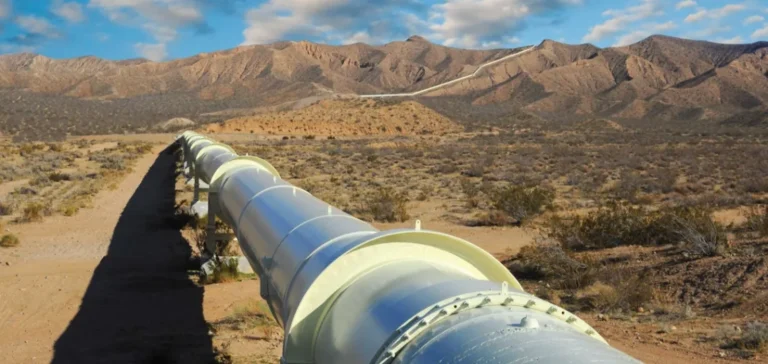
Turkmenistan’s gas export model currently relies primarily on China, through the Central Asia–China Gas Pipeline operated with China National Petroleum Corporation (CNPC). This concentration limits the country’s commercial flexibility and increases its interest in alternative partnerships. Even modest volumes destined for other markets can affect existing contractual balances.

Turkey is emerging as a strategic commercial partner due to its geographic position and its capacity to redistribute flows to other regional markets. Iraq’s participation at the summit also points to the exploration of additional southern commercial outlets, in a country structurally dependent on gas imports for electricity generation.

Regulatory constraints and economic parameters

The proposed commercial partnerships unfold in a complex regulatory environment. International sanctions affecting some participants require specific contractual structures, particularly regarding payments, insurance and logistics. These constraints can influence the profitability and operational implementation of the agreements.

In parallel, the environmental performance of gas value chains—particularly methane emissions—is increasingly considered by commercial and financial partners. These parameters may affect financing terms and counterpart selection, adding an extra layer to the ongoing negotiations in Ashgabat.
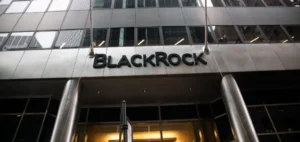
BlackRock sold 7.1% of Spanish company Naturgy for €1.7bn ($1.99bn) through an accelerated bookbuild managed by JPMorgan, reducing its stake to 11.42%.
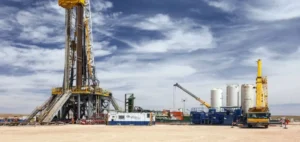
The British company begins the initial production phase of Morocco's Tendrara gas field, activating a ten-year contract with Afriquia Gaz amid phased technical investments.
The Energy Information Administration revises its gas price estimates upward for late 2025 and early 2026, in response to strong consumption linked to a December cold snap.
Venture Global denies Shell’s claims of fraud in an LNG cargo arbitration and accuses the oil major of breaching arbitration confidentiality.
The Valera LNG carrier delivered a shipment of liquefied natural gas (LNG) from Portovaya, establishing a new energy route between Russia and China outside Western regulatory reach.
South Stream Transport B.V., operator of the offshore section of the TurkStream pipeline, has moved its headquarters from Rotterdam to Budapest to protect itself from further legal seizures amid ongoing sanctions and disputes linked to Ukraine.
US LNG exports are increasingly bypassing the Panama Canal in favour of Europe, seen as a more attractive market than Asia in terms of pricing, liquidity and logistical reliability.
Indian Oil Corporation has issued a tender for a spot LNG cargo to be delivered in January 2026 to Dahej, as Asian demand weakens and Western restrictions on Russian gas intensify.
McDermott has secured a major engineering, procurement, construction, installation and commissioning contract for a strategic subsea gas development offshore Brunei, strengthening its presence in the Asia-Pacific region.
The partnership between Fluor and JGC has handed over LNG Canada's second liquefaction unit, completing the first phase of the major gas project on Canada’s west coast.
Northern Oil and Gas and Infinity Natural Resources invest $1.2bn to acquire Utica gas and infrastructure assets in Ohio, strengthening NOG’s gas profile through vertical integration and high growth potential.
China has received its first liquefied natural gas shipment from Russia’s Portovaya facility, despite growing international sanctions targeting Russian energy exports.
Brazil’s natural gas market liberalisation has led to the migration of 13.3 million cubic metres per day, dominated by the ceramics and steel sectors, disrupting the national competitive balance.
Sasol has launched a new gas processing facility in Mozambique to secure fuel supply for the Temane thermal power plant and support the national power grid’s expansion.
With the addition of Nguya FLNG to Tango, Eni secures 3 mtpa of capacity in Congo, locking in non-Russian volumes for Italy and positioning Brazzaville within the ranks of visible African LNG exporters.
Japan’s JERA has signed a liquefied natural gas supply contract with India’s Torrent Power for four cargoes annually from 2027, marking a shift in its LNG portfolio toward South Asia.
The merger of TotalEnergies and Repsol’s UK assets into NEO NEXT+ creates a 250,000 barrels of oil equivalent per day operator, repositioning the majors in response to the UK’s fiscal regime and basin decline.
Climate requirements imposed by the European due diligence directive are complicating trade relations between the European Union and Qatar, jeopardising long-term gas supply as the global LNG market undergoes major shifts.
A report forecasts that improved industrial energy efficiency and residential electrification could significantly reduce Colombia’s need for imported gas by 2030.
Falling rig counts and surging natural gas demand are reshaping the Lower 48 energy landscape, fuelling a rebound in gas-focused mergers and acquisitions.

All the latest energy news, all the time

Annual subscription

8.25$/month*

*billed annually at 99$/year for the first year then 149,00$/year ​

Unlimited access - Archives included - Pro invoice

Monthly subscription

Unlimited access • Archives included

5.2$/month*
then 14.90$ per month thereafter

*Prices shown are exclusive of VAT, which may vary according to your location or professional status.

Since 2021: 30,000 articles - +150 analyses/week.