Hungary hosts TurkStream headquarters after asset freeze in the Netherlands

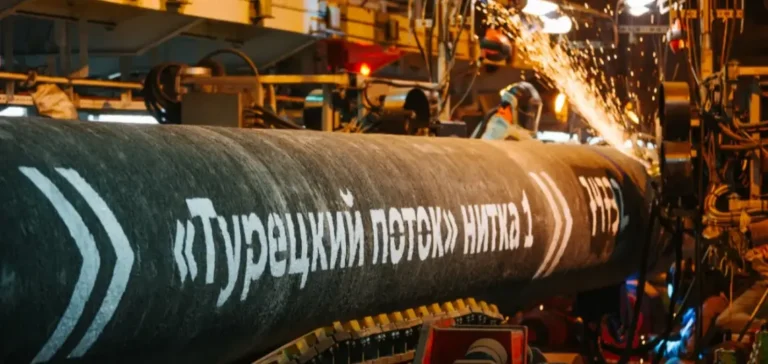
South Stream Transport B.V., operator of the offshore section of the TurkStream pipeline, has moved its headquarters from Rotterdam to Budapest to protect itself from further legal seizures amid ongoing sanctions and disputes linked to Ukraine.

Share:

Comprehensive energy news coverage, updated nonstop

Annual subscription

8.25$/month*

*billed annually at 99$/year for the first year then 149,00$/year ​

Unlimited access • Archives included • Professional invoice

OTHER ACCESS OPTIONS

Monthly subscription

Unlimited access • Archives included

5.2$/month*
then 14.90$ per month thereafter

FREE ACCOUNT

3 articles offered per month

FREE

*Prices are excluding VAT, which may vary depending on your location or professional status

Since 2021: 35,000 articles • 150+ analyses per week

South Stream Transport B.V., a Gazprom subsidiary operating the maritime section of TurkStream, has officially moved its headquarters from the Netherlands to Hungary. The decision follows an Amsterdam court ruling to freeze its assets in response to a lawsuit filed by Ukrainian company DTEK Krymenergo over losses related to the annexation of Crimea.

A transfer to bypass Dutch jurisdiction

By relocating to Budapest, South Stream Transport B.V. aims to shield itself from Dutch jurisdiction, previously used to enforce asset seizures against Russian entities. In 2019, Naftogaz secured a full freeze of the company’s shares. The regulatory environment in the Netherlands has tightened further since authorities revoked its export licence in 2022.

The Hungarian government, supportive of close energy ties with Moscow, has reinforced its backing for the project. Prime Minister Viktor Orban and Foreign Minister Peter Szijjarto have repeatedly stressed TurkStream’s strategic importance for both national and regional energy security.

TurkStream, a central corridor for Russian gas

TurkStream carries up to 31.5 bcm/year of gas from Russia to Turkey, then into Southeast Europe. Hungary currently imports about 7.5 bcm/year through the pipeline, up from the 4.5 bcm initially agreed under a long-term contract signed in 2021. The gas is then transported to Serbia, Bulgaria, Slovakia and potentially Austria.

European Union sanctions limit technology transfers to Russia but do not block deliveries to the EU. However, the relocation to Hungary could complicate future sanctions that may target infrastructure rather than flows or technologies.

Impact of the US regulatory framework

The United States has granted Hungary a one-year exemption allowing financial transactions related to TurkStream, despite CAATSA (Countering America’s Adversaries Through Sanctions Act) and PEESA (Protecting Europe’s Energy Security Act) sanctions regimes. This legal framework reduces banking risks for entities operating out of Budapest.

The relocation does not alter the ownership structure, with Gazprom retaining full control over South Stream Transport B.V. However, it increases the involvement of Hungarian authorities in the operational governance of the pipeline.

Regional market consequences

In the short term, the move is unlikely to impact spot gas prices in Central Europe, as transported volumes are already factored into market balances. It does, however, provide added protection against legal or regulatory disruptions that might arise in other European jurisdictions.

Operators in Serbia, Bulgaria and Slovakia benefit from greater contractual flow security, while Ukrainian creditors may now need to pursue legal avenues outside the Netherlands. The Hungarian corporate structure complicates direct enforcement on future revenue streams from the pipeline.

A signal for other Russian infrastructures in Europe

This precedent may lead other Russian entities based in the Netherlands or Luxembourg to consider re-domiciling to more favourable EU jurisdictions or non-EU countries such as Serbia or Turkey. This could contribute to a reshaping of the European energy landscape amid ongoing tensions between Brussels and Moscow.

The relocation of South Stream Transport B.V. also highlights Hungary’s growing role as a critical conduit for Russian gas exports. This strengthens Budapest’s leverage in EU negotiations on funding and energy policy.
Indian Oil Corporation has issued a tender for a spot LNG cargo to be delivered in January 2026 to Dahej, as Asian demand weakens and Western restrictions on Russian gas intensify.
McDermott has secured a major engineering, procurement, construction, installation and commissioning contract for a strategic subsea gas development offshore Brunei, strengthening its presence in the Asia-Pacific region.
The partnership between Fluor and JGC has handed over LNG Canada's second liquefaction unit, completing the first phase of the major gas project on Canada’s west coast.
Northern Oil and Gas and Infinity Natural Resources invest $1.2bn to acquire Utica gas and infrastructure assets in Ohio, strengthening NOG’s gas profile through vertical integration and high growth potential.
China has received its first liquefied natural gas shipment from Russia’s Portovaya facility, despite growing international sanctions targeting Russian energy exports.
Brazil’s natural gas market liberalisation has led to the migration of 13.3 million cubic metres per day, dominated by the ceramics and steel sectors, disrupting the national competitive balance.
Sasol has launched a new gas processing facility in Mozambique to secure fuel supply for the Temane thermal power plant and support the national power grid’s expansion.
With the addition of Nguya FLNG to Tango, Eni secures 3 mtpa of capacity in Congo, locking in non-Russian volumes for Italy and positioning Brazzaville within the ranks of visible African LNG exporters.
Japan’s JERA has signed a liquefied natural gas supply contract with India’s Torrent Power for four cargoes annually from 2027, marking a shift in its LNG portfolio toward South Asia.
The merger of TotalEnergies and Repsol’s UK assets into NEO NEXT+ creates a 250,000 barrels of oil equivalent per day operator, repositioning the majors in response to the UK’s fiscal regime and basin decline.
Climate requirements imposed by the European due diligence directive are complicating trade relations between the European Union and Qatar, jeopardising long-term gas supply as the global LNG market undergoes major shifts.
A report forecasts that improved industrial energy efficiency and residential electrification could significantly reduce Colombia’s need for imported gas by 2030.
Falling rig counts and surging natural gas demand are reshaping the Lower 48 energy landscape, fuelling a rebound in gas-focused mergers and acquisitions.
The Nigerian government has approved a payment of NGN185bn ($128 million) to settle debts owed to gas producers, aiming to secure electricity supply and attract new investments in the energy sector.
Riley Exploration Permian has finalised the sale of its Dovetail Midstream entity to Targa Northern Delaware for $111 million, with an additional conditional payment of up to $60 million. The deal also includes a future transfer of equipment for $10 million.
Stanwell has secured an exclusive agreement with Quinbrook for the development of the Gladstone SDA Energy Hub, combining gas turbines and long-duration battery storage to support Queensland’s electricity grid stability.
The growth of US liquefied natural gas exports could slow if rising domestic costs continue to squeeze margins, as new volumes hit an already saturated global market.
Turkmenistan is leveraging the Global Gas Centre to build commercial links in Europe and South Asia, as it responds to its current dependence on China and a shifting post-Russian gas market.
The Marmara Ereğlisi liquefied natural gas (LNG) terminal operated by BOTAŞ is increasing its regasification capacity, consolidating Türkiye’s role as a regional player in gas redistribution toward the Balkans and Southeast Europe.
Budapest contests the European agreement to ban Russian natural gas imports by 2027, claiming the measure is incompatible with its economic interests and the European Union's founding treaties.

All the latest energy news, all the time

Annual subscription

8.25$/month*

*billed annually at 99$/year for the first year then 149,00$/year ​

Unlimited access - Archives included - Pro invoice

Monthly subscription

Unlimited access • Archives included

5.2$/month*
then 14.90$ per month thereafter

*Prices shown are exclusive of VAT, which may vary according to your location or professional status.

Since 2021: 30,000 articles - +150 analyses/week.