Congo LNG reaches 3 mtpa and anchors the strategic gas axis between Eni and Europe

With the addition of Nguya FLNG to Tango, Eni secures 3 mtpa of capacity in Congo, locking in non-Russian volumes for Italy and positioning Brazzaville within the ranks of visible African LNG exporters.

Share:

Comprehensive energy news coverage, updated nonstop

Annual subscription

8.25$/month*

*billed annually at 99$/year for the first year then 149,00$/year ​

Unlimited access • Archives included • Professional invoice

OTHER ACCESS OPTIONS

Monthly subscription

Unlimited access • Archives included

5.2$/month*
then 14.90$ per month thereafter

FREE ACCOUNT

3 articles offered per month

FREE

*Prices are excluding VAT, which may vary depending on your location or professional status

Since 2021: 35,000 articles • 150+ analyses per week

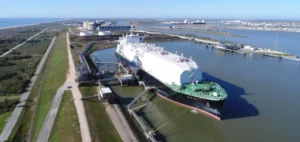
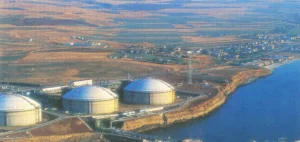
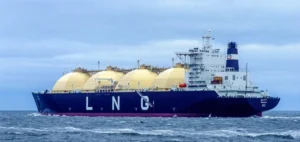
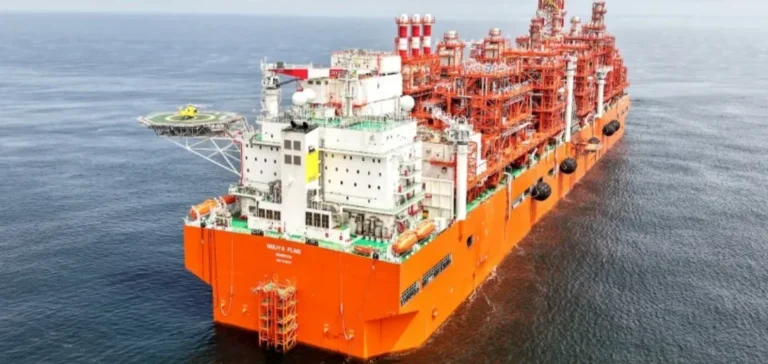
The Republic of Congo is entering a new phase in its gas development. With the commissioning of Nguya FLNG, a floating liquefaction unit built by Chinese group Wison, the Congo LNG project now reaches a capacity of 3 million tonnes per year. Eni, operator of the offshore Marine XII licence via its local subsidiary Eni Congo, oversees the entire infrastructure, from the Nené and Litchendjili platforms to the Tango and Nguya liquefaction vessels, positioned offshore to reduce land-based exposure.

An industrial response to Europe’s gas crisis

For Eni, Congo LNG is more than a mid-sized African asset. It is a strategic anchor in a post-Russian architecture where Italy seeks to reduce its dependence on Moscow. Since 2022, Rome has strengthened energy ties with nearby partners (Algeria, Libya, Egypt) and Congo, seen as a stable jurisdiction with no international sanctions and offshore access at low entry cost. Italy currently imports more than 90% of its gas needs, and every secured non-Russian flow is a tactical gain in its energy balance.

Offshore infrastructure and full control of the value chain by Eni

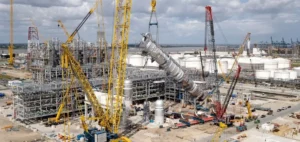
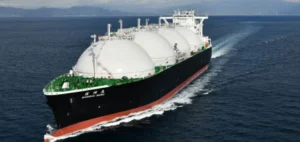
Eni orchestrates the entire gas system: upstream, processing, liquefaction and cargo marketing. The first unit, Tango FLNG (0.6 mtpa), was redeployed from Argentina. The second, Nguya FLNG (2.4 mtpa), built in China, brought the project to 3 mtpa in under three years. The use of floating infrastructure helps bypass onshore constraints while minimising development time and cost. It also provides geographic flexibility if offtake routes need to be adjusted.

Congo becomes a visible player on the African LNG map

In the African gas landscape, Congo enters the second tier of producers. Far behind Algeria (~25 mtpa), Nigeria (~22 mtpa) and Egypt (~12 mtpa), Brazzaville aligns with countries like Angola (5.2 mtpa), Equatorial Guinea (3.7 mtpa), or Mozambique (3.4 mtpa). At 3 mtpa, Congolese volumes could account for up to 9% of the continent’s total LNG exports if current levels are maintained. Most cargoes are destined for Southern Europe, with reduced transit times, but could be redirected to Asia depending on market spreads.

A structuring economic model for Brazzaville

Congo’s economic model is based on an existing production-sharing agreement between the state, represented by Société nationale des pétroles du Congo (SNPC), and Eni. This framework guarantees a direct volume share to Brazzaville, supplemented by royalties, corporate taxes and potential long-term offtake revenues over 15 to 20 years. A new gas code is under preparation to clarify domestic supply obligations, secure midstream investment, and codify fiscal rights for each exported cubic metre.

Legal stability and compliance make it a bankable asset

Unlike other African projects exposed to sanctions or insecurity — such as Mozambique LNG — Congo LNG benefits from a relatively stable legal framework. The Democratic Republic of Congo is under international monitoring, but not Brazzaville. No systemic OFAC or UN sanctions currently apply to the Republic of Congo, making the project eligible for institutional financing, provided that counterparties and subcontractors are thoroughly screened for compliance.

Market impact, cargo flows and logistical risk

Congolese LNG is primarily positioned to supply Italian, Spanish and French terminals. The FLNG setup concentrates all operations on two vessels, increasing vulnerability to outages or disruptions in the Gulf of Guinea. However, Eni’s full operational control enables volume adjustments based on spot demand or market conditions.

Regional consequences and long-term strategy

The success of Congo LNG strengthens Eni’s position to replicate the FLNG model across other African offshore gas resources. Angola, Côte d’Ivoire and Senegal could follow a similar path. For Italy, it consolidates its ambition to become a southern European gas hub. For Brazzaville, the challenge now is to channel LNG revenues into domestic infrastructure such as electricity, petrochemicals and fertilisers to reduce long-term exposure to export dependency.

Falling rig counts and surging natural gas demand are reshaping the Lower 48 energy landscape, fuelling a rebound in gas-focused mergers and acquisitions.
The Nigerian government has approved a payment of NGN185bn ($128 million) to settle debts owed to gas producers, aiming to secure electricity supply and attract new investments in the energy sector.
Riley Exploration Permian has finalised the sale of its Dovetail Midstream entity to Targa Northern Delaware for $111 million, with an additional conditional payment of up to $60 million. The deal also includes a future transfer of equipment for $10 million.
Stanwell has secured an exclusive agreement with Quinbrook for the development of the Gladstone SDA Energy Hub, combining gas turbines and long-duration battery storage to support Queensland’s electricity grid stability.
The growth of US liquefied natural gas exports could slow if rising domestic costs continue to squeeze margins, as new volumes hit an already saturated global market.
Turkmenistan is leveraging the Global Gas Centre to build commercial links in Europe and South Asia, as it responds to its current dependence on China and a shifting post-Russian gas market.
The Marmara Ereğlisi liquefied natural gas (LNG) terminal operated by BOTAŞ is increasing its regasification capacity, consolidating Türkiye’s role as a regional player in gas redistribution toward the Balkans and Southeast Europe.
Budapest contests the European agreement to ban Russian natural gas imports by 2027, claiming the measure is incompatible with its economic interests and the European Union's founding treaties.
The European Union has enshrined in law a complete ban on Russian gas by 2027, forcing utilities, operators, traders and states to restructure contracts, physical flows and supply strategies under strict regulatory pressure.
The partial exploitation of associated gas from the Badila field by Perenco supplies electricity to Moundou, highlighting the logistical and financial challenges of gas development in Chad.
A new regulation requires gas companies to declare the origin, volume and duration of their contracts, as the EU prepares to end Russian imports.
Saudi Aramco has launched production at the unconventional Jafurah gas field, initiating an investment plan exceeding $100bn to substitute domestic crude and increase exportable flows under OPEC+ constraints.
By mobilising long-term contracts with BP and new infrastructure, PLN is driving Indonesia’s shift toward prioritising domestic LNG use, at the centre of a state-backed investment programme supported by international lenders.
TotalEnergies, TES and three Japanese companies will develop an industrial-scale e-gas facility in the United States, targeting 250 MW capacity and 75,000 tonnes of annual output by 2030.
The UK government has ended its financial support for TotalEnergies' liquefied natural gas project in Mozambique, citing increased risks and a lack of national interest in continuing its involvement.
Faced with a climate- and geopolitically-constrained winter, Beijing announces expected record demand for electricity and gas, placing coal, LNG and UHV grids at the centre of a national energy stress test.
The Iraqi government and Kurdish authorities have launched an investigation into the drone attack targeting the Khor Mor gas field, which halted production and caused widespread electricity outages.
PetroChina internalises three major gas storage sites through two joint ventures with PipeChina, representing 11 Gm³ of capacity, in a CNY40.02bn ($5.43bn) deal consolidating control over its domestic gas network.
The European Union is facilitating the use of force majeure to exit Russian gas contracts by 2028, a risky strategy for companies still bound by strict legal clauses.
Amid an expected LNG surplus from 2026, investors are reallocating positions toward the EU carbon market, betting on tighter supply and a bullish price trajectory.

All the latest energy news, all the time

Annual subscription

8.25$/month*

*billed annually at 99$/year for the first year then 149,00$/year ​

Unlimited access - Archives included - Pro invoice

Monthly subscription

Unlimited access • Archives included

5.2$/month*
then 14.90$ per month thereafter

*Prices shown are exclusive of VAT, which may vary according to your location or professional status.

Since 2021: 30,000 articles - +150 analyses/week.