
Zenith Energy has published its financial results as of 30 September, confirming a major strategic shift. The group, historically active in hydrocarbon production, now focuses on a significant international arbitration against Tunisia, and the development of a solar and uranium exploration portfolio in Italy. This pivot comes amid modest operating results and limited liquidity, increasing pressure on the company to monetise its projects and legal proceedings.
An operational model centred on Tunisian litigation and Italy
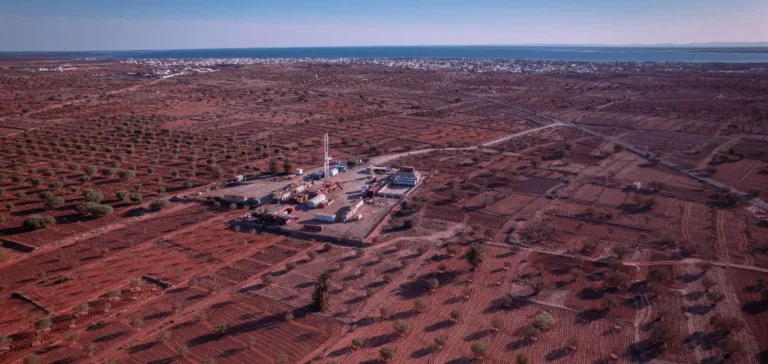
Zenith’s Tunisian assets – Robbana, El Bibane, Ezzaouia and Sidi El Kilani – no longer generate meaningful cash flow, with their value now primarily derived from two arbitration cases. The investment arbitration filed at the International Centre for Settlement of Investment Disputes (ICSID) amounts to a claimed $572.65mn. A parallel contractual arbitration with the International Chamber of Commerce (ICC) has resulted in an unfavourable ruling, which Zenith is challenging before the Swiss Federal Tribunal.
In Italy, Zenith is developing a 110.5 MWp solar pipeline structured in regional clusters (Latium, Liguria, Apulia, Piedmont) designed to optimise grid connection, engineering and project financing synergies. The pipeline now includes Battery Energy Storage Systems (BESS), aimed at capturing the value of increasing intra-day electricity price volatility on the Italian market.
Accounts driven by non-recurring income
For the six-month period, Zenith reported $1.09mn in revenue and a net profit of $3.76mn, largely due to $14.5mn in non-recurring income. However, cash flow from operations was negative at –$11.76mn, reflecting a business not yet generating sustained liquidity. Administrative expenses totalled $7.56mn, more than half of which were related to Tunisian litigation and listing costs.
Total debt includes $47.6mn in bonds and $15.6mn in deferred counterparties, while cash reserves stand at just $2.41mn. Zenith raised $14.7mn in equity and bond financing during the first half, underscoring its dependence on continuous market access to meet funding needs through 2026.
Uranium exploration in Italy: strategic option or speculative reserve
Zenith holds two uranium exploration permits in Lombardy (Val Vedello and Novazza), representing a historical estimate of around 15 million pounds of U₃O₈. These assets align with the European context of securing critical raw materials, with uranium now explicitly listed under the Critical Raw Materials Act, potentially enhancing the strategic interest of these permits.
However, Italy has not reversed its post-referendum nuclear phase-out. Even limited activities such as exploration or potential export of uranium remain politically sensitive, restricting short-term development prospects. For Zenith, these permits currently serve more as speculative leverage than as a near-term revenue source.
Fragmented governance and a time-funded model
Zenith is listed on three markets – London, Oslo and Stockholm – with shareholders including members of the executive team. This multi-listing strategy broadens access to capital but adds compliance costs. Non-recurring expenses linked to capital raising weigh heavily on general costs, while communication across markets remains fragmented.
The company highlights management-shareholder alignment through insider participation in capital increases, yet the absence of sustained cash generation raises questions over the model’s viability. Current valuation largely relies on successful legal outcomes or asset sales at favourable multiples, in an already competitive and well-capitalised market.