CNAT requests a three-year extension for Almaraz I and II

Centrales Nucleares Almaraz-Trillo has officially requested the extension of operations for reactors Almaraz I and II until 2030, challenging the original timeline for the shutdown of Spain’s nuclear fleet.

Share:

Comprehensive energy news coverage, updated nonstop

Annual subscription

8.25€/month*

*billed annually at 99€/year for the first year then 149,00€/year ​

Unlimited access • Archives included • Professional invoice

OTHER ACCESS OPTIONS

Monthly subscription

Unlimited access • Archives included

5.2€/month*
then 14.90€ per month thereafter

FREE ACCOUNT

3 articles offered per month

FREE

*Prices are excluding VAT, which may vary depending on your location or professional status

Since 2021: 35,000 articles • 150+ analyses per week

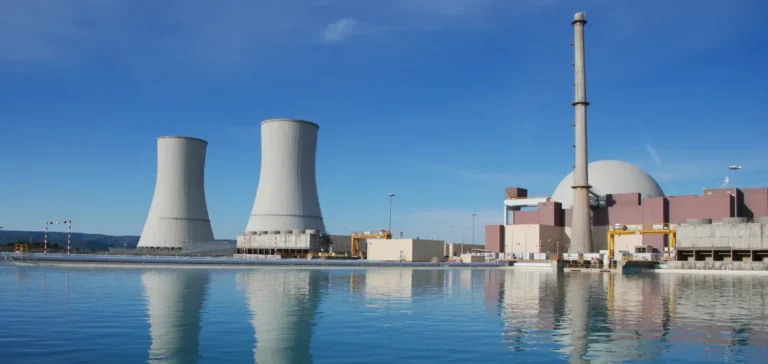
Centrales Nucleares Almaraz-Trillo (CNAT) announced it has submitted a request to Spain’s Ministry for Ecological Transition and the Demographic Challenge to amend the operating licence for units I and II of the Almaraz nuclear power plant. This move, approved during an extraordinary meeting of the board of directors and shareholders, aims to extend the operation of both units until June 2030, instead of their initially scheduled shutdown in 2027.

A strategy out of step with the 2019 roadmap

The Almaraz plant, located in the province of Cáceres, is one of seven reactors currently operating in Spain, which together supply approximately 20% of the country’s electricity. The decommissioning schedule set in 2019 planned for a gradual shutdown of the fleet between 2027 and 2035. Units I and II at Almaraz, commissioned in 1983 and 1984 respectively, are among the four reactors due to be shut down by the end of the decade.

The official request comes amid increasing scrutiny of this plan. In February, a manifesto signed by 32 companies in the sector, including Framatome, GE Vernova and Westinghouse, called for a reopening of discussions around the 2019 agreement. The document highlighted the changing industrial and geopolitical context and pointed to the role of nuclear energy in ensuring the stability of the power system.

Industrial pressure and regulatory framework

According to CNAT, the Almaraz plant continues to meet the requirements set out in the Periodic Safety Review approved by the Nuclear Safety Council (Consejo de Seguridad Nuclear, CSN) in 2020. The company stated that an annual investment of EUR50 million ($58 million) is allocated for the modernisation of the facilities. It also noted that the plant currently employs around 4,000 people and supplies power to more than 4 million households.

The sector’s core argument centres on industrial competitiveness. The February manifesto stressed that the early withdrawal of nuclear power could undermine the resilience of Spain’s energy mix. It also called for a review of the applicable tax framework, deemed too burdensome to ensure the economic viability of the plants.

Growing political support

That same month, the Spanish Congress of Deputies approved a proposal from the People’s Party in favour of reversing the nuclear phase-out plan. The motion passed with 171 votes in favour, 164 against and 14 abstentions. Although non-binding, the decision has reinforced calls for an adjustment to the national energy strategy.

CNAT’s shareholders – Iberdrola (53%), Endesa (36%) and Naturgy (11%) – have not publicly commented on the extension request. The Almaraz plant shares technical characteristics with the North Anna nuclear power plant in the United States, which recently received approval for extended operations of up to 80 years.

Work has begun at the Bailong and Lufeng sites with concrete poured for the nuclear islands, marking the start of construction for two CAP1000 reactors.
French group Orano receives USD900mn in public support to establish a new uranium enrichment facility in Tennessee, as part of a broader US nuclear sector revival plan.
Japan’s nuclear restart effort stalls after Chubu Electric acknowledged a possibly flawed seismic risk estimate at its Hamaoka facility under regulatory review.
Russia has connected its first 1,250 MW VVER-TOI reactor at the Kursk II nuclear power plant to the grid, signalling a key step toward full commissioning by 2034.
Chubu Electric acknowledged a methodological discrepancy in the seismic evaluation of two nuclear reactors, a situation that could weigh on the restart of nuclear operations in Japan.
Denison Mines is set to commit CAD600mn ($437mn) to build Phoenix, the first large-scale uranium mine developed in Canada in over a decade, with production expected by mid-2028.
The Idaho Advanced Energy Consortium secured approval for its five strategic projects, now competing for $75mn in funding under the US Tech Hub programme.
Duke Energy has filed a permit application to assess the feasibility of a nuclear reactor in Stokes County on an existing power generation site, without committing to immediate construction.
The South Korean nuclear regulator has approved the launch of the 1,400-megawatt Saeul 3 reactor, beginning with a six-month pilot phase before full commercial operation.
Ankara confirmed new Russian funding for the Akkuyu project, Turkey’s first nuclear site, strengthening its energy ties with Moscow and advancing its domestic nuclear ambitions.
Niger’s military regime disputes theft allegations by French prosecutors after uranium stock vanished from a nationalised site previously operated by Orano.
Rosatom successfully completed a series of tests on its high-temperature gas-cooled reactor fuel, validating its performance at up to 1,700 °C under prolonged irradiation conditions.
Videberg Kraft AB becomes the first company to request government support to build two new reactors at the Ringhals site, under the national nuclear investment framework adopted in 2025.
The European Commission opens an in-depth investigation into Prague's public funding of a major nuclear project, which could reach €30bn ($32.88bn), with guaranteed revenues over forty years.
Niigata's assembly officially backs the restart of the Kashiwazaki-Kariwa site, marking a key step in Japan’s return to nuclear energy following the 2011 Fukushima disaster.
The Japanese government plans to fund up to 30% of loans required for nuclear projects, aiming to accelerate reactor restarts and double the share of nuclear energy in its energy mix by 2040.
French nuclear reactor developer Newcleo has submitted its lead-cooled small modular reactor design to Euratom, initiating the first regulatory phase to integrate nuclear non-proliferation safeguards at the European level.
French state utility EDF has increased the maximum estimated cost for building six new nuclear reactors to €72.8 billion ($85.29 billion), representing a 40% rise over the original figure.
US-based Holtec has signed a memorandum of understanding with Hungary’s energy group MVM to assess the deployment of its SMR-300 technology, strengthening bilateral nuclear cooperation and opening prospects for a new market in Central Europe.
California-based startup Radiant has secured $300mn to build its first factory in Tennessee and prepare for the mass production of miniature nuclear reactors for off-grid applications.

All the latest energy news, all the time

Annual subscription

8.25€/month*

*billed annually at 99€/year for the first year then 149,00€/year ​

Unlimited access - Archives included - Pro invoice

Monthly subscription

Unlimited access • Archives included

5.2€/month*
then 14.90€ per month thereafter

*Prices shown are exclusive of VAT, which may vary according to your location or professional status.

Since 2021: 30,000 articles - +150 analyses/week.