CNAT requests a three-year extension for Almaraz I and II

Centrales Nucleares Almaraz-Trillo has officially requested the extension of operations for reactors Almaraz I and II until 2030, challenging the original timeline for the shutdown of Spain’s nuclear fleet.
Share:

Comprehensive energy news coverage, updated nonstop

Annual subscription

8.25$/month*

*billed annually at 99$/year for the first year then 149,00$/year ​

Unlimited access • Archives included • Professional invoice

OTHER ACCESS OPTIONS

Monthly subscription

Unlimited access • Archives included

5.2$/month*
then 14.90$ per month thereafter

FREE ACCOUNT

3 articles offered per month

FREE

*Prices are excluding VAT, which may vary depending on your location or professional status

Since 2021: 35,000 articles • 150+ analyses per week

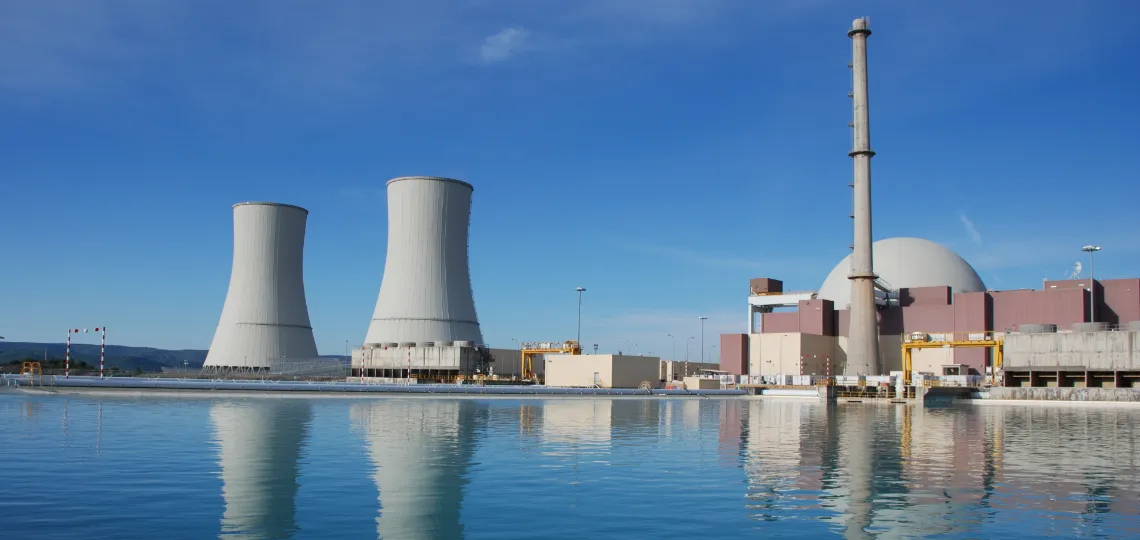
Centrales Nucleares Almaraz-Trillo (CNAT) announced it has submitted a request to Spain’s Ministry for Ecological Transition and the Demographic Challenge to amend the operating licence for units I and II of the Almaraz nuclear power plant. This move, approved during an extraordinary meeting of the board of directors and shareholders, aims to extend the operation of both units until June 2030, instead of their initially scheduled shutdown in 2027.

A strategy out of step with the 2019 roadmap

The Almaraz plant, located in the province of Cáceres, is one of seven reactors currently operating in Spain, which together supply approximately 20% of the country’s electricity. The decommissioning schedule set in 2019 planned for a gradual shutdown of the fleet between 2027 and 2035. Units I and II at Almaraz, commissioned in 1983 and 1984 respectively, are among the four reactors due to be shut down by the end of the decade.

The official request comes amid increasing scrutiny of this plan. In February, a manifesto signed by 32 companies in the sector, including Framatome, GE Vernova and Westinghouse, called for a reopening of discussions around the 2019 agreement. The document highlighted the changing industrial and geopolitical context and pointed to the role of nuclear energy in ensuring the stability of the power system.

Industrial pressure and regulatory framework

According to CNAT, the Almaraz plant continues to meet the requirements set out in the Periodic Safety Review approved by the Nuclear Safety Council (Consejo de Seguridad Nuclear, CSN) in 2020. The company stated that an annual investment of EUR50 million ($58 million) is allocated for the modernisation of the facilities. It also noted that the plant currently employs around 4,000 people and supplies power to more than 4 million households.

The sector’s core argument centres on industrial competitiveness. The February manifesto stressed that the early withdrawal of nuclear power could undermine the resilience of Spain’s energy mix. It also called for a review of the applicable tax framework, deemed too burdensome to ensure the economic viability of the plants.

Growing political support

That same month, the Spanish Congress of Deputies approved a proposal from the People’s Party in favour of reversing the nuclear phase-out plan. The motion passed with 171 votes in favour, 164 against and 14 abstentions. Although non-binding, the decision has reinforced calls for an adjustment to the national energy strategy.

CNAT’s shareholders – Iberdrola (53%), Endesa (36%) and Naturgy (11%) – have not publicly commented on the extension request. The Almaraz plant shares technical characteristics with the North Anna nuclear power plant in the United States, which recently received approval for extended operations of up to 80 years.
A public-private consortium is developing a 5 MW thermal microreactor designed to operate without refuelling for ten years, marking a strategic step in Brazil's nuclear innovation efforts.
EDF has announced that the Flamanville EPR reactor is now operating at 80% of its capacity. The target of reaching full output by the end of autumn remains confirmed by the utility.
The accelerated approval of the Aurora facility’s nuclear safety plan marks a strategic milestone in rebuilding a domestic nuclear fuel production line in the United States.
The Industrikraft consortium will invest SEK400mn ($42.2mn) to become a shareholder in Videberg Kraft, marking a new phase in Sweden’s nuclear project led by Vattenfall on the Värö Peninsula.
MVM Group has signed an agreement with Westinghouse to secure VVER-440 fuel supplies from 2028, reducing its reliance on Russia and strengthening nuclear cooperation between Budapest and Washington.
The delivery of nuclear fuel by Russian subsidiary TVEL to the Da Lat research reactor marks a key step in strengthening the nuclear commercial partnership between Moscow and Hanoi.
US supplier X-energy has formalised a graphite supply contract with Japan's Toyo Tanso for the construction of its first four small modular reactors, in partnership with Dow and backed by the US Department of Energy.
US-based Enveniam has signed an agreement with LIS Technologies Inc. to oversee the design and construction of a new laser-based uranium enrichment facility on American soil.
Faced with shorter approval timelines, several European nuclear firms, including Newcleo, Orano and Urenco, are considering relocating key industrial investments to the United States.
A consortium led by Swedish giants such as ABB, SSAB and Volvo will invest SEK400mn to support the development of small modular nuclear reactors through a strategic partnership with Vattenfall.
Russia and India are preparing an expanded agreement for the construction of VVER-1200 reactors and modular nuclear power plants, while accelerating work at the strategic Kudankulam site.
Fusion Fuel Cycles has begun work on its UNITY-2 facility, a unique test bench designed to validate the full tritium fuel cycle under fusion conditions, marking a key step toward fusion energy.
Framatome will produce TRISO fuel at Romans-sur-Isère as part of a pilot project for advanced nuclear reactors, in partnership with actors such as Blue Capsule Technology.
Sweden’s parliament has approved a major reform authorising uranium extraction, opening the door to a reassessment of the economic potential of mining projects containing this strategic mineral.
South Africa's regulator has authorised Koeberg Unit 2 to operate until 2045 following maintenance work and a long-term safety assessment.
French nuclear group Orano has confirmed the release of its representative in Niger, detained since May, as tensions remain high with the country’s junta over control of uranium assets.
EDF launches a sovereign digital platform to secure data exchanges between nuclear stakeholders, aiming to accelerate the construction of future EPR2 reactors.
ONE Nuclear Energy publishes a virtual presentation for investors detailing its industrial vision, ahead of its merger with Hennessy Capital Investment Corp. VII expected in the first half of 2026.
A majority of Americans now back nuclear energy, with strong approval for converting coal plants into nuclear sites and increasing public investment in sector technologies.
Alfa Laval extends its cooperation with EDF to supply heat exchangers for EPR2 projects across three nuclear sites, reinforcing its position in the French nuclear sector.

All the latest energy news, all the time

Annual subscription

8.25$/month*

*billed annually at 99$/year for the first year then 149,00$/year ​

Unlimited access - Archives included - Pro invoice

Monthly subscription

Unlimited access • Archives included

5.2$/month*
then 14.90$ per month thereafter

*Prices shown are exclusive of VAT, which may vary according to your location or professional status.

Since 2021: 30,000 articles - +150 analyses/week.