Amazon and X-energy advance nuclear project with 12 small reactors

Amazon unveils new visuals of its upcoming nuclear site, marking a key step in its partnership with X-energy to deploy up to 960 MW of modular nuclear capacity in Washington state.

Share:

Comprehensive energy news coverage, updated nonstop

Annual subscription

8.25$/month*

*billed annually at 99$/year for the first year then 149,00$/year ​

Unlimited access • Archives included • Professional invoice

OTHER ACCESS OPTIONS

Monthly subscription

Unlimited access • Archives included

5.2$/month*
then 14.90$ per month thereafter

FREE ACCOUNT

3 articles offered per month

FREE

*Prices are excluding VAT, which may vary depending on your location or professional status

Since 2021: 35,000 articles • 150+ analyses per week

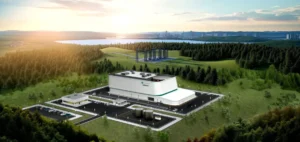
Amazon has released a series of renderings of its future Cascade Advanced Energy Center nuclear site, one year after announcing a strategic partnership with nuclear technology firm X-energy and electricity provider Energy Northwest. The project plans to install up to 12 small modular reactors (SMRs) near the Columbia Generating Station in the north-western United States.

The first block will include four SMRs for a combined output of 320 megawatts. Amazon stated that construction could begin by the end of the decade, with operations projected for the 2030s. Ultimately, the entire site could reach a total capacity of 960 MW across three blocks. The project is part of the company’s strategy to secure more than 5 GW of nuclear capacity in the United States by 2039.

Industrial partnerships and technological ambitions

Amazon and X-energy have also signed an agreement with South Korean groups Doosan Enerbility and Korea Hydro & Nuclear Power to accelerate SMR deployment. The chosen model, the Xe-100, is a fourth-generation reactor designed to operate at high temperatures using tri-structural isotropic (TRISO) particle fuel, known for its thermal resistance. Each unit produces 80 MW of electricity and can be assembled in a standardised 320 MW block.

The Xe-100 design is road-shippable and allows for faster construction timelines, meeting the energy demands of high-consumption data centres. This reactor type is also suitable for other industrial applications such as thermal processing and mining.

Deployment in the United States and local impact

The first industrial deployment site for the Xe-100 is under development at Dow Inc’s UCC Seadrift Operations site in Texas. It will be the first time a nuclear reactor is directly installed to power an industrial facility in the United States. In parallel, Amazon’s project in Washington state is expected to create at least 1,000 construction jobs and over 100 permanent roles once operational.

As part of the initiative, Columbia Basin College in Pasco, Washington, has received federal funding to open a training centre equipped with a simulator replicating the Xe-100 control room. The centre aims to train a qualified workforce to operate the site.

Governance structure and expansion options

The agreement signed between the partners gives Amazon the right to purchase electricity from the initial 320 MW block. Energy Northwest, as the local operator, retains the option to build up to eight additional modules. Power generated from these units could then be distributed between Amazon and local utilities.

French state utility EDF has increased the maximum estimated cost for building six new nuclear reactors to €72.8 billion ($85.29 billion), representing a 40% rise over the original figure.
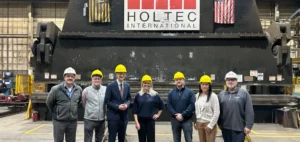
US-based Holtec has signed a memorandum of understanding with Hungary’s energy group MVM to assess the deployment of its SMR-300 technology, strengthening bilateral nuclear cooperation and opening prospects for a new market in Central Europe.
California-based startup Radiant has secured $300mn to build its first factory in Tennessee and prepare for the mass production of miniature nuclear reactors for off-grid applications.
Terra Innovatum has increased its interactions with the Nuclear Regulatory Commission to advance licensing of its SOLO™ micro-modular reactor, despite the partial shutdown of the US federal government.
The US nuclear regulator has extended the operating licences of three Illinois reactors by 20 years, strengthening Constellation's long-term industrial outlook for the Clinton and Dresden sites.
The SATURNE Industrial Chair aims to develop innovative uranium extraction methods, with joint funding from Orano and the National Research Agency over a four-year period.
US-based X-energy has signed a reservation agreement with South Korea's Doosan Enerbility to secure key components for its small modular nuclear reactors.
Samsung Heavy Industries has received Approval in Principle for a floating nuclear plant featuring two SMART100 reactors, marking a step toward the commercialisation of offshore small modular reactors.
The Indian government proposes a unified legal framework for nuclear energy, aiming to boost private investment and increase installed capacity to 100 GW by 2047.
Samsung C&T strengthens its presence in modular nuclear energy in Europe by signing an agreement with Synthos Green Energy to develop up to 24 SMRs in Poland and several Central European countries.
Israeli firm nT-Tao and Ben-Gurion University have developed a nonlinear control system that improves energy stability in fusion plasmas, strengthening the technical foundation of their future compact reactors.
The Indian government has introduced a bill allowing private companies to build and operate nuclear power plants, ending a state monopoly in place for over five decades.
Natura Resources enters a new regulatory phase for its molten salt reactor MSR-1, following the signing of a framework agreement with the US Department of Energy under the Reactor Pilot Program.
Norwegian Nuclear Decommissioning is surveying 22 localities to assess their interest in hosting storage facilities for radioactive waste from the country’s former research reactors.
Electricité de France's Flamanville 3 reactor has reached full power for the first time, marking a key industrial milestone in the deployment of EPRs in Europe, despite cost overruns reaching EUR23.7bn ($25.7bn).
GE Vernova Hitachi’s BWRX-300 small modular reactor has passed a key regulatory hurdle in the United Kingdom, opening the door to potential commercial deployment, despite no current plans for construction.
Molten salt reactor developer Natura Resources has acquired Shepherd Power and partnered with NOV to scale up modular reactor manufacturing by the next decade.
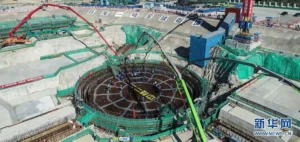
China National Nuclear Corporation expects commercial operation in 2026 for its ACP100 reactor, following successful cold testing and completion of critical structures in 2025.
Start-up SEATOM has been selected to join NATO's DIANA programme with its micro nuclear reactor designed for extreme environments, reinforcing its position in dual-use marine and military energy technologies.
The Estonian Ministry of Economic Affairs has opened a tender to select a site and conduct initial environmental studies for a 600 MW nuclear power plant, marking a decisive step for the country’s energy future.

All the latest energy news, all the time

Annual subscription

8.25$/month*

*billed annually at 99$/year for the first year then 149,00$/year ​

Unlimited access - Archives included - Pro invoice

Monthly subscription

Unlimited access • Archives included

5.2$/month*
then 14.90$ per month thereafter

*Prices shown are exclusive of VAT, which may vary according to your location or professional status.

Since 2021: 30,000 articles - +150 analyses/week.