Denmark strengthens maritime controls at Skagen Strait amid Russian shadow fleet activity

Denmark is intensifying inspections of ships passing through Skagen, a strategic point linking the North Sea and the Baltic Sea, to counter the risks posed by the Russian shadow fleet transporting sanctioned oil.

Share:

Comprehensive energy news coverage, updated nonstop

Annual subscription

8.25$/month*

*billed annually at 99$/year for the first year then 149,00$/year ​

Unlimited access • Archives included • Professional invoice

OTHER ACCESS OPTIONS

Monthly subscription

Unlimited access • Archives included

5.2$/month*
then 14.90$ per month thereafter

FREE ACCOUNT

3 articles offered per month

FREE

*Prices are excluding VAT, which may vary depending on your location or professional status

Since 2021: 35,000 articles • 150+ analyses per week

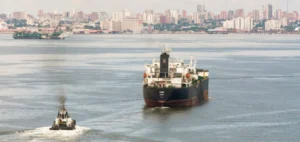
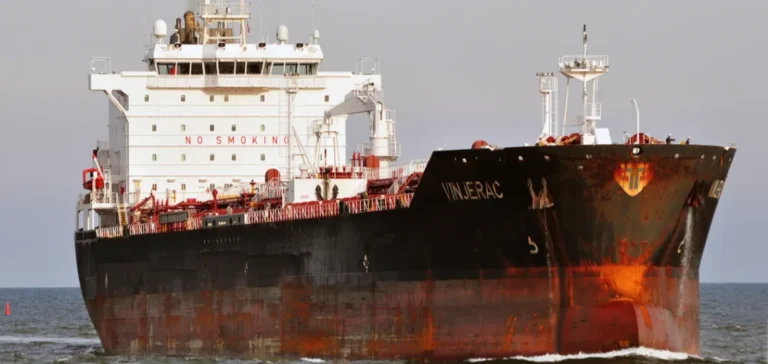
The Danish government has announced a tightening of environmental controls on ships passing through Skagen, a key maritime passage connecting the North Sea and the Baltic Sea. The decision aims to limit risks associated with ageing tankers used by the Russian shadow fleet to transport oil under international sanctions.

A coordinated strengthening of maritime inspections

The Ministry of Environment stated that the Danish Maritime Authority will cooperate with the Danish Environmental Protection Agency to carry out more frequent inspections of ships at the Skagen anchorage. Environment Minister Magnus Heunicke said that most of these vessels are old and pose a particular threat to maritime safety and the Danish marine environment.

Maritime authorities are increasing checks on compliance with basic environmental rules to better identify tankers linked to the Russian shadow fleet. This network of vessels, often operated by shell companies, transports Russian oil circumventing the sanctions imposed after the invasion of Ukraine.

Growing risks for safety and navigation

According to a joint study by S&P Global Market Intelligence and S&P Global Commodity Insights, about 940 vessels have been identified as being at risk of sanctions violations or confirmed offenders, with an average age of twenty years — well above the industry average. Minister of Industry and Trade Morten Bødskov said that many of these worn-out ships regularly navigate Danish waters, justifying the intensified inspections.

Since 2024, several Northern European countries, including Norway and Finland, have also tightened their inspections, though they have refrained from mass detentions due to international law constraints. France recently detained the captain of a tanker suspected of transporting sanctioned Russian oil.

A strategic issue for energy flows

Denmark remains bound by the Copenhagen Treaty, guaranteeing freedom of navigation in the Danish Straits. According to estimates from S&P Global Commodities at Sea, around 4.5 million barrels per day of oil passed through this zone in the first half of 2025, mainly Russian crude and refined products.

In September, Russia exported 1.6 million barrels per day of crude from the Baltic, representing 41% of its total seaborne exports. Exports of refined oil products reached 649,000 barrels per day, or 57% of the national total, confirming the Baltic’s strategic role in Russia’s energy trade.
Caspian Pipeline Consortium suspended loading and intake operations due to a storm and full storage capacity.
Frontera Energy has signed a crude supply deal worth up to $120mn with Chevron Products Company, including an initial $80mn prepayment and an option for additional funding.
Amplify Energy has completed the sale of its Oklahoma assets for $92.5mn, as part of its strategy to streamline its portfolio and optimise its financial structure.
State-owned Nigerian company NNPC has opened a bidding process to sell stakes in oil and gas assets as part of a portfolio restructuring strategy.
As offshore projects expand, Caribbean nations are investing in shore bases and specialised ports to support oil and gas operations at sea.
Turkish, Hungarian and Polish national companies confirm participation in Tripoli's summit as Libya revives upstream investments and broadens licensing opportunities.
Oil workers’ union FUP announced its intention to approve Petrobras’ latest proposal, paving the way to end a week-long national strike with no impact on production.
Subsea7 has secured a subsea installation contract from LLOG for the Buckskin South project, scheduled for execution between 2026 and 2027, strengthening its position in the Gulf of Mexico and boosting its order book visibility.
Global crude oil production is expected to rise by 0.8 million barrels per day in 2026, with Brazil, Guyana and Argentina contributing 50% of the projected increase.
Woodbridge Ventures II Inc. signs definitive agreement with Greenflame Resources for a transformative merger, alongside a concurrent financing of up to $10mn.
Interceptions of ships linked to Venezuelan oil are increasing, pushing shipowners to suspend operations as PDVSA struggles to recover from a cyberattack that disrupted its logistical systems.
Harbour Energy acquires US offshore operator LLOG for $3.2bn, adding 271 million barrels in reserves and establishing a fifth operational hub in the Gulf of Mexico.
The agreement signed with Afreximbank marks a strategic shift for Heirs Energies, aiming to scale up its exploration and production operations on Nigeria's OML 17 oil block.
Oritsemeyiwa Eyesan’s appointment as head of Nigeria’s oil regulator marks a strategic shift as the country targets $10bn in upstream investment through regulatory reform and transparent licensing.
Baghdad states that all international companies operating in Kurdistan’s oil fields must transfer their production to state marketer SOMO, under the agreement signed with Erbil in September.
Chinese oil group CNOOC continues its expansion strategy with a new production start-up in the Pearl River Basin, marking its ninth offshore launch in 2025.
A train carrying over 1,200 tonnes of gasoline produced in Azerbaijan entered Armenia on December 19, marking the first commercial operation since recent conflicts, with concrete implications for regional transit.
Subsea 7 has secured a new extension of its frame agreement with Equinor for subsea inspection, maintenance and repair services through 2027, deploying the Seven Viking vessel on the Norwegian Continental Shelf.
Caracas says Iran has offered reinforced cooperation after the interception of two ships carrying Venezuelan crude, amid escalating tensions with the United States.
US authorities intercepted a second oil tanker carrying Venezuelan crude, escalating pressure on Caracas amid accusations of trafficking and tensions over sanctioned oil exports.

All the latest energy news, all the time

Annual subscription

8.25$/month*

*billed annually at 99$/year for the first year then 149,00$/year ​

Unlimited access - Archives included - Pro invoice

Monthly subscription

Unlimited access • Archives included

5.2$/month*
then 14.90$ per month thereafter

*Prices shown are exclusive of VAT, which may vary according to your location or professional status.

Since 2021: 30,000 articles - +150 analyses/week.