South Africa confirms environmental authorisation for Duynefontein nuclear power plant

The South African Minister of the Environment has approved Eskom’s authorisation to build a nuclear power plant in Duynefontein, ending appeals lodged by several environmental organisations.

Share:

Comprehensive energy news coverage, updated nonstop

Annual subscription

8.25€/month*

*billed annually at 99€/year for the first year then 149,00€/year ​

Unlimited access • Archives included • Professional invoice

OTHER ACCESS OPTIONS

Monthly subscription

Unlimited access • Archives included

5.2€/month*
then 14.90€ per month thereafter

FREE ACCOUNT

3 articles offered per month

FREE

*Prices are excluding VAT, which may vary depending on your location or professional status

Since 2021: 35,000 articles • 150+ analyses per week

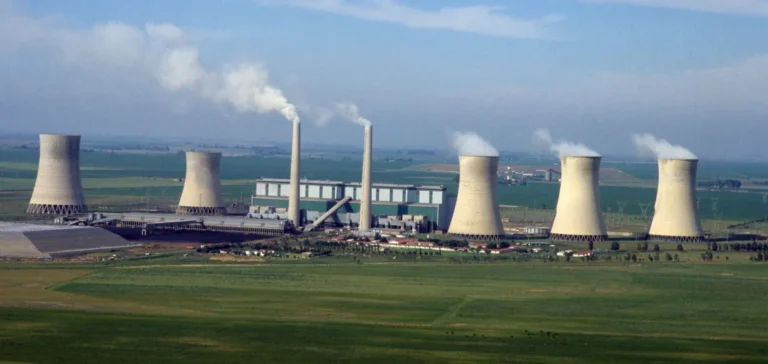
South Africa’s Minister of Forestry, Fisheries and the Environment, Dion George, has upheld the 2017 decision to authorise the state-owned utility Eskom to construct and operate a nuclear power plant in Duynefontein, located in the Western Cape province. The authorisation, initially granted by the Department of Environmental Affairs, had been challenged by several environmental organisations, but those appeals have now been dismissed.

Procedure and regulatory framework
Dion George stated that his decision followed a thorough review of the Environmental Impact Assessment Report (EIAr) and an independent peer review conducted by experts. He specified that the assessment had been carried out in line with the principles of the National Environmental Management Act, 1998 (Act No. 107 of 1998), taking into account environmental, social and economic considerations.

The minister also noted that the environmental authorisation does not exempt Eskom from obtaining other regulatory approvals. The company must comply with the requirements of the National Nuclear Regulator (NNR) to secure a nuclear installation licence, obtain approval from the National Energy Regulator of South Africa, and acquire water use licences from the Department of Water and Sanitation, in addition to other necessary permits.

Planned capacity and project background
The Duynefontein site is located adjacent to the Koeberg nuclear power plant, which is also operated by Eskom. In March 2016, the company submitted licence applications to the NNR for both this site and Thyspunt, with the objective of constructing multiple nuclear reactors and associated auxiliary installations. In 2017, the Department of Environmental Affairs authorised the installation of 4,000 MWe of nuclear capacity at either site.

In January 2024, the South African government unveiled a plan to develop 2.5 GWe of new nuclear capacity. However, the process was paused in August 2024 to allow for broader public consultation. The validation of the Duynefontein authorisation therefore comes in the context of a gradual resumption of the national nuclear agenda.

Nuclear sector position
Loyiso Tyabashe, Chief Executive Officer of Nuclear Energy Corporation of South Africa Ltd (Necsa), welcomed the decision, calling it a significant milestone for the country’s nuclear industry. He stated that Necsa would continue to cooperate with the Department of Electricity and Energy as well as with Eskom, leveraging its technical expertise to maximise the project’s industrial and economic benefits.
US fusion energy leaders have called on the federal government to redirect public funding towards their projects, arguing that large-scale investment is needed to stay competitive with China.
Santee Cooper has approved a memorandum of understanding with Brookfield Asset Management to assess the feasibility of restarting two unfinished nuclear reactors, with a potential $2.7 billion payment and 550 MW capacity stake.
Helical Fusion has signed a landmark agreement with Aoki Super to supply electricity from fusion, marking a first in Japan’s energy sector and a commercial step forward for the helical stellarator technology.
India’s nuclear capacity is expected to grow by more than 13,000 MW by 2032, driven by ongoing heavy water reactor construction, new regional projects and small modular reactor development by the Bhabha Atomic Research Centre.
NextEra Energy has lifted its earnings estimates for 2025 and 2026, supported by power demand linked to long‑term contracts previously signed with Google and Meta to supply their artificial intelligence data centres with low‑carbon electricity.
London launches a complete regulatory overhaul of its nuclear industry to shorten authorisation timelines, expand eligible sites, and lower construction and financing costs.
Finland's Ministry of Economic Affairs extends the deadline to June 2026 for the regulator to complete its review of the operating licence for the Olkiluoto spent nuclear fuel repository.
Framatome will replace several digital control systems at the Columbia plant in the United States under a contract awarded by Energy Northwest.
The conditional green light from the nuclear regulator moves Cigéo into its final regulatory stage, while shifting the risks towards financing, territorial negotiations and industrial execution.
The drone strike confirmed by the IAEA on the Chernobyl site vault exposes Ukraine to a nuclear risk under armed conflict, forcing the EBRD to finance partial restoration while industry standards must now account for drone threats.
Deep Fission is installing a 15 MWe pressurised reactor 1.6 km underground at Great Plains Industrial Park, under the Department of Energy’s accelerated pilot programme, targeting criticality by July 4, 2026.
EDF commits to supply 33 MW of nuclear electricity to Verkor over 12 years, enabling the battery manufacturer to stabilise energy costs ahead of launching its first Gigafactory.
The full-scope simulator for the Lianjiang nuclear project has successfully passed factory acceptance testing, paving the way for its installation at the construction site in China's Guangdong province.
A coalition of Danish industry groups, unions and investors launches a platform in support of modular nuclear power, aiming to develop firm low-carbon capacity to sustain industrial competitiveness.
The United Kingdom and TAE Technologies create a joint venture in Culham to produce neutral beams, a key component of fusion, with strategic backing from Google.
Texas-based developer Natura Resources receives new federal funding to test key components of its 100-megawatt modular reactor in partnership with Oak Ridge National Laboratory.
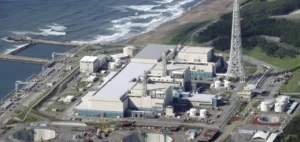
The Niigata regional assembly is deliberating on restarting unit 6 of the world’s largest nuclear plant, thirteen years after operations ceased following the Fukushima disaster.
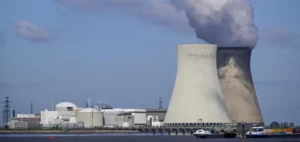
Reactor Doel 2 was taken offline, becoming the fifth Belgian reactor to cease operations under the country’s gradual nuclear phase-out policy.
Rolls-Royce SMR has expanded its partnership with ÚJV Řež to accelerate the deployment of small modular reactors, targeting the construction of several units in the Czech Republic and abroad.
The Indian government aims to amend legislation to allow private companies to participate in civil nuclear development, a move positioned as critical to achieving the country’s long-term energy targets.

All the latest energy news, all the time

Annual subscription

8.25€/month*

*billed annually at 99€/year for the first year then 149,00€/year ​

Unlimited access - Archives included - Pro invoice

Monthly subscription

Unlimited access • Archives included

5.2€/month*
then 14.90€ per month thereafter

*Prices shown are exclusive of VAT, which may vary according to your location or professional status.

Since 2021: 30,000 articles - +150 analyses/week.