Outages in Nouakchott expose weaknesses in Mauritania’s power grid

Nouakchott has endured lengthy power interruptions for several weeks, highlighting the financial and technical limits of the Mauritanian Electricity Company as Mauritania aims to widen access and green its mix by 2030.

Share:

Comprehensive energy news coverage, updated nonstop

Annual subscription

8.25$/month*

*billed annually at 99$/year for the first year then 149,00$/year ​

Unlimited access • Archives included • Professional invoice

OTHER ACCESS OPTIONS

Monthly subscription

Unlimited access • Archives included

5.2$/month*
then 14.90$ per month thereafter

FREE ACCOUNT

3 articles offered per month

FREE

*Prices are excluding VAT, which may vary depending on your location or professional status

Since 2021: 35,000 articles • 150+ analyses per week

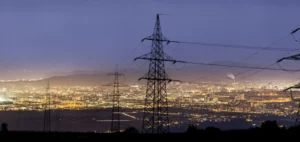
Long power cuts have paralysed Nouakchott since late June, forcing businesses and households to suspend activities for several hours each day. The interruptions, sometimes lasting more than six hours, underline the fragility of the Mauritanian Electricity Company (SOMELEC) network. Agence Ecofin reported on fifteen July that the capital accounts for more than half of national demand. The crisis underscores the gap between the country’s energy potential and operational reality on the ground.

Ageing infrastructure
The National Energy Pact, launched in 2022 under the Mission300 initiative, aims to raise the electricity access rate from fifty-five per cent to 100 % by 2030. Yet Le360 reported on fourteen July that SOMELEC absorbs about two per cent of gross domestic product each year in public transfers, a burden that peaked at 3.2 % in 2019, signalling a hardly sustainable business model. Lacking targeted investment, the company struggles to maintain an already ageing thermal fleet.

In 2023 Mauritanian output totalled 1.66 TWh for an installed capacity of 615 MW, but barely 520 MW were actually available at peak hours. This narrow margin leaves little room for technical setbacks, explaining the rising frequency of load-shedding. Technical and commercial losses approach thirty per cent of injected power, according to official data. Outlying districts of Nouakchott, less well connected, are the first to feel the fluctuations.

Financial burden
Minister of Economy Sid Ahmed Ould Bouh said that “current supply remains insufficient in the face of fast-growing demand,” remarks carried by Saharamedias on twelve July. The state still subsidises fossil-fuel purchases, limiting budgetary room for network modernisation. World Bank experts estimate that annual demand growth of seven % could create production shortfalls exceeding one hundred megawatts by 2027. Dependence on imported hydrocarbons also exposes the national energy bill to global price swings.

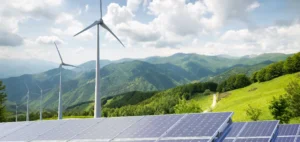
According to the Ministry of Petroleum, Energy and Mines, renewable energy should reach seventy per cent of the mix by 2030 through desert wind and solar projects. The same document calls for multiplying installed capacity by 1.66 to more than one thousand megawatts by decade’s end. Achieving those goals presupposes the swift start-up of the offshore Grand Tortue Ahmeyim gas field. For now, Nouakchott residents still rely on ageing diesel plants whose reliability is waning.

Necessary modernisation
SOMELEC engineers estimate that priority replacement of two hundred kilometres of urban cables would cut losses by five points. International lenders, including the Islamic Development Bank, are nonetheless tying loans to a reduction in operating deficits. Payment delays by large public consumers further strain the operator’s cash flow, creating a vicious circle of under-investment and breakdowns. Unless this refurbishment begins, load-shedding is likely to remain the norm for the capital.
National operator PSE partners with armed forces to protect transformer stations as critical infrastructure faces sabotage linked to foreign interference.
The Norwegian government establishes a commission to anticipate the decline of hydrocarbons and assess economic options for the country in the coming decades.
Kazakhstan plans to allocate 3 GW of wind and solar projects by the end of 2026 through public tenders, with a first 1 GW tranche in 2025, amid efforts to modernise its power system.
Hurricanes Beryl, Helene and Milton accounted for 80% of electricity outages recorded in 2024, marking a ten-year high according to federal data.
The French Energy Regulatory Commission introduces a temporary prudential control on gas and electricity suppliers through a “guichet à blanc” opening in December, pending the transposition of European rules.
The Carney–Smith agreement launches a new pipeline to Asia, removes oil and gas emission caps, and initiates reform of the Pacific north coast tanker ban.
The gradual exit from CfD contracts is turning stable assets into infrastructures exposed to higher volatility, challenging expected returns and traditional financing models for the renewable sector.
The Canadian government introduces major legislative changes to the Energy Efficiency Act to support its national strategy and adapt to the realities of digital commerce.
Quebec becomes the only Canadian province where a carbon price still applies directly to fuels, as Ottawa eliminated the public-facing carbon tax in April 2025.
New Delhi launches a 72.8 bn INR incentive plan to build a 6,000-tonne domestic capacity for permanent magnets, amid rising Chinese export restrictions on critical components.
The rise of CfDs, PPAs and capacity mechanisms signals a structural shift: markets alone no longer cover 10–30-year financing needs, while spot prices have surged 400% in Europe since 2019.
Germany plans to finalise the €5.8bn ($6.34bn) purchase of a 25.1% stake in TenneT Germany to strengthen its control over critical national power grid infrastructure.
The Ghanaian government is implementing a reform of its energy system focused on increasing the use of local natural gas, aiming to reduce electricity production costs and limit the sector's financial imbalance.
On the 50th anniversary of its independence, Suriname announced a national roadmap including major public investment to develop its offshore oil reserves.
In its latest review, the International Energy Agency warns of structural blockages in South Korea’s electricity market, calling for urgent reforms to close the gap on renewables and reduce dependence on imported fossil fuels.
China's power generation capacity recorded strong growth in October, driven by continued expansion of solar and wind, according to official data from the National Energy Administration.
The 2026–2031 offshore programme proposes opening over one billion acres to oil exploration, triggering a regulatory clash between Washington, coastal states and legal advocacy groups.
The government of Mozambique is consolidating its gas transport and regasification assets under a public vehicle, anchoring the strategic Beira–Rompco corridor to support Rovuma projects and respond to South Africa’s gas dependency.
The British system operator NESO initiates a consultation process to define the methodology of eleven upcoming regional strategic plans aimed at coordinating energy needs across England, Scotland and Wales.
The Belém summit ends with a technical compromise prioritising forest investment and adaptation, while avoiding fossil fuel discussions and opening a climate–trade dialogue likely to trigger new regulatory disputes.

All the latest energy news, all the time

Annual subscription

8.25$/month*

*billed annually at 99$/year for the first year then 149,00$/year ​

Unlimited access - Archives included - Pro invoice

Monthly subscription

Unlimited access • Archives included

5.2$/month*
then 14.90$ per month thereafter

*Prices shown are exclusive of VAT, which may vary according to your location or professional status.

Since 2021: 30,000 articles - +150 analyses/week.