Zambia launches $270mn power interconnection project with DRC

Zambia has approved the construction of a 200 km high-voltage line to DRC to diversify its electricity supply and boost regional trade.

Share:

Comprehensive energy news coverage, updated nonstop

Annual subscription

8.25$/month*

*billed annually at 99$/year for the first year then 149,00$/year ​

Unlimited access • Archives included • Professional invoice

OTHER ACCESS OPTIONS

Monthly subscription

Unlimited access • Archives included

5.2$/month*
then 14.90$ per month thereafter

FREE ACCOUNT

3 articles offered per month

FREE

*Prices are excluding VAT, which may vary depending on your location or professional status

Since 2021: 35,000 articles • 150+ analyses per week

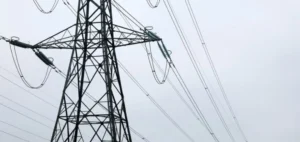
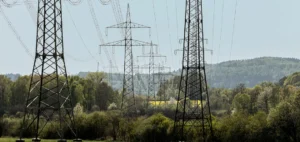
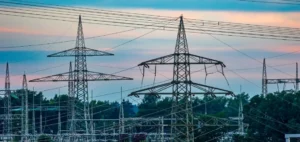
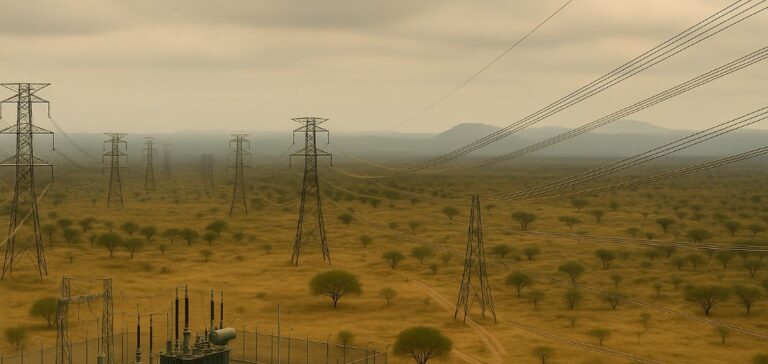
The Energy Regulation Board (ERB), Zambia’s energy sector regulatory authority, has approved a 200-kilometre high-voltage transmission line project connecting the country to the Democratic Republic of Congo (DRC). Estimated at $270mn (approximately ZMW7.1bn), the Kalumbila-Kolwezi Interconnector Project (KKIP) aims to strengthen integration between the two countries’ power grids.

The decision comes amid growing pressure on Zambia’s energy system, which has been weakened by prolonged drought conditions affecting hydropower production. In response, the government introduced emergency measures in 2023, including a request for mining companies to reduce their electricity consumption.

A project serving the mining sector

The KKIP route will link directly to a substation located at the Sentinel copper mine, operated by Canadian firm First Quantum Minerals in the Kalumbila district. The infrastructure is designed to secure electricity supply for a site that plays a key role in the national economy, which is heavily reliant on mining.

Private company Enterprise Power DRC, involved in the project’s implementation, stated that the interconnection will facilitate electricity trade between the two countries. The company will cooperate with grid operators in both Zambia and the DRC to ensure stable and reliable cross-border flows.

A regional strategy for energy integration

The KKIP forms part of a broader initiative by the Zambian government to expand interconnections with neighbouring countries. On April 22, Zambia launched another major project with Tanzania under the Zambia-Tanzania-Kenya (ZTK) corridor. This $292mn (approximately ZMW7.7bn) project is funded by the World Bank, the European Union, and the United Kingdom.

The corridor aims to link the electricity networks of Southern and Eastern Africa by 2027. It is also intended to foster regional energy market integration and provide a structural response to climate-related pressures on national capacity.

Towards a shared power market

Cooperation with the DRC gives Zambia access to significant and underutilised hydropower potential. The KKIP marks a step towards a more stable, shared power market, as both countries seek to attract private investment into energy infrastructure.

The Ministry of Energy has yet to disclose financing arrangements for the KKIP. However, bilateral and multilateral talks are underway to secure the necessary funding. Construction is expected to begin in the coming months, pending finalisation of technical and commercial agreements.

The European Commission enforces a new governance of electricity grids through eight energy highways, putting pressure on France as Spain and Portugal push to triple interconnection capacity by 2040.
The European Commission is set to launch a massive plan to modernise electricity transmission networks, including eight key projects, reinforced storage capacity, and the creation of cross-border hydrogen corridors.
The European Commission launches a reform to centralise infrastructure decisions and accelerate permitting in order to unblock renewable capacities currently constrained by grid congestion.
The UK regulator has approved a £28bn investment plan for electricity and gas networks from 2026 to 2031, setting strict performance conditions for operators while increasing household energy bills.
Brussels validates a new list of 235 PCI/PMI infrastructure projects, prioritising electricity, hydrogen and CO₂ corridors, while locking in access conditions to European funding through 2040.
Azerbaijan is developing Nakhchivan into a key electricity export hub with interconnection projects to Türkiye, boosting regional integration into the European energy market.
The European Union faces a €30bn public funding gap for cross-border electricity interconnections, jeopardising supply security and market integration by 2040.
The new Vunumoya station, built for over $58mn in 18 months, marks a strategic step toward integrating 900 MW of renewable energy in the mining region of Mpumalanga.
A joint vehicle between RWE and Apollo injects €3.2bn into the 25.1% stake in Amprion to support a €36.4bn investment plan in German power grids by 2029, consolidating a hybrid public-private model.
Türkiye enters advanced negotiations with the World Bank for $6bn in funding to strengthen its electricity transmission network, a key condition for expanding its renewable and nuclear capacity.
The Government of Ontario has tasked Hydro One with developing a strategic power line between Bowmanville and the Greater Toronto Area, offering equity participation to nearby First Nations.
China Southern Power Grid continues its network modernisation operations in Africa, introducing its technologies in Cairo and training local technicians to support long-term energy cooperation with the continent.
Avangrid has obtained the final regulatory approval for the NECEC project, a 1,200-megawatt cross-border transmission line connecting Québec hydropower to New England.
The European hydrogen interconnection project H2med reaches a key milestone with the technical validation of the BarMar route between Barcelona and Marseille, confirming the viability of the subsea corridor for expected operation in 2032.
Vattenfall has signed an agreement to sell its Independent Distribution Network Operator in the UK to Eclipse Power, a subsidiary of Octopus Sky Fund, marking a strategic refocus of its energy investments.
Shanghai Electric signed a framework agreement with Siemens to develop medium- and low-voltage equipment, aiming to modernise China’s power grids and support national decarbonisation targets.
Germany allocates a €7.6bn ($8.14bn) ceiling to acquire a minority interest in TenneT Germany, bolstering control over strategic grid infrastructure without a full buyout of the Dutch-owned subsidiary.
Naturgy secures major financing from the European Investment Bank to modernise Panama’s power infrastructure, in a strategic project supporting grid reliability and regional integration.
A $430mn funding package will be allocated by the World Bank to Tunisia to modernise its electrical grid and strengthen its integration with renewable capacity, aiming to attract $2.8bn in private investments.
German grid operator 50Hertz commits to nearly 30 GW of new connection capacity by 2029, amid network saturation and calls for reforming access procedures.

All the latest energy news, all the time

Annual subscription

8.25$/month*

*billed annually at 99$/year for the first year then 149,00$/year ​

Unlimited access - Archives included - Pro invoice

Monthly subscription

Unlimited access • Archives included

5.2$/month*
then 14.90$ per month thereafter

*Prices shown are exclusive of VAT, which may vary according to your location or professional status.

Since 2021: 30,000 articles - +150 analyses/week.