European Oil Majors Slow Down Their Energy Transition

Facing a renewable energy market deemed less profitable, several European oil and gas companies are shifting their strategy. BP, Shell, and Enel are reducing their green investments to prioritize hydrocarbons, while TotalEnergies maintains a hybrid approach.

Share:

Comprehensive energy news coverage, updated nonstop

Annual subscription

8.25$/month*

*billed annually at 99$/year for the first year then 149,00$/year ​

Unlimited access • Archives included • Professional invoice

OTHER ACCESS OPTIONS

Monthly subscription

Unlimited access • Archives included

5.2$/month*
then 14.90$ per month thereafter

FREE ACCOUNT

3 articles offered per month

FREE

*Prices are excluding VAT, which may vary depending on your location or professional status

Since 2021: 35,000 articles • 150+ analyses per week

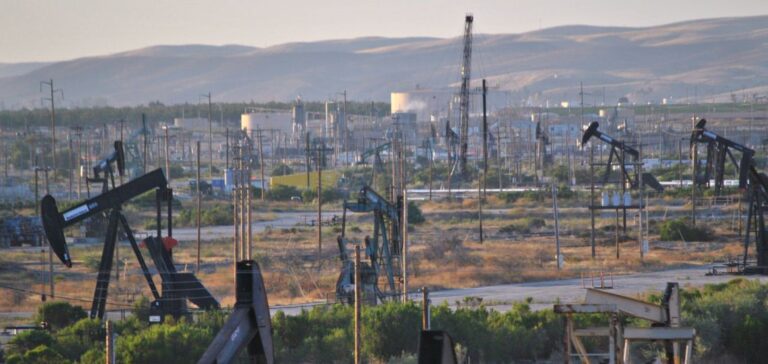
The European oil industry is reassessing its priorities. After setting ambitious targets for energy transition, several companies are now scaling back their renewable energy commitments. This shift is driven by perceived lower returns and increasing pressure from investors seeking higher stock market valuations.

Diverging Projections on Oil Demand

While the International Energy Agency (IEA) predicts a peak in global oil demand by the end of the decade, other forecasts suggest this turning point is still far off. Vitol, a leading independent trader, does not foresee a decline before 2040, whereas TotalEnergies estimates the threshold between 2030 and 2035. Meanwhile, the Organization of the Petroleum Exporting Countries (OPEC) expects demand to continue growing at least until 2050.

Amid this uncertainty, major oil companies are adjusting their strategies. They argue that the development of renewable energy remains insufficient to compensate for hydrocarbon demand, especially in emerging markets where energy consumption continues to rise.

European Majors Backtrack

Some European companies, once at the forefront of the energy transition, are now scaling back their ambitions. Enel has reduced its renewable energy budget by €5 billion for the 2024-2026 period. BP, which had committed to cutting hydrocarbon production by 25% by 2030, is under investor pressure to revise this target downward. In December 2024, the British group announced a significant reduction in its offshore wind investments, opting instead to form a joint venture with Japanese company Jera.

Shell is adopting a similar approach. The company confirmed in December that it would no longer develop new offshore wind projects, arguing that it lacks a competitive advantage in this segment. Instead, management is focusing on historically more profitable activities, particularly liquefied natural gas (LNG).

TotalEnergies Maintains a Hybrid Approach

In contrast to this trend, TotalEnergies is sticking to its renewable energy targets. The company aims to reach 100 gigawatts (GW) of renewable electricity capacity by 2030 and allocate one-third of its investments to so-called “low-carbon energy.” However, this category also includes hybrid segments such as biofuels, biogas, and gas-fired power plants, indicating a more gradual than disruptive approach.

Furthermore, TotalEnergies has no plans to reduce its oil and gas production. In October 2024, the company raised its growth forecasts for these sectors, projecting an annual increase of 3% until 2030, with a particular focus on natural gas.

American and National Oil Majors in Observation Mode

While American oil giants such as ExxonMobil and Chevron have set emission reduction targets, they remain primarily focused on hydrocarbon production. Unlike their European counterparts, they have made minimal investments in renewable electricity.

National oil companies (NOCs), which control more than 50% of global production, also play a crucial role. Some, including Aramco, Adnoc, and PetroChina, have announced long-term climate goals, aiming for carbon neutrality in their operations between 2045 and 2050. However, these commitments remain limited compared to Western majors, which are subject to stricter transparency requirements.

The strategic realignment of European companies highlights a trade-off between immediate profitability and energy transition. As projections on global oil demand continue to diverge, the market’s evolution will dictate further adjustments by major players in the sector.

Q ENERGY France and the Association of Rural Mayors of France have entered a strategic partnership to develop local electrification and support France's energy sovereignty through rural territories.
ACWA Power, Badeel and SAPCO have secured $8.2bn in financing to develop seven solar and wind power plants with a combined capacity of 15 GW in Saudi Arabia, under the national programme overseen by the Ministry of Energy.
Hydro-Québec reports a 29% increase in net income over nine months in 2025, supported by a profitable export strategy and financial gains from an asset sale.
Antin Infrastructure Partners is preparing to sell Idex in early 2026, with four North American funds competing for a strategic asset in the European district heating market.
EDF could sell up to 100% of its US renewables unit, valued at nearly €4bn ($4.35bn), to focus on French nuclear projects amid rising debt and growing political uncertainty in the United States.
Norsk Hydro plans to shut down five extrusion plants in Europe in 2026, impacting 730 employees, as part of a restructuring aimed at improving profitability in a pressured market.
The City of Paris has awarded Dalkia the concession for its urban heating network, a €15bn contract, ousting long-time operator Engie after a five-year process.
NU E Power Corp. completed the purchase of 500 MW in energy assets from ACT Mid Market Ltd. and appointed Broderick Gunning as Chief Executive Officer, marking a new strategic phase for the company.
Commodities trader BB Energy has cut over a dozen jobs in Houston and will shift some administrative roles to Europe as part of a strategic reorganisation.
Ferrari has entered into an agreement with Shell for the supply of 650 GWh of renewable electricity until 2034, covering nearly half of the energy needs of its Maranello site.
By divesting assets in Mexico, France and Eastern Europe, Iberdrola reduces exposure to non-strategic markets to strengthen its positions in regulated networks in the United Kingdom, the United States and Brazil, following a targeted capital reallocation strategy.
Iberdrola offers to buy the remaining 16.2% of Neoenergia for 32.5 BRL per share, valuing the transaction at approximately €1.03bn to simplify its Brazilian subsidiary’s structure.
Paratus Energy Services collected $38mn via its subsidiary Fontis Energy for overdue invoices in Mexico, supported by a public fund aimed at stabilising supplier payments.
CrossBoundary Energy secures a $200mn multi-project debt facility, backed by Standard Bank and a $495mn MIGA guarantee, to supply solar and storage solutions for industrial and mining clients across up to 20 African countries.
Mercuria finalises an Asian syndicated loan refinancing with a 35% increase from 2024, consolidating its strategic position in the region.
Sixty Fortune 100 companies are attending COP30, illustrating a growing disconnect between federal US policy and corporate strategies facing international climate regulations.
Tanmiah Food Company signed three memorandums of understanding to reduce its emissions and launched the region’s first poultry facility cooled by geothermal energy, in alignment with Saudi Arabia’s industrial ambitions.
Subsea7 posted higher operating profit and a record order backlog, supported by long-term contracts in the Subsea and Renewables segments.
Adnoc signed multiple agreements with Chinese groups during CIIE, expanding commercial exchange and industrial cooperation with Beijing in oil, gas and petrochemical materials.
Cenovus Energy completed a $2.6bn cross-border bond issuance and plans to repurchase over $1.7bn in maturing notes as part of active debt management.

All the latest energy news, all the time

Annual subscription

8.25$/month*

*billed annually at 99$/year for the first year then 149,00$/year ​

Unlimited access - Archives included - Pro invoice

Monthly subscription

Unlimited access • Archives included

5.2$/month*
then 14.90$ per month thereafter

*Prices shown are exclusive of VAT, which may vary according to your location or professional status.

Since 2021: 30,000 articles - +150 analyses/week.