Woodfibre LNG develops world’s first net zero LNG export facility
Pacific Energy’s Canadian subsidiary plans to produce liquefied natural gas with one of the lowest carbon intensities in the sector, using low-emission technologies and local carbon credits.
| Sectors | Gas, LNG |
|---|---|
| Themes | Innovation & Transformation, Sector Innovation |
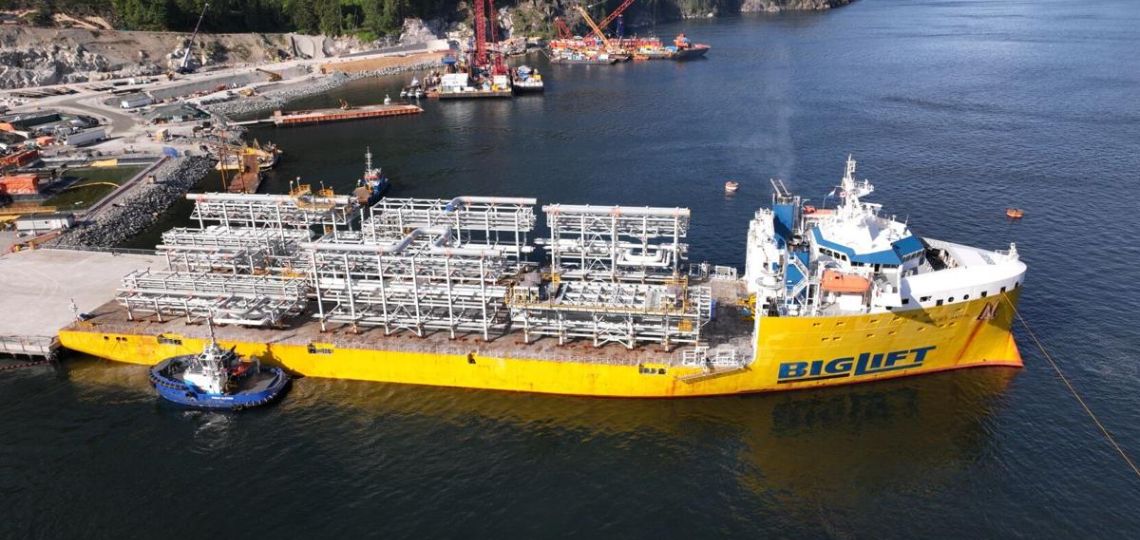
Woodfibre LNG, a subsidiary of Pacific Energy and part of the Singapore-based Royal Golden Eagle conglomerate, is developing a liquefied natural gas (LNG) infrastructure in Squamish, British Columbia, set to become the first LNG export facility to reach net zero emissions. This target applies not only to the operational phase but also to the construction period.
The project relies on a combination of emissions reduction technologies and validated carbon offset mechanisms. The E-Drive system, which powers liquefaction compressors with renewable hydroelectricity, is the central innovation. According to the company, this technology is expected to avoid the emission of more than 230,000 tonnes of carbon dioxide equivalent (CO2e) annually.
On-site direct emissions reduction
Additional emission-limiting features have been incorporated into the facility’s design. Boil-off gas will be reliquefied to prevent atmospheric release, helping avoid over 11,000 tonnes of CO2e per year. An air cooling system, implemented in accordance with the Squamish Nation Environmental Assessment Agreement, will reduce another 3,000 tonnes of CO2e annually by replacing traditional seawater-based methods.
These combined initiatives aim for a carbon intensity of 0.04 tonnes of CO2 per tonne of LNG produced—significantly lower than the global industry average. This figure is independently verified by Brightspot Climate and aligns with British Columbia’s regulatory requirements.
Use of local carbon credits
To offset remaining emissions, Woodfibre LNG will use carbon credits generated by forest conservation projects in partnership with local Indigenous communities. These credits are based on the preservation of forest ecosystems capable of storing carbon dioxide over the long term.
According to Ratnesh Bedi, President of Pacific Energy, the strategy shows that achieving net zero emissions is technically feasible today. He stated that the project sets a new standard for how energy can be produced with significantly reduced carbon impact.