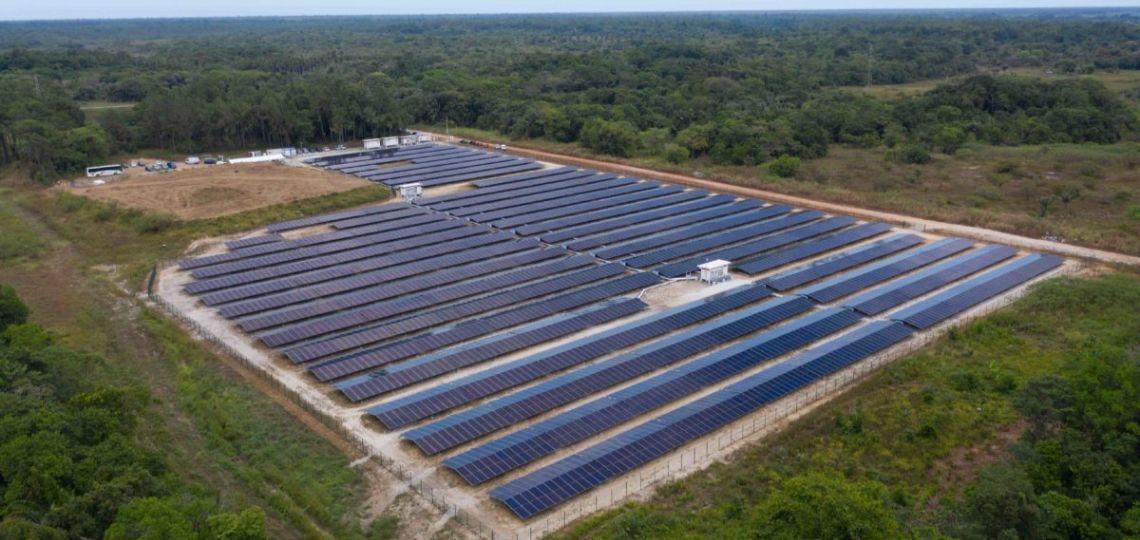
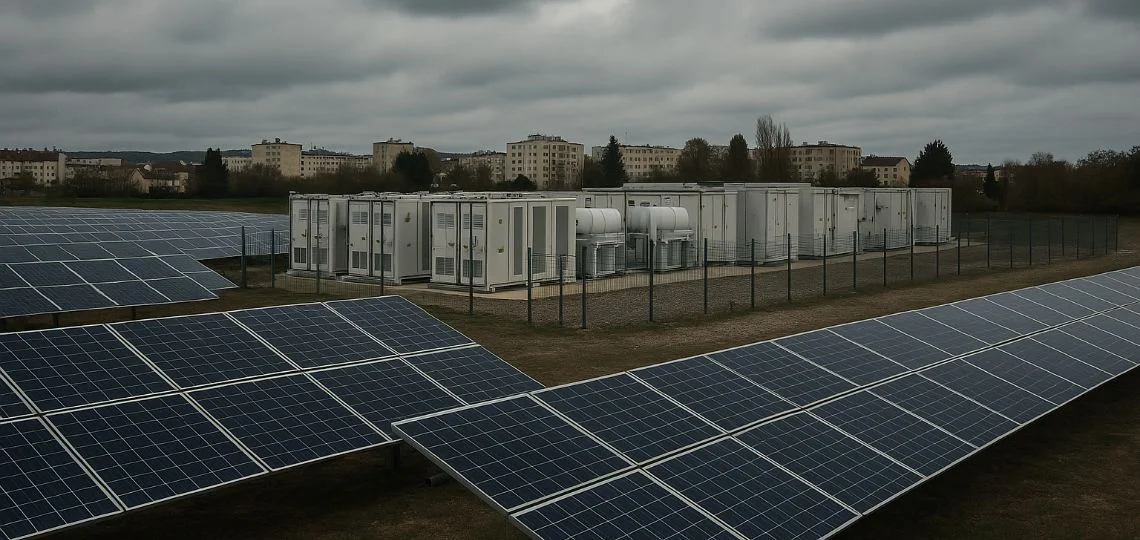
Voltalia has begun site preparation works for its hybrid power plant project in Sainte-Anne, western French Guiana. The facility will combine a 43-megawatt photovoltaic capacity, a 135-megawatt-hour lithium-ion storage system and biofuel-powered generators used only in emergency situations. Construction, with commissioning scheduled for 2028, aligns with the Multi-Year Energy Programme (PPE) of the region.
A response to the imbalance in the local grid
The plant will produce around 50 gigawatt-hours of electricity annually, enough to supply 50,000 people in French Guiana. This capacity aims to meet the rising energy needs of the Saint-Laurent-du-Maroni area, which is experiencing rapid population growth. Located close to the EDF source substation at Carrefour Margot, the site is strategically positioned for direct integration into the local grid, often under strain.
The storage system, with 34 megawatts of delivered power, is designed to stabilise intermittent solar output and ensure continuous supply. The biofuel generators, using HVO1 fuel, will be activated only in case of critical grid imbalance, enhancing supply security in this isolated region.
Construction scheduled over three years
The project represents a strategic energy infrastructure for the territory, which is heavily reliant on imported fossil fuels and faces high production costs. Site preparation began at the end of July and will continue until the planned commissioning in 2028. The goal is to gradually bring systems online without service interruption.
Voltalia plans to oversee the full development cycle from construction to operation. The company is strengthening its presence in French Guiana, where it already leads several projects aligned with the national energy independence goals. The Sainte-Anne plant is designed to operate autonomously, without relying on the national grid, making it a technical reference for isolated tropical regions.
An infrastructure adapted to local constraints
The site’s geographic and climatic conditions required specific design considerations. The plant has been engineered to withstand heavy rainfall and high temperatures while minimising land use through modular solutions. It has been designed for future scalability, including potential expansions in storage or generation.
The combination of three energy sources—solar, batteries, and biofuel—follows an operational optimisation model for a region where isolated grids pose a persistent challenge. Battery systems enable solar power to be shifted into evening peak demand, while emergency backup units ensure continuous service under all circumstances.