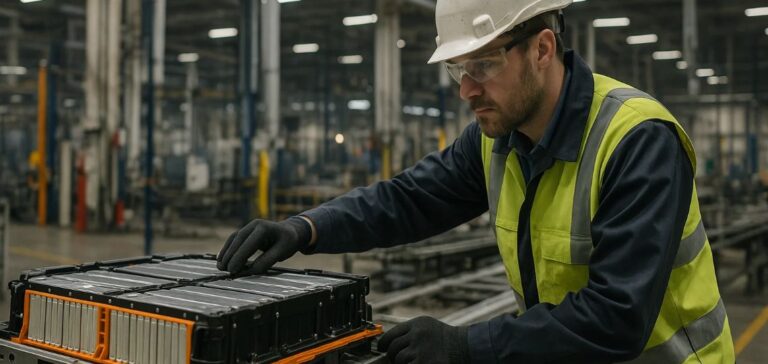
Verkor begins production testing at its battery plant in Dunkirk

Backed by Meridiam, Verkor's Dunkirk facility begins testing ahead of planned production launch in early 2026, with Renault as a primary client.

Share:

Comprehensive energy news coverage, updated nonstop

Annual subscription

8.25€/month*

*billed annually at 99€/year for the first year then 149,00€/year ​

Unlimited access • Archives included • Professional invoice

OTHER ACCESS OPTIONS

Monthly subscription

Unlimited access • Archives included

5.2€/month*
then 14.90€ per month thereafter

FREE ACCOUNT

3 articles offered per month

FREE

*Prices are excluding VAT, which may vary depending on your location or professional status

Since 2021: 35,000 articles • 150+ analyses per week

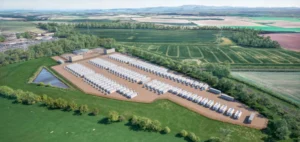
The electric vehicle battery factory developed by French company Verkor in Dunkirk has entered its production testing phase, according to infrastructure fund Meridiam, one of the project’s major investors. The facility, a symbol of France’s reindustrialisation effort, is “nearly completed”, stated Thierry Déau, Chief Executive Officer of Meridiam, during a press exchange in Paris marking the fund’s 20th anniversary. Meridiam has invested €200mn in the gigafactory.

Commercial launch targeted for early 2026

Final mechanical and electrical connections of the equipment are scheduled for the coming weeks, according to earlier remarks from Verkor co-founder Benoît Lemaignan. Commercial production is expected to begin no later than early 2026. By 2028, the facility will have a production capacity of up to 16 GWh of lithium-ion cells per year, with 12 GWh allocated to Renault. This volume corresponds to energy storage sufficient to equip approximately 150,000 vehicles, notably including Alpine models from the French automaker.

A streamlined industrial model

As the European battery sector faces uncertainty, illustrated by the bankruptcy of Swedish manufacturer Northvolt, Thierry Déau highlighted the strategic differences between the two firms. Unlike Northvolt, which pursued full vertical integration including recycling, Verkor is focused solely on cell manufacturing. This narrowed scope provides greater operational and financial control, according to the Meridiam executive, who regards Renault as a stable industrial partner.

Meridiam expands global infrastructure presence

Meridiam raised €1.5bn in 2024 and invested nearly €4bn in diversified projects worldwide, €1bn more than in 2023. Notable transactions include a contract exceeding €5bn to build one of the largest seawater desalination plants in Jordan, as well as a motorway project in Atlanta, United States, of similar value. The fund is also engaged in electric vehicle charging infrastructure, particularly in Germany, reflecting a sustained strategy of geographic diversification.
Energy group RWE launches construction of its largest UK storage system, with 700 MWh capacity, at its Pembroke power station in Wales.
The Australian government opens Tender 8 to secure 16 GWh of storage, for the first time including aggregated portfolios of 5 to 30 MW within the National Electricity Market.
With a strategic investment in a 200 MWh facility, European Energy strengthens its industrial position in Denmark and energises the Nordic battery storage market.
The Spanish renewable energy producer significantly increased its investments and revenue while achieving more than half of its asset rotation target for the 2025–2027 period.
Chinese manufacturer EVE Energy has signed a three-year memorandum of understanding with Sweden’s Vimab BESS AB to supply batteries and energy storage solutions in Northern Europe.
Huawei's full-lifecycle battery safety rating system has been officially validated by a national technical committee, marking a key milestone for large-scale energy storage deployment.
AMPYR Australia and InCommodities have signed a 15-year partnership for the Bulabul BESS project, marking the Danish trader’s first long-term commitment in the Australian energy storage market.
Tokyo Gas and Okaya & Co. will begin construction in December 2025 of a 25 MW/75 MWh battery energy storage system in Hokkaido, with commercial operations expected in 2028 or later.
US-based CETY has been awarded a $10mn contract to build a battery energy storage system in New York State, marking the first in a series of planned installations across the region.
French energy group Engie wins its second-largest global battery storage project with a capacity of 280 MW, awarded by a state-owned company in Gujarat, India.
Nostromo’s IceBrick system becomes the first behind-the-meter thermal storage device to participate in California’s wholesale energy market, in partnership with Olivine, marking a milestone for commercial buildings.
Pacific Green has received approval from the Victorian government for its second energy storage park in Australia, a 1GW project to be developed over 36 months in Portland’s industrial zone.
TagEnergy launches a 150 MW storage project at the Golden Plains wind farm site, strengthening its investment strategy in Australia's energy infrastructure.
CATL, Sun Village and Marubeni Power Retail have signed an agreement to develop 2.4GWh of grid-scale storage capacity in Japan, without a defined schedule, leveraging investment, construction and commercial management synergies.
Northland Power has acquired two energy storage projects in Poland from Greenvolt Power Group, consolidating a strategic partnership in a transitioning market.
The global battery energy storage systems market anticipates 28.8% annual growth through 2033, supported by industrial electrification, government incentives and grid modernisation efforts.
Group1 and Michigan Potash & Salt Company have signed an agreement to create a domestic potassium-based battery supply chain, relying on local mining and production free from critical metals.
A battery storage project developed in Shiga Prefecture marks a new step for the Japanese industry, with the official commissioning of a 4MWh facility aimed at the primary balancing market.
Nine battery storage projects totalling 18MW will be built by au Renewable Energy across the Chubu, Kansai and Kyushu regions, with commissioning scheduled through March 2027.
ACEnergy’s Central BESS project has been approved with a $3.6mn benefit-sharing plan for local and Indigenous communities.

All the latest energy news, all the time

Annual subscription

8.25€/month*

*billed annually at 99€/year for the first year then 149,00€/year ​

Unlimited access - Archives included - Pro invoice

Monthly subscription

Unlimited access • Archives included

5.2€/month*
then 14.90€ per month thereafter

*Prices shown are exclusive of VAT, which may vary according to your location or professional status.

Since 2021: 30,000 articles - +150 analyses/week.