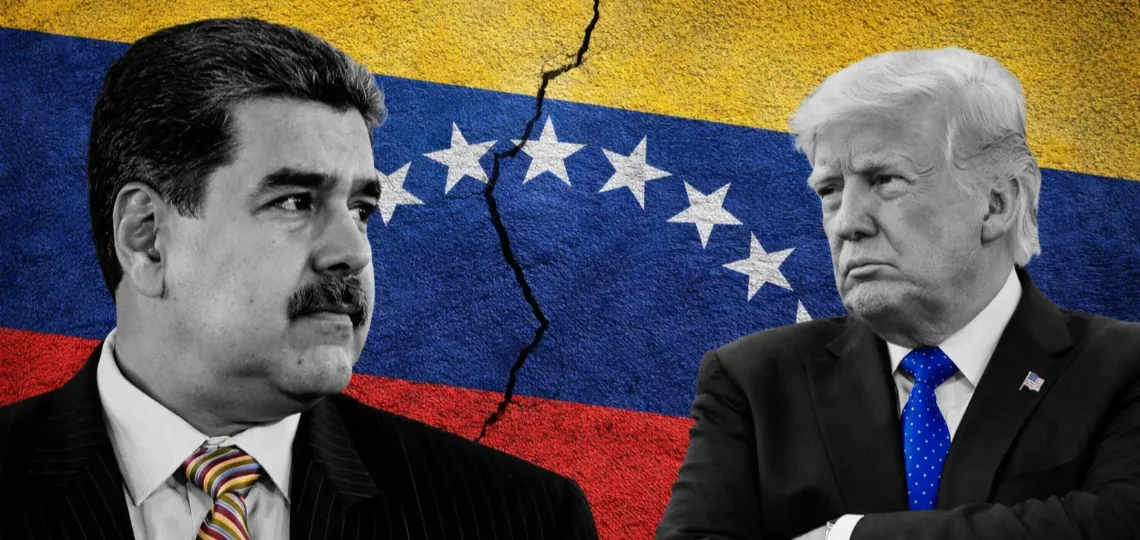
The arrest of Nicolas Maduro by American forces on the night of January 3-4, 2026, represents the culmination of nearly twenty years of deteriorating relations between Washington and Caracas, marked by escalating economic sanctions, a devastating oil embargo, and drug trafficking accusations. This military operation, including airstrikes on the Venezuelan capital and several neighboring regions, profoundly reshapes the regional energy map and raises major questions about the future of the 303 billion barrels of proven reserves beneath Venezuelan soil. Donald Trump confirmed during a press conference in Florida his intention to open the country to American oil companies while maintaining the embargo on Venezuelan crude, stating that the United States would be reimbursed for all the money spent on this intervention. The American president accuses Maduro of leading the Cartel of the Suns, a drug trafficking organization whose existence remains contested by many experts, and had raised the bounty for his arrest to 50 million dollars in August 2025. This capture marks an unprecedented turning point in American foreign policy in Latin America, with potential repercussions for the entire global energy market and the geopolitical balance of the region.
Twenty Years of Diplomatic and Economic Tensions
Relations between Washington and Caracas deteriorated from the moment Hugo Chavez came to power in 1999, an emblematic figure of the Latin American radical left who established a socialist model based on the redistribution of oil revenues. In 2006, the George W. Bush administration imposed the first sanctions by banning the sale of American-made weapons and military equipment to Venezuela, citing a lack of cooperation in the fight against terrorism. The two countries no longer had respective ambassadors by 2010, reflecting a gradual diplomatic rupture that would intensify over the years. After Chavez’s death in 2013 and the election of his political heir Nicolas Maduro, the Barack Obama administration imposed sanctions on several Venezuelan senior officials for human rights violations, in response to the violent repression of protests against the new president. The first Trump administration tightened these measures starting in 2017, sanctioning Supreme Court members and then Maduro himself, whose assets in the United States were frozen. The American president then evoked a possible military option in Venezuela, a threat he continuously brandished in subsequent years without ever materializing it until this week.
The Oil Embargo, a Weapon of Economic Destruction
The implementation of the American embargo on Venezuelan oil on April 28, 2019, dealt a fatal blow to the country’s economy, whose black gold exports represented 96% of national income before it took effect. Three-quarters of oil revenues came from American clients at the time, making this measure an economic stranglehold of formidable effectiveness in attempting to oust Maduro from power. Washington simultaneously froze Venezuelan government assets in the United States and sanctioned the national oil company Petroleos de Venezuela SA (PDVSA) as well as the central bank. Oil production, which reached 3.5 million barrels per day when Chavez came to power, collapsed to a historic low of 350,000 barrels daily in 2020, under the combined effect of sanctions and decades of underinvestment, mismanagement, and corruption. The embargo was temporarily eased in 2023 to compensate for the loss of Russian crude after the invasion of Ukraine, but reinstated when Washington deemed that Maduro was not honoring his commitments toward a fair presidential election in 2024. At the beginning of his second term in 2025, Donald Trump ended the oil licenses that allowed multinationals to operate despite the sanctions, with the exception of American company Chevron, which has benefited from a special authorization since July but is no longer permitted to pay money to the government.
Circumventing Sanctions and Resorting to the Black Market
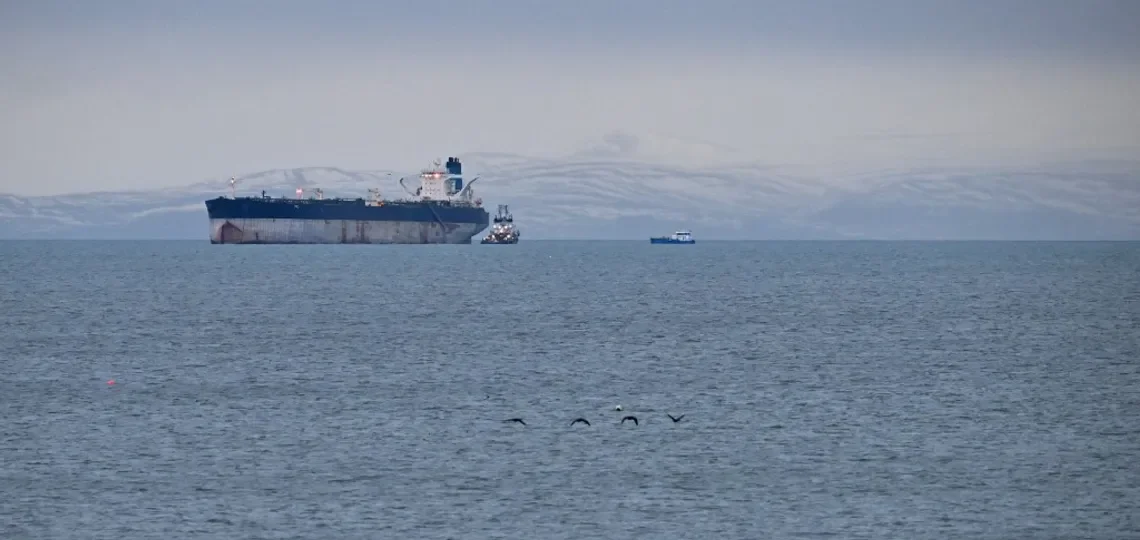
Faced with economic asphyxiation, Venezuela developed strategies to circumvent the embargo that allowed it to maintain production of approximately one million barrels per day according to the Organization of the Petroleum Exporting Countries (OPEC). China now absorbs approximately 80% of Venezuelan exports, transiting through Malaysia which serves as a screen to mask the crude’s origin, while Cuba receives some 5% of production under bilateral agreements between the two countries. To transport this oil, Caracas resorted to ghost tankers using numerous tricks such as false flags and false routes, like the Skipper, the first vessel intercepted by the American navy as part of the blockade established in December. Financial transactions were increasingly conducted in USDT, a cryptocurrency pegged to the dollar exchange rate, allowing the avoidance of American sanctions linked to transactions in the American currency. Washington intensified pressure in recent weeks by announcing a total blockade against sanctioned tankers going to or leaving Venezuela, described as a grotesque threat by Caracas, and by seizing several vessels including two in December. On December 10, the seizure of a first tanker off Venezuela was denounced by Caracas as an act of international piracy, confirming according to the Venezuelan government that the American objective was to seize its oil.
Military Escalation and Drug Trafficking Accusations
The indictment of Nicolas Maduro in the United States for narco-terrorism in March 2020 opened a new chapter in the confrontation between the two countries, with Washington initially offering 15 million dollars for any information leading to his arrest. This bounty was progressively raised to 25 million dollars after Maduro’s inauguration for a third term in early 2025, then to 50 million in August, accompanying a massive military deployment in the Caribbean Sea. The United States conducted deadly airstrikes starting in September against boats of suspected drug traffickers, accusing Caracas of being behind a drug trafficking operation flooding American territory. At least 115 people were killed in 35 publicly announced strikes before this week’s operation, demonstrating an unprecedented intensification of American military action in the region. On Monday, Donald Trump stated that the United States had destroyed a docking area used by boats accused of participating in drug trafficking, constituting presumably the first ground strike since the beginning of the campaign. On the night of Friday to Saturday, explosions shook Caracas while strikes targeted a base and military complex in the capital as well as other targets in two neighboring regions, preceding the announcement of the capture and exfiltration of Maduro and his wife.
Migration Issues in American Strategy
The migration question constitutes another major aspect of the dispute between Washington and Caracas, with Donald Trump having made the fight against immigration a priority of his second term. The American president blames Venezuela for the arrival of a large number of Venezuelan migrants, accusing Caracas of having pushed toward the United States hundreds of thousands of people from prisons and psychiatric hospitals. According to the United Nations (UN), some eight million Venezuelans, approximately a quarter of the population, have fled the economic and political crisis since 2014, most to Latin American countries and others to the United States. Donald Trump revoked the temporary protection status that hundreds of thousands of Venezuelans benefited from due to the crisis in their country and has expelled several thousand this year. In the spring, the United States sent 252 Venezuelans accused without evidence or trial of belonging to a gang to a prison in El Salvador, where they spent four months before being repatriated to Caracas, which, like non-governmental organizations, denounced the torture suffered in detention. This migration dimension adds an additional justification for the American intervention in the eyes of the Trump administration, which presents the regime change as a solution to stem the flow of migrants at its source.
American Ambitions for Oil Reserves
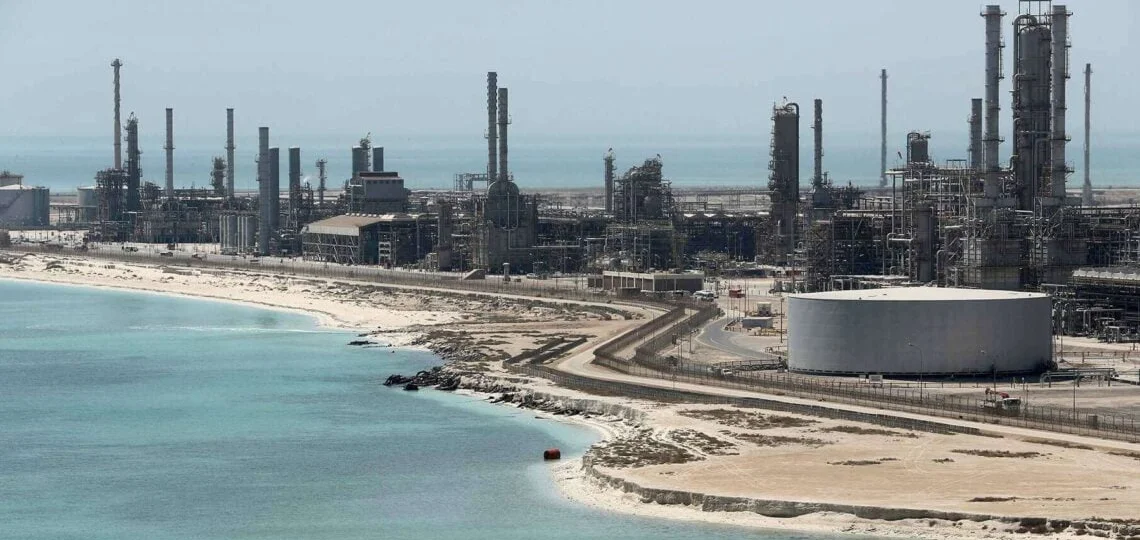
Venezuela possesses the largest proven oil reserves in the world with 303.221 million barrels according to OPEC, ahead of Saudi Arabia with 267.200 million barrels and Iran. Donald Trump clearly displayed his intentions during his press conference, declaring that the very large American oil companies would go there, spend billions of dollars to repair the severely damaged infrastructure, and begin generating revenues for the country. The American president considers that the oil exported under embargo by Caracas is stolen from the international community and that these volumes were extracted using American equipment and investments before Hugo Chavez’s nationalizations, according to analysis by John Plassard of Cité Gestion Private Bank. Currently, only Chevron operates in the country thanks to a special license, exploiting four oil fields in partnership with PDVSA, while ExxonMobil and ConocoPhillips left the territory in 2007, refusing the conditions imposed by Chavez requiring majority state participation. Venezuelan oil, of lower quality, ends up transformed into diesel or by-products like asphalt rather than gasoline, and the United States has refineries on the Gulf of Mexico coast specifically designed decades ago to process it. Trump’s objective is also to push Chinese actors out of the American continent, a strategy that adds to efforts undertaken on the Panama Canal to deprive China of its influence in an area through which a large portion of Venezuelan crude transits.
An Uncertain Return on Investment for American Majors
Energy sector analysts express reservations about the feasibility of the American plan and the real appetite of oil companies for Venezuela. Giovanni Staunovo of UBS states that any production recovery would require considerable investments given the state of infrastructure disrepair, degraded by years of neglect and corruption. Ole Hansen of Saxo Bank emphasizes that large American oil companies have a primary responsibility to their shareholders and not to the government, expressing doubts about renewed interest in Venezuela in the near future. The market context appears unfavorable, with crude oil prices weighed down by a global supply surplus and having declined in 2025 despite the numerous geopolitical developments that limited this decline. Stephen Schork, analyst at consulting firm Schork Group, believes that the United States is doing very well without Venezuelan oil and that Washington’s interest is more political than economic. The impact on barrel prices should remain limited according to experts, with the market being well supplied, with a probable marginal increase this week linked to potential logistical disruptions around Venezuelan ports. Observers are nevertheless closely watching Donald Trump’s statements regarding Iran, whose much higher production could more significantly influence prices in case of escalation.
Energy as an Instrument of American Power
Patrick Pouyanné, Chief Executive Officer of TotalEnergies, analyzed in an interview with La Tribune Dimanche conducted before the intervention that the United States now uses energy as a means of influence over the rest of the world. The head of the French oil group emphasizes that the major shift of the last fifteen years rests on the transformation of the United States from an importer of oil and gas into a major global producer, on track to become the largest producer and exporter of liquefied natural gas thanks to shale oil and gas. This energy dominance has disrupted not only the economy but also all international dynamics, notably reducing American dependence on the Middle East. According to Pouyanné, the United States views the world through its own lens and no longer wishes to be the world’s policemen, focusing on China, the Pacific, Venezuela, and South America. The TotalEnergies chief questions Europeans’ ability to face Russia in the Ukrainian conflict, noting that Germany has finally decided to revise its hyperdependence on the United States since 1945 by modifying its Constitution to invest 500 billion euros in defense and 500 billion in infrastructure. He deplores that the European Union is a Europe of consumers doubled with a Europe of ecology, but not a Europe of industry, calling for a more demanding dialogue with China including 50-50 joint ventures and the establishment of real factories creating jobs.
Regional Instability and Tensions in Neighboring Countries
The American intervention in Venezuela takes place in a regional context marked by growing tensions around natural resources and their exploitation. Guyana, a small English-speaking country in northern South America with the largest oil reserves per capita on the planet, announced on January 2 a campaign against foreign gold producers operating illegally on its territory. Guyanese President Irfaan Ali declared that all foreign miners operating illegally must be identified for prosecution and expulsion, specifying that he also wanted to prosecute foreign companies not declaring their entire production. He emphasized that some Brazilian miners had very low or non-existent declarations, giving them 24 hours to fully comply with the country’s laws and the reporting obligation to the Guyana Gold Board. The commissioner of the Guyana Geology and Mines Commission (GGMC), Newell Dennison, indicated that the Chinese group Zijin Mining, which operates the country’s largest mine, had not violated any laws. Guyana’s gold production reached 435,000 ounces in 2024, with the objective of exceeding 500,000 ounces or 14 tonnes this year. This firmness from Guyana comes as Venezuela has long claimed part of the resource-rich Guyanese territory, adding an additional dimension to regional tensions that the American intervention could exacerbate.
Prospects and Questions for the Energy Market
The Venezuelan government denounced a very serious military aggression and called on all social and political forces in the country to activate mobilization plans, suggesting a period of instability whose duration and intensity remain unpredictable. Political transition in Venezuela, if it materializes according to Washington’s wishes, will require years before translating into a significant increase in oil production given the scale of required investments. American refineries in the Gulf of Mexico, designed to process heavy Venezuelan crude, could eventually benefit from increased supply, but majors will need to evaluate the profitability of such investments in a market characterized by abundant supply. The American strategy aimed at reducing Chinese influence in Latin America will confront the reality of commercial ties forged by Beijing with numerous countries in the region over the past two decades. The threats made by Donald Trump against Iran, warning that the United States would come to the aid of protesters in case of violent repression, suggest that Venezuela could be just one step in a broader energy and geopolitical strategy. The evolution of the situation in the coming weeks will determine whether this intervention marks the beginning of a new era for Venezuelan oil or becomes mired in the political, security, and economic difficulties that have characterized past Washington-backed regime change attempts.