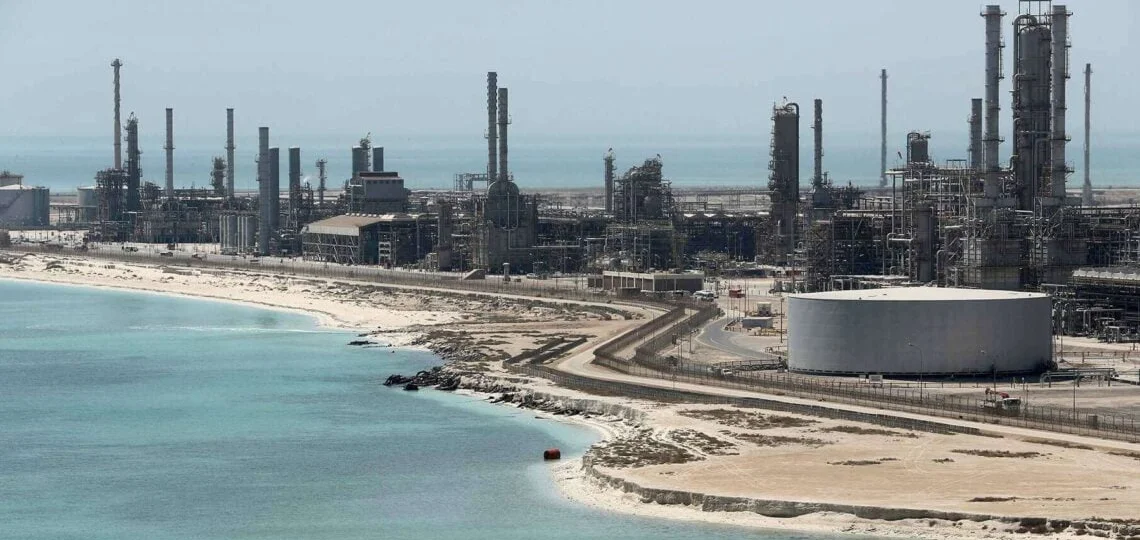
US seizes oil tanker off Venezuela as Caracas denounces an act of aggression

The United States seized a vessel suspected of transporting sanctioned oil from Iran and Venezuela, prompting a strong reaction from Nicolás Maduro's government.

Share:

Comprehensive energy news coverage, updated nonstop

Annual subscription

8.25$/month*

*billed annually at 99$/year for the first year then 149,00$/year ​

Unlimited access • Archives included • Professional invoice

OTHER ACCESS OPTIONS

Monthly subscription

Unlimited access • Archives included

5.2$/month*
then 14.90$ per month thereafter

FREE ACCOUNT

3 articles offered per month

FREE

*Prices are excluding VAT, which may vary depending on your location or professional status

Since 2021: 35,000 articles • 150+ analyses per week

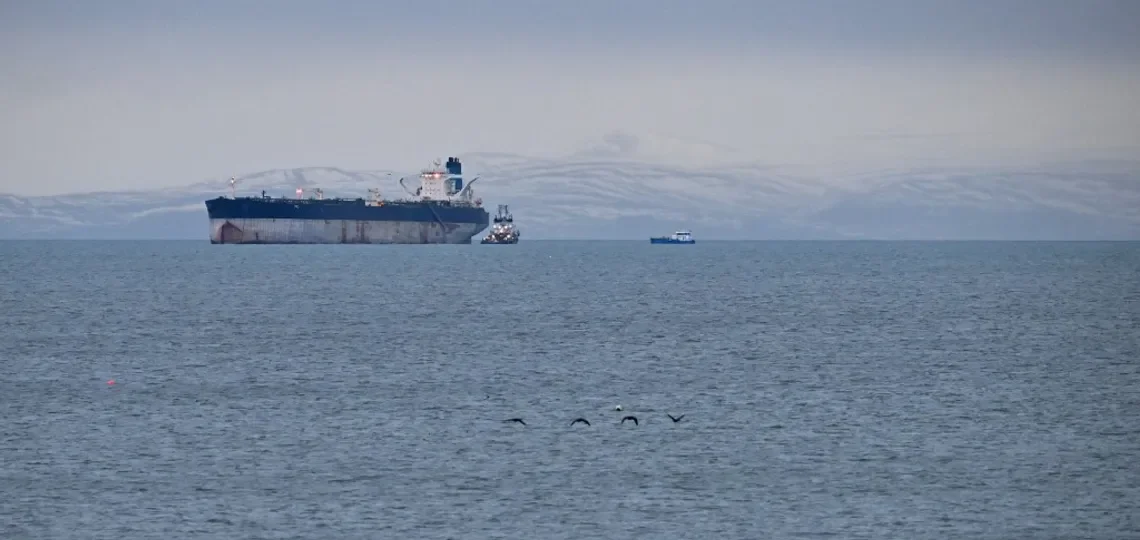
US forces intercepted an oil tanker off the Venezuelan coast in an operation coordinated by several federal agencies, including the Department of Justice, the Department of Defense, and the Coast Guard. President Donald Trump confirmed the action, describing the vessel as “the largest tanker ever seized.” Attorney General Pam Bondi stated that the vessel was transporting sanctioned oil intended to finance entities considered terrorist organisations.
The Venezuelan government reacted immediately. Caracas labelled the seizure an “act of international piracy” and accused the United States of attempting to appropriate its resources. President Nicolás Maduro said the country would never become an “oil colony”, and Interior Minister Diosdado Cabello accused Washington of “theft and aggression”.

Military operation in the Caribbean Sea

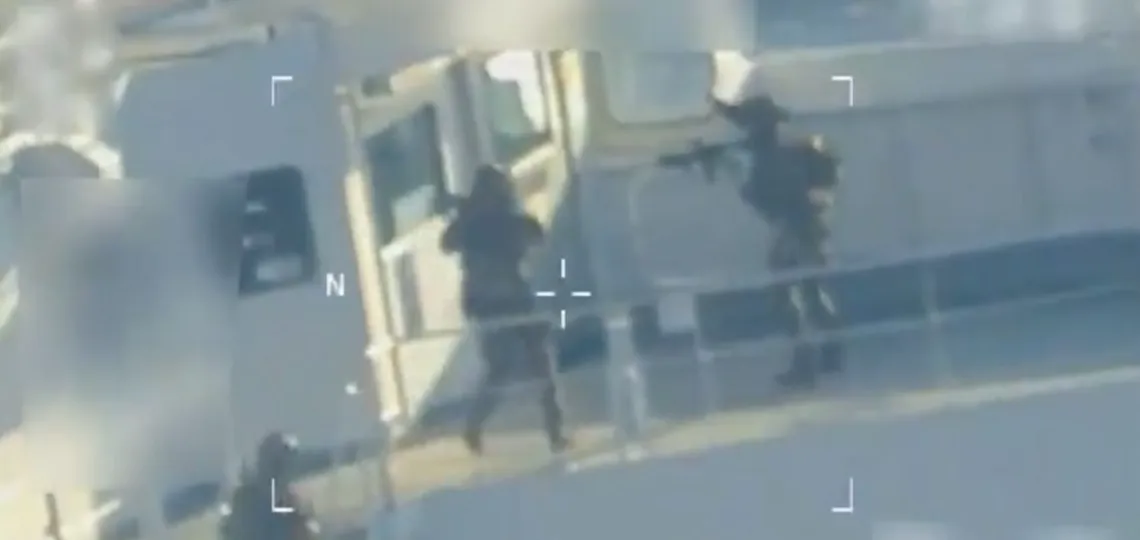
The intervention involved two helicopters, ten Coast Guard members, ten Marines and special forces. The helicopters were deployed from the USS Gerald Ford, currently stationed in the Caribbean Sea. Images released show armed troops descending by rope onto the ship. According to US authorities, the vessel had been transmitting false location data, a “spoofing” technique used to obscure its movements.

The vessel, identified as the Skipper, is registered under the flag of the Marshall Islands, although it was recently seen sailing under the Guyanese flag, an assertion disputed by Georgetown authorities. Nigerian-based Thomarose Global Ventures Ltd is listed as the operational manager, while its registered owner is Marshall Islands-based Triton Navigation Corp.

Impact on the oil market and regional tensions

According to maritime tracking data, the Skipper made port calls in Iran, Iraq, and the United Arab Emirates between June and July. Its last known position was off the coast of Guyana at the end of October, with limited movement recorded since. However, this information remains uncertain due to potential signal manipulation.

The tanker’s seizure comes amid growing pressure on Venezuela’s oil exports. Brent crude rose slightly as traders anticipated possible disruptions in supply. Analysts suggest the incident could deter other shipping companies from entering the region, adding strain to Venezuela’s already sanctioned oil sector.

Military build-up and confrontational climate

The United States has recently increased its military presence in the region, deploying thousands of troops and warships. Since September, at least 22 strikes have targeted boats suspected of drug trafficking, resulting in the deaths of at least 80 people. The situation has raised concerns over a potential escalation, as Caracas continues to denounce foreign interference.

During a public rally, Nicolás Maduro attempted to appeal to the American public by singing “Don’t worry, be happy,” calling for peace and rejecting the idea of war. However, it was unclear whether he had been informed of the Skipper’s seizure before his appearance.

BOURBON will provide maritime services to ExxonMobil Guyana for five years starting in 2026, marking a key step in the logistical development of the Guyanese offshore basin.
Viridien has launched a 4,300 sq km seismic reimaging programme over Angola’s offshore block 22 to support the country’s upcoming licensing round in the Kwanza Basin.
Shell restructures its stake in the Caspian pipeline by exiting the joint venture with Rosneft, with Kremlin approval, to comply with sanctions while maintaining access to Kazakh crude.
Shell acquires 60% of Block 2C in the Orange Basin, commits to drilling three wells and paying a $25mn signing bonus to PetroSA, pending regulatory approval in South Africa.
Malgré la pression exercée sur le gouvernement vénézuélien, Washington ne cherche pas à exclure Caracas de l’OPEP, misant sur une influence indirecte au sein du cartel pour défendre ses intérêts énergétiques.
Kazakhstan redirects part of its oil production to China following the drone attack on the Caspian Pipeline Consortium terminal, without a full export halt.
US investment bank Xtellus Partners has submitted a plan to the US Treasury to recover frozen Lukoil holdings for investors by selling the Russian company’s international assets.
Ghanaian company Cybele Energy has signed a $17mn exploration deal in Guyana’s shallow offshore waters, targeting a block estimated to contain 400 million barrels and located outside disputed territorial zones.
Oil prices moved little after a drop linked to the restart of a major Iraqi oilfield, while investors remained focused on Ukraine peace negotiations and an upcoming monetary policy decision in the United States.
TechnipFMC will design and install flexible pipes for Ithaca Energy as part of the development of the Captain oil field, strengthening its footprint in the UK offshore sector.
Vaalco Energy has started drilling the ET-15 well on the Etame platform, marking the beginning of phase three of its offshore development programme in Gabon, supported by a contract with Borr Drilling.
The attack on a key Caspian Pipeline Consortium offshore facility in the Black Sea halves Kazakhstan’s crude exports, exposing oil majors and reshaping regional energy dynamics.
Iraq is preparing a managed transition at the West Qurna-2 oil field, following US sanctions against Lukoil, by prioritising a transfer to players deemed reliable by Washington, including ExxonMobil.
The Rapid Support Forces have taken Heglig, Sudan’s largest oil site, halting production and increasing risks to regional crude export flows.
The rehabilitation cost of Sonara, Cameroon’s only refinery, has now reached XAF300bn (USD533mn), with several international banks showing growing interest in financing the project.
China imported 12.38 million barrels per day in November, the highest level since August 2023, driven by stronger refining margins and anticipation of 2026 quotas.
The United States reaffirmed its military commitment to Guyana, effectively securing access to its rapidly expanding oil production amid persistent border tensions with Venezuela.
Sanctioned tanker Kairos, abandoned after a Ukrainian drone attack, ran aground off Bulgaria’s coast, exposing growing legal and operational risks tied to Russia’s shadow fleet in the Black Sea.
The United States is temporarily licensing Lukoil’s operations outside Russia, blocking all financial flows to Moscow while facilitating the supervised sale of a portfolio valued at $22bn, without disrupting supply for allied countries.
Libya’s state oil firm NOC plans to launch a licensing round for 20 blocks in early 2026, amid mounting legal, political and financial uncertainties for international investors.

All the latest energy news, all the time

Annual subscription

8.25$/month*

*billed annually at 99$/year for the first year then 149,00$/year ​

Unlimited access - Archives included - Pro invoice

Monthly subscription

Unlimited access • Archives included

5.2$/month*
then 14.90$ per month thereafter

*Prices shown are exclusive of VAT, which may vary according to your location or professional status.

Since 2021: 30,000 articles - +150 analyses/week.