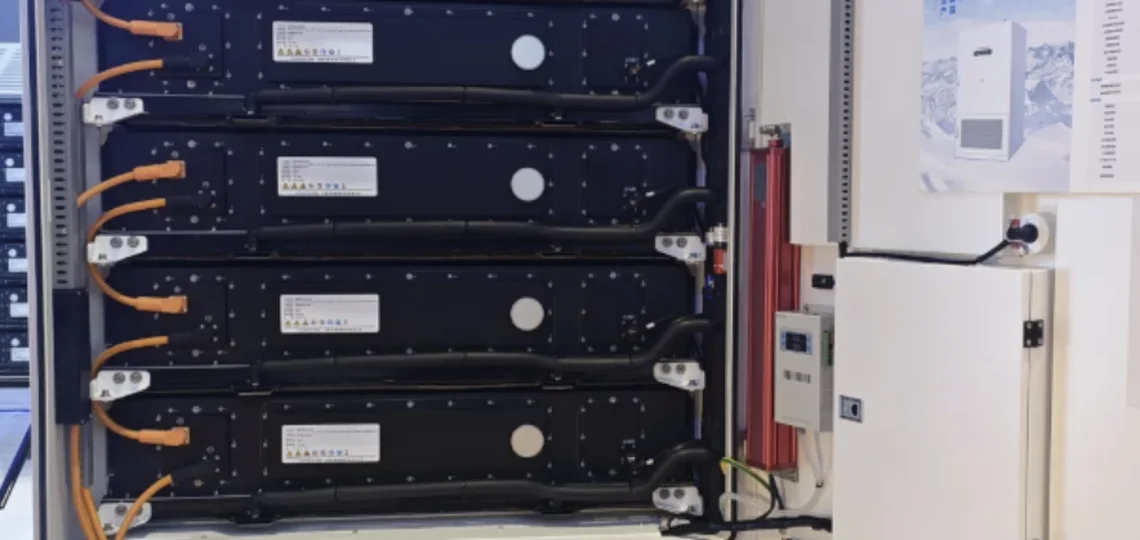
UNIGRID Battery raises $12 million for battery production

San Diego-based startup UNIGRID Battery announces a $12 million Series A financing round to step up production of sodium-ion batteries.
Share:

Production batteries sodium-ion

Comprehensive energy news coverage, updated nonstop

Annual subscription

8.25$/month*

*billed annually at 99$/year for the first year then 149,00$/year ​

Unlimited access • Archives included • Professional invoice

OTHER ACCESS OPTIONS

Monthly subscription

Unlimited access • Archives included

5.2$/month*
then 14.90$ per month thereafter

FREE ACCOUNT

3 articles offered per month

FREE

*Prices are excluding VAT, which may vary depending on your location or professional status

Since 2021: 35,000 articles • 150+ analyses per week

UNIGRID Battery, an innovative company based in San Diego, recently announced the closing of a $12 million Series A financing round. This financing, co-led by Transition VC and Ritz Venture Capital, also saw the participation of new investors such as Union Square Ventures and existing investor Foothill Ventures. This capital injection is aimed at accelerating production of the sodium-ion batteries developed by UNIGRID to meet growing demand in the electric mobility and stationary storage markets.
Advanced technology and target market

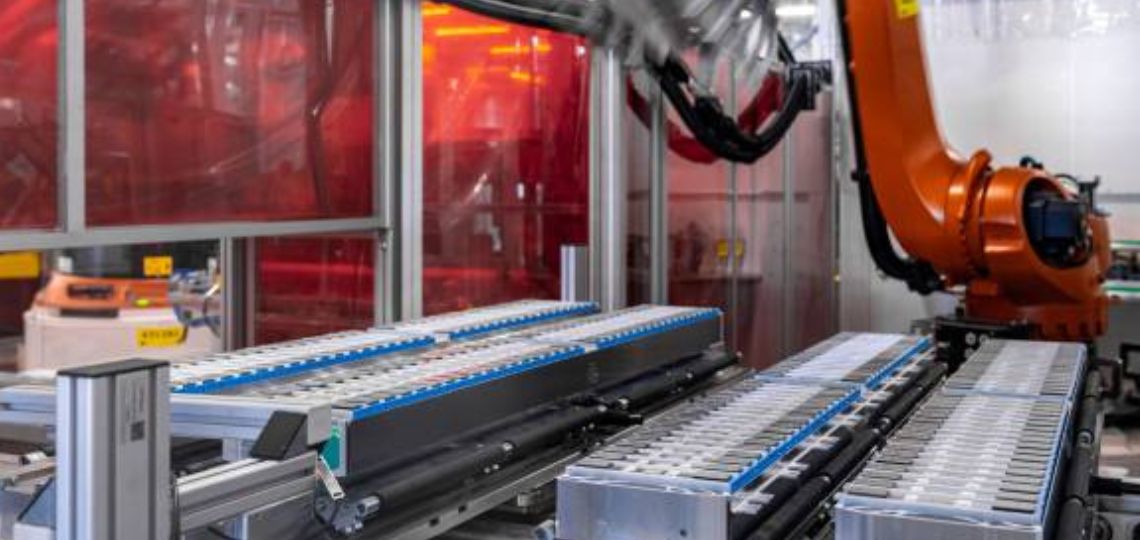
UNIGRID sodium-ion batteries are distinguished by their high energy density, a feature made possible by exclusive alloy anode technology. This innovation enables sodium-ion batteries to rival LFP (lithium-iron-phosphate) batteries in terms of performance. Darren H. S. Tan, CEO of UNIGRID Battery, says this technology will be crucial in meeting the demand for energy storage in the residential, commercial and industrial sectors.

Strategic investors and market outlook

Mona Alsubaei, Partner at Transition VC, underlines the importance of this technology for the growing need for energy storage. Sangbin Ong, Managing Director at Ritz Venture Capital, notes that the outstanding performance of UNIGRID’s sodium-ion batteries presents significant opportunities not only in stationary storage but also in the fast-growing electric mobility sector.

Industrial compatibility and expansion

One of the main advantages of UNIGRID’s technology is its compatibility with existing Li-ion battery manufacturing infrastructures. This enables UNIGRID to work directly with manufacturing partners to rapidly scale up production without the need for specialized equipment. This approach has been well received by customers and system integrators looking for immediate alternatives to Li-ion batteries.

Academic origins and future development

Founded in 2021, UNIGRID Battery is a spin-off from the University of California, San Diego. The company was founded by Dr. Darren H. S. Tan and Dr. Erik A. Wu, based on their doctoral research under the supervision of Professors Zheng Chen and Shirley Meng. UNIGRID focuses on the development of advanced sodium-ion batteries to meet the emerging needs of energy storage and electric mobility.
With this $12 million round of financing, UNIGRID Battery is well positioned to strengthen its production capacity and meet growing market demand. Backed by innovative technology and a solid investor base, the company is poised to play a leading role in the battery industry.

LG Energy Solution terminated a KRW3.9tr agreement with Freudenberg Battery Power System amid the US electric vehicle market’s decline and its partner’s strategic withdrawal.
Port Inc. reports positive results from its battery storage pilot in Gunma, leveraging a regulatory window ahead of adjustment market reforms scheduled for fiscal year 2026.
Canadian company Vision Lithium has completed a private placement of 14 mn flow-through shares totalling $209,000 to support its mineral exploration projects in Québec.
Matrix Renewables has signed a turnkey agreement with Tesla to develop a 1 GWh battery energy storage system in Scotland, marking its first standalone project of this kind in the UK.
China's electricity market overhaul improves the profitability of energy storage, supporting a rapid increase in battery exports as global demand rises with data centres and power grids.
South Korea’s Tilda accelerates its entry into Vietnam with an artificial intelligence-based energy optimisation solution for solar and energy storage systems in the manufacturing sector.
Aegis Critical Energy Defence Corp. and Seetel New Energy have created Cordelia BESS to respond to Ontario’s LT2 call for proposals, aimed at strengthening energy capacity through battery storage.
esVolta finalises investment tax credit transfer for its Black Walnut storage project to Computacenter, marking a first-of-its-kind operation within its California energy portfolio.
Peregrine Energy Solutions has begun construction on a 500 MWh storage project in Texas, relying on Wärtsilä's technology and WHC's engineering expertise to enhance ERCOT grid flexibility.
The world's largest battery energy storage system enters service in Saudi Arabia, with an annual capacity of 2.2 billion kWh spread across three strategic sites in the southwest of the country.
Masdar begins commercial operations at a Stockport battery storage unit and announces two more UK projects, part of a £1bn ($1.25bn) plan for 3GWh of BESS capacity.
Australia-based storage platform Akaysha Energy has launched its first operational project, a 155 MW battery in Queensland, while confirming its expansion to over 1 GWh.
LehmanSoft Japan connected a 2MW/8.1MWh energy storage facility to the grid in Chichibu City, marking its entry into the Japanese stationary storage market.
Akuo launches a large-scale electricity storage project in Boulouparis, with a 200 MWh capacity, to support New Caledonia’s grid stability and reinforce the integration of renewable energies.
Spie and Tesla have signed a framework agreement to install battery electricity storage systems in Europe, focusing on France, Poland and Germany.
The group has won a strategic project with operator Amprion to deploy five 50 MW batteries to ease pressure on the German power grid and optimise electricity transmission.
Vena Energy has begun construction of a 408 MWh battery energy storage system in Tailem Bend, marking a new phase in the deployment of its infrastructure in Australia.
The explosion of battery storage applications in Germany is causing grid congestion and pushing Berlin to revise its regulatory framework to prevent market saturation.
The collapse in storage costs positions batteries as a key lever for dispatchable solar, but dependence on Chinese suppliers creates growing tension between competitiveness and supply chain security.
JA Solar has launched a microgrid combining 5.2 MW of solar and 2.61 MWh of storage at an industrial site in Sicily, marking its first application of the "PV+Storage+X" model in Italy.

All the latest energy news, all the time

Annual subscription

8.25$/month*

*billed annually at 99$/year for the first year then 149,00$/year ​

Unlimited access - Archives included - Pro invoice

Monthly subscription

Unlimited access • Archives included

5.2$/month*
then 14.90$ per month thereafter

*Prices shown are exclusive of VAT, which may vary according to your location or professional status.

Since 2021: 30,000 articles - +150 analyses/week.