UK relaunches offshore wind with AR7 tender and 5.5 GW at stake

The UK is betting on a new contracts-for-difference model to secure up to 5.5 GW of offshore wind, despite a reduced budget and unprecedented competitive pressure.

Share:

Comprehensive energy news coverage, updated nonstop

Annual subscription

8.25$/month*

*billed annually at 99$/year for the first year then 149,00$/year ​

Unlimited access • Archives included • Professional invoice

OTHER ACCESS OPTIONS

Monthly subscription

Unlimited access • Archives included

5.2$/month*
then 14.90$ per month thereafter

FREE ACCOUNT

3 articles offered per month

FREE

*Prices are excluding VAT, which may vary depending on your location or professional status

Since 2021: 35,000 articles • 150+ analyses per week

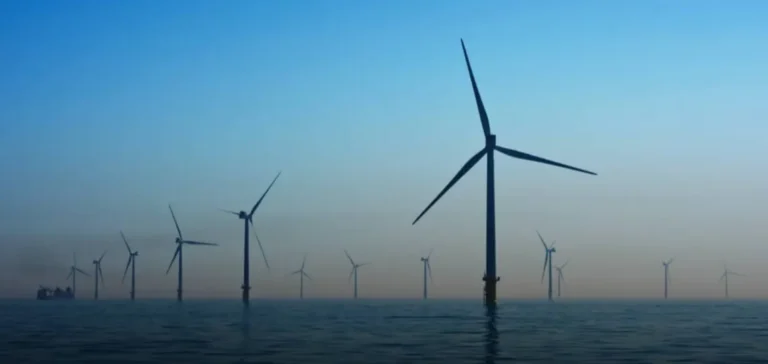
The United Kingdom has launched its seventh Contracts for Difference (CfD) allocation round for offshore wind, marking a strategic shift after disappointing outcomes from the two previous rounds. Allocation Round 7 (AR7) introduces a redesigned framework, extended to 20 years, with a 41% budget reduction, but aimed at maximising cost-efficiency per megawatt. This approach seeks to restore confidence among developers, investors, and suppliers amid a volatile market.

A recalibrated model to maximise awarded capacity

The new framework set by the Department for Energy Security and Net Zero (DESNZ) aims to secure more megawatts at a lower unit price. Projections indicate between four and six projects could be selected, representing a total capacity of around 5.5 GW. This figure remains close to AR6 levels, despite the sharp cut in funding. The conditional “top-up” mechanism will allow a budget increase, subject to UK Treasury approval, if the bids submitted present strong value for money.

The updated contract terms give developers the ability to reduce their bids by up to 12%, supported by 20-year CfDs. The longer term reduces revenue risk and improves access to third-party funding, including partial asset sales and institutional partnerships.

Increased competition between LR3 and LR4 lease round projects

AR7 sees 26.5 GW of eligible capacity competing for a limited number of slots. Award decisions will no longer rely solely on cost but also on strategic imperatives, such as internal deadline management, supply chain commitments, and pressure from leasing option fees.

Leasing Round 4 (LR4) projects, such as Morgan and Mona, are incentivised to bid aggressively to avoid losses from option fees, which can reach up to GBP185mn per GW per year. In contrast, some Leasing Round 3 (LR3) projects, such as Norfolk Vanguard developed by RWE, are already contractually committed on critical components and must secure CfDs to avoid price revisions or production slot losses.

Strategic tension amplified for major developers

RWE emerges as a key player in this competitive landscape, with assets across all three strategic categories: high-cost LR4, contract-pressured LR3, and low-risk Extensions. Its portfolio strategy could strongly influence the outcome of the auction.

Extension projects, considered lower risk but also lower cost, must decide whether to bid now or wait for potentially better terms in AR8. This creates asymmetric pressure between single-asset developers, such as Equinor, and those with diversified portfolios.

Impact on supply chains and market stability

The new framework also provides stabilised visibility for industrial suppliers. The execution window for 2029–2032 projects coincides with a period of eased manufacturing capacity, favouring bid alignment and contract security. The GBP544mn Clean Industry Bonus (CIB) incentivises investment in UK-based factories and ports, while encouraging domestic production.

Such stability is seen as critical for converting investment intentions into firm orders while avoiding cyclical surges or collapses in demand.

Conditions align to support sustainable competitiveness

The balance between capital discipline, revenue certainty, and targeted policy incentives helps prevent a repeat of the 2021 price collapse. If bids reach expected thresholds and the full budget is utilised, AR7 could signal a turning point for the UK’s offshore wind sector.

This model may serve as a reference for governments facing similar fiscal and political constraints, demonstrating that stable volumes, controlled budgets and targeted industrial support can produce measurable results without undermining project viability.

The rapid growth of onshore wind in Southeast Asia is at risk due to inflexible public policies and inadequate power transmission infrastructure.
Enefit Green has sold its only wind farm in Finland to Canadian fund TD Greystone Infrastructure Fund, refocusing operations on the Baltic states and Poland in a regional concentration strategy.
McDonald’s UK commits to purchasing all electricity from the Douglas West Extension Wind Farm, a 66 MW project developed by Capital Dynamics in Scotland, under a long-term agreement managed by ENGIE.
Swedish developer OX2 acquires three onshore wind projects totalling 235 MW in Romania, pushing its portfolio beyond 1.1 GW in a rapidly growing market.
Danish group Vestas is expanding its blade plant in Poland and creating more than 300 jobs to supply turbines to Germany, the leading onshore wind market in Europe.
The UK government has approved the development consent for the 480 MW Morecambe offshore wind farm, a project led by Copenhagen Infrastructure Partners and scheduled to enter construction in 2027.
Infinity Power has started work on its 200 MW wind project in Ras Ghareb, strengthening its position in the African market with technical support from China's POWERCHINA Huadong.
A partnership between the European Investment Bank and Crédit Agricole CIB aims to generate up to €8 billion in wind energy investments across the European Union through a bank guarantee mechanism.
With a €600mn ($652mn) contribution, the European Investment Bank becomes the main lender of the BC-Wind offshore wind project developed by Ocean Winds off the Polish coast.
Cadeler has taken delivery of its tenth wind turbine installation vessel, Wind Mover, delivered ahead of schedule and immediately deployed in Europe, strengthening its capabilities amid rising industrial demand.
Levanta Renewables partners with Triconti Windkraft Group to develop an onshore wind farm in Quezon province, scheduled to begin operations in 2028.
BW Ideol Projects Company acquires a minority stake in the Méditerranée Grand Large project, strengthening its partnership with EDF power solutions and Maple Power in the Mediterranean floating offshore wind sector.
Octopus Energy joins a global initiative to accelerate renewable energy deployment in Africa, committing $450mn through its Power Africa programme to supply electricity to more than one million people.
Australian energy provider Snowy Hydro has secured long-term agreements with Aula Energy and TagEnergy, adding 120 MW of wind power and 105 MW of battery storage to its national portfolio.
The He Dreiht offshore wind farm delivers its first MWh as the German auction model stalls, offering EnBW and its institutional investors a strategic showcase.
The Irish government has provisionally awarded development rights for the Tonn Nua offshore site to the Ørsted-ESB joint venture under a 20-year contract supporting a 900 MW project.
Nordex Group will supply six turbines to upgrade a 34.2 MW wind farm in Caparroso, financed by the European Union under the NextGenerationEU plan.
The Spanish group continues its asset rotation strategy by transferring its French onshore wind and solar portfolio to Technique Solaire, reinforcing its focus on offshore and regulated networks.
Japanese group Eurus Energy has completed the environmental assessment for its 60.2MW repowering project in Wakkanai, with commissioning targeted for April 2029.
BayWa r.e. has reached a strategic milestone with the concept certification of its BayFloat floating substructure, validated by DNV according to current floating offshore wind standards.

All the latest energy news, all the time

Annual subscription

8.25$/month*

*billed annually at 99$/year for the first year then 149,00$/year ​

Unlimited access - Archives included - Pro invoice

Monthly subscription

Unlimited access • Archives included

5.2$/month*
then 14.90$ per month thereafter

*Prices shown are exclusive of VAT, which may vary according to your location or professional status.

Since 2021: 30,000 articles - +150 analyses/week.