Two tankers targeted in the Black Sea, Ankara warns over maritime security

Two tankers under the Gambian flag were attacked in the Black Sea near Turkish shores, prompting a firm response from President Recep Tayyip Erdogan on growing risks to regional energy transport.

Share:

Comprehensive energy news coverage, updated nonstop

Annual subscription

8.25$/month*

*billed annually at 99$/year for the first year then 149,00$/year ​

Unlimited access • Archives included • Professional invoice

OTHER ACCESS OPTIONS

Monthly subscription

Unlimited access • Archives included

5.2$/month*
then 14.90$ per month thereafter

FREE ACCOUNT

3 articles offered per month

FREE

*Prices are excluding VAT, which may vary depending on your location or professional status

Since 2021: 35,000 articles • 150+ analyses per week

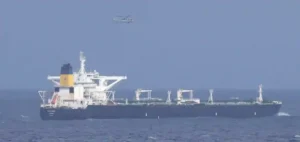
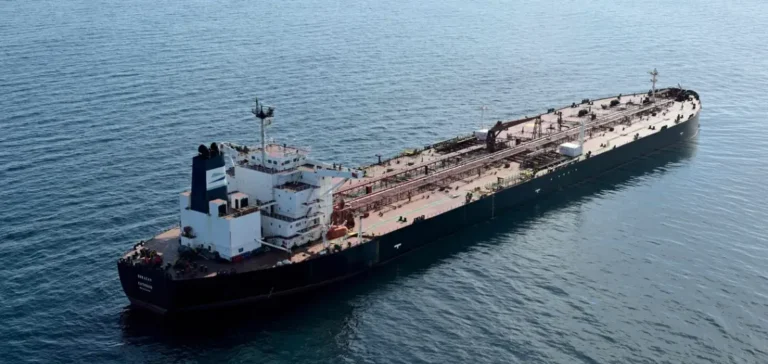
Two vessels transporting Russian oil were hit by successive drone attacks in the Black Sea as they headed to the port of Novorossiysk. The two tankers, Kairos and Virat, flying the Gambian flag, were under Western sanctions and identified as part of the “shadow fleet” moving Russian crude despite restrictions. The strikes occurred Friday night and again Saturday morning in the case of the Virat, in close proximity to Turkey’s exclusive economic zone.

Turkey swiftly expressed concern through an official statement by President Recep Tayyip Erdogan, describing the situation as a “worrying escalation.” Ankara views these attacks as a direct threat to navigation security, regional energy stability and the marine environment. The head of state stressed that the Black Sea is a strategically essential zone for hydrocarbon transport and that Turkey would closely monitor the situation.

Oil flows under pressure off Turkish shores

The two vessels were headed for Novorossiysk, a major Russian port on the Black Sea used for oil exports. The attacks come amid prolonged tensions between Ukraine and Russia, where energy infrastructure and logistics have increasingly become military targets. While Ankara did not specify the origin of the drones, Kyiv claimed responsibility for the strikes, describing them as measures against Russia’s oil revenues.

The tankers are believed to be operated by entities linked to export networks bypassing Western price caps. These so-called “shadow” maritime routes have expanded since the start of the conflict, enabling Moscow to maintain deliveries to Asia through opaque supply chains. The Black Sea remains a critical point in this trade, particularly through corridors between the Bosphorus and Russian ports.

Ankara maintains its role as regional energy mediator

In his address, President Erdogan reiterated Turkey’s position as a vigilant yet independent actor in the conflict. “We are issuing the necessary warnings to all relevant parties,” he stated. The head of state affirmed that Turkey remains open to supporting any plan aimed at de-escalating the conflict, in connection with ongoing diplomatic discussions.

Energy security in the maritime basin has become a central concern for Ankara in recent months. Located at the crossroads of East-West energy flows, Turkey has strengthened its role as a logistical platform, particularly in the transit of oil and gas. Any disruption in these maritime routes could affect regional markets and impact long-term contractual commitments.
President Donald Trump confirmed direct contact with Nicolas Maduro as tensions escalate, with Caracas denouncing a planned US operation targeting its oil resources.
Zenith Energy claims Tunisian authorities carried out the unauthorised sale of stored crude oil, escalating a longstanding commercial dispute over its Robbana and El Bibane concessions.
TotalEnergies restructures its stake in offshore licences PPL 2000 and PPL 2001 by bringing in Chevron at 40%, while retaining operatorship, as part of a broader refocus of its deepwater portfolio in Nigeria.
Aker Solutions has signed a six-year frame agreement with ConocoPhillips for maintenance and modification services on the Eldfisk and Ekofisk offshore fields, with an option to extend for another six years.
Iranian authorities intercepted a vessel carrying 350,000 litres of fuel in the Persian Gulf, tightening control over strategic maritime routes in the Strait of Hormuz.
North Atlantic France finalizes the acquisition of Esso S.A.F. at the agreed per-share price and formalizes the new name, North Atlantic Energies, marking a key step in the reorganization of its operations in France.
Greek shipowner Imperial Petroleum has secured $60mn via a private placement with institutional investors to strengthen liquidity for general corporate purposes.
Ecopetrol plans between $5.57bn and $6.84bn in investments for 2026, aiming to maintain production, optimise infrastructure and ensure profitability despite a moderate crude oil market.
Faced with oversupply risks and Russian sanctions, OPEC+ stabilises volumes while preparing a structural redistribution of quotas by 2027, intensifying tensions between producers with unequal capacities.
The United Kingdom is replacing its exceptional tax with a permanent price mechanism, maintaining one of the world’s highest fiscal pressures and reshaping the North Sea’s investment attractiveness for oil and gas operators.
Pakistan confirms its exit from domestic fuel oil with over 1.4 Mt exported in 2025, transforming its refineries into export platforms as Asia faces a structural surplus of high- and low-sulphur fuel oil.
Turkish company Aksa Enerji has signed a 20-year contract with Sonabel for the commissioning of a thermal power plant in Ouagadougou, aiming to strengthen Burkina Faso’s energy supply by the end of 2026.
The Caspian Pipeline Consortium resumed loadings in Novorossiisk after a Ukrainian attack, but geopolitical tensions persist over Kazakh oil flows through this strategic Black Sea corridor.
Hungary increases oil product exports to Serbia to offset the imminent shutdown of the NIS refinery, threatened by US sanctions over its Russian majority ownership.
Faced with falling oil production, Pemex is expanding local refining through Olmeca, aiming to reduce fuel imports and optimise its industrial capacity under fiscal pressure.
Brazil’s state oil company will reduce its capital spending by 2%, hit by falling crude prices, marking a strategic shift under Lula’s presidency.
TotalEnergies has finalised the sale of its 12.5% stake in Nigeria’s offshore Bonga oilfield for $510mn, boosting Shell and Eni’s positions in the strategic deepwater production site.
Serbia is preparing a budget law amendment to enable the takeover of NIS, a refinery under US sanctions and owned by Russian groups, to avoid an imminent energy shutdown.
Nigeria’s Dangote refinery selects US-based Honeywell to supply technology that will double its crude processing capacity and expand its petrochemical output.
Iraq secures production by bypassing US sanctions through local payments, energy-for-energy swaps, and targeted suspension of financial flows to Lukoil to protect West Qurna-2 exports.

All the latest energy news, all the time

Annual subscription

8.25$/month*

*billed annually at 99$/year for the first year then 149,00$/year ​

Unlimited access - Archives included - Pro invoice

Monthly subscription

Unlimited access • Archives included

5.2$/month*
then 14.90$ per month thereafter

*Prices shown are exclusive of VAT, which may vary according to your location or professional status.

Since 2021: 30,000 articles - +150 analyses/week.