
Trump’s Tariff Threats Weigh Down Oil Prices

The imminent prospect of U.S. tariffs on imports from Canada and Mexico is causing concern in oil markets. Combined with an unexpected rise in crude stocks in the U.S., this announcement is impacting global oil prices.

Share:

Comprehensive energy news coverage, updated nonstop

Annual subscription

8.25$/month*

*billed annually at 99$/year for the first year then 149,00$/year ​

Unlimited access • Archives included • Professional invoice

OTHER ACCESS OPTIONS

Monthly subscription

Unlimited access • Archives included

5.2$/month*
then 14.90$ per month thereafter

FREE ACCOUNT

3 articles offered per month

FREE

*Prices are excluding VAT, which may vary depending on your location or professional status

Since 2021: 35,000 articles • 150+ analyses per week

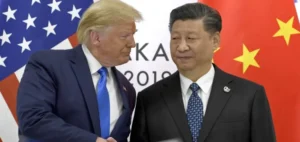
The U.S. administration confirmed on Tuesday its intention to impose new tariffs on products imported from Canada and Mexico, a measure that could take effect as early as February 1st. This decision, announced by White House spokesperson Karoline Leavitt, is part of a policy aimed at protecting domestic industries, but it is raising concerns in commodity markets.

Direct Impact on Oil

Investors are worried about the effects of these measures on global oil demand. John Plassard, an analyst at Mirabaud, highlights that this protectionist policy could heighten trade tensions and curb energy consumption. Additionally, an unexpectedly large increase in crude oil reserves in the U.S. has intensified downward pressure on prices.

According to the U.S. Energy Information Administration (EIA), crude stocks rose by 3.5 million barrels during the week ending January 24. This increase surpassed analysts’ forecasts, who had predicted a rise of 2.2 million barrels.

Prices Under Pressure

As a direct consequence of these announcements, oil prices declined on Wednesday. Brent crude, for March delivery, dropped by 0.22% to $77.32 per barrel. Its U.S. counterpart, West Texas Intermediate (WTI), fell by 0.50%, settling at $73.40 per barrel.

Price fluctuations could continue as markets await the upcoming meeting of the Organization of the Petroleum Exporting Countries and its allies (OPEC+), scheduled for Monday. This joint ministerial monitoring committee (JMMC) will be closely watched by investors, especially since Donald Trump recently urged Saudi Arabia to increase its production to lower prices.

European Gas Prices Also Rise

Meanwhile, natural gas prices in Europe have reached their highest level since October 2023. The Dutch TTF futures contract, the benchmark for the European market, climbed to €51.25 per megawatt-hour (MWh). This increase is primarily due to disruptions in several gas fields in Norway, operated by Gassco.

As U.S. energy policy continues to fuel uncertainties, market participants remain on alert regarding the economic consequences of these protectionist measures.
Shell has reopened a divestment process for its 37.5% stake in Germany's PCK Schwedt refinery, reviving negotiations disrupted by the Russia-Ukraine conflict and Western sanctions.
Shell Offshore approves a strategic investment to extend the life of the Kaikias field through a waterflood operation, with first injection planned for 2028 from the Ursa platform.
Oil prices drop amid progress in Ukraine talks and expectations of oversupply, pushing West Texas Intermediate below $55 for the first time in nearly five years.
The US energy group plans to allocate $1.3bn to growth and $1.1bn to asset maintenance, with a specific focus on natural gas liquids and refining projects.
Venezuelan state oil group PDVSA claims it was targeted by a cyberattack attributed to foreign interests, with no impact on main operations, amid rising tensions with the United States.
BUTEC has finalised the financing of a 50 MW emergency power project in Burkina Faso, structured under a BOOT contract and backed by Banque Centrale Populaire Group.
BW Energy has signed a long-term lease agreement with Minsheng Financial Leasing for its Maromba B platform, covering $274mn of the project’s CAPEX, with no payments due before first oil.
Shell will restart offshore exploration on Namibia’s PEL 39 block in April 2026 with a five-well drilling programme targeting previously discovered zones, despite a recent $400mn impairment.
Iranian authorities intercepted a vessel suspected of fuel smuggling off the coast of the Gulf of Oman, with 18 South Asian crew members on board, according to official sources.
Harbour Energy will acquire Waldorf Energy Partners’ North Sea assets for $170mn, increasing its stakes in the Catcher and Kraken fields, while Capricorn Energy settles part of its claims.
The Big Beautiful Gulf 1 sale attracted more than $300mn in investments, with a focused strategy led by BP, Chevron and Woodside on high-yield blocks.
The United States intercepted an oil tanker loaded with Venezuelan crude and imposed new sanctions on maritime entities, increasing pressure on Nicolas Maduro’s regime and its commercial networks in the Caribbean.
OPEC expects crude demand from its members to reach 43 million barrels per day in 2026, nearly matching current OPEC+ output, contrasting with oversupply forecasts from other institutions.
The United States seized a vessel suspected of transporting sanctioned oil from Iran and Venezuela, prompting a strong reaction from Nicolás Maduro's government.
The International Energy Agency lowers its global oil supply forecast for 2026 while slightly raising demand growth expectations amid improved macroeconomic conditions.
South Sudanese authorities have been granted responsibility for securing the strategic Heglig oilfield following an agreement with both warring parties in Sudan.
TotalEnergies acquires a 40% operated interest in the offshore PEL83 license, marking a strategic move in Namibia with the Mopane oil field, while Galp secures stakes in two other promising blocks.
BOURBON will provide maritime services to ExxonMobil Guyana for five years starting in 2026, marking a key step in the logistical development of the Guyanese offshore basin.
Viridien has launched a 4,300 sq km seismic reimaging programme over Angola’s offshore block 22 to support the country’s upcoming licensing round in the Kwanza Basin.
Shell restructures its stake in the Caspian pipeline by exiting the joint venture with Rosneft, with Kremlin approval, to comply with sanctions while maintaining access to Kazakh crude.

All the latest energy news, all the time

Annual subscription

8.25$/month*

*billed annually at 99$/year for the first year then 149,00$/year ​

Unlimited access - Archives included - Pro invoice

Monthly subscription

Unlimited access • Archives included

5.2$/month*
then 14.90$ per month thereafter

*Prices shown are exclusive of VAT, which may vary according to your location or professional status.

Since 2021: 30,000 articles - +150 analyses/week.