The United Kingdom reforms its nuclear regulation to reduce construction costs

London launches a complete regulatory overhaul of its nuclear industry to shorten authorisation timelines, expand eligible sites, and lower construction and financing costs.

Share:

Comprehensive energy news coverage, updated nonstop

Annual subscription

8.25$/month*

*billed annually at 99$/year for the first year then 149,00$/year ​

Unlimited access • Archives included • Professional invoice

OTHER ACCESS OPTIONS

Monthly subscription

Unlimited access • Archives included

5.2$/month*
then 14.90$ per month thereafter

FREE ACCOUNT

3 articles offered per month

FREE

*Prices are excluding VAT, which may vary depending on your location or professional status

Since 2021: 35,000 articles • 150+ analyses per week

The British government is restructuring its nuclear regulatory framework following the conclusions of the Nuclear Regulatory Taskforce, which identified the United Kingdom as the most expensive country in the world to build a nuclear plant. This reform, described as a “radical reset” by its authors, aims to lower investment costs, accelerate planning processes, and enable large-scale industrial deployment around European Pressurised Reactors (EPR) and Small Modular Reactors (SMR).

The Office for Nuclear Regulation (ONR) and several environmental agencies could be merged into a single commission, designed as a centralised regulatory one-stop shop. This change seeks to eliminate redundancies across safety, environmental impact, and planning authorisation procedures. The total regulatory cost, including design, construction, operation, and decommissioning, is estimated at several tens of billions of pounds over the project lifecycle.

More flexible planning and expanded nuclear land eligibility

The updated National Policy Statement for Nuclear Power Generation ends the closed list of eight pre-authorised sites adopted in 2011. The new rules now include SMR and AMR (Advanced Modular Reactors) technologies, allowing their deployment on industrial areas, disused sites, and zones close to end-use demand, such as data centres or hydrogen hubs.

The Wylfa site in Wales has been selected to host the first Rolls-Royce SMR park, marking the beginning of a broader site selection process. Great British Energy – Nuclear (GBE-N) has been mandated to propose, by autumn 2026, a list of new sites able to accommodate at least one gigawatt-class reactor, including in Scotland, despite opposition from the Scottish government.

Targeted reduction in environmental constraints

The Fingleton report proposes a reassessment of the cost-benefit balance of certain environmental standards, notably those related to marine wildlife protection. At Hinkley Point C, the additional costs linked to fish protection systems are estimated at several hundred million pounds. One option under consideration is to replace some physical requirements with environmental offset mechanisms funded by a dedicated nature fund.

The possibility of building reactors near urban areas, currently restricted by zoning constraints, is also being examined. This regulatory shift aims to bring production closer to end-use sites, particularly for high electricity-demand industries, and to reduce infrastructure investment in transmission.

Institutional centralisation and project prioritisation

The Advanced Nuclear Framework adopted under the Spending Review formalises a division of roles: GBE-N screens and evaluates projects, the National Wealth Fund (NWF) considers equity investments, and the Department for Energy Security and Net Zero (DESNZ) designs support mechanisms, including the Regulated Asset Base (RAB) model and Contracts for Difference (CfD).

GBE-N becomes the sole entry point for any nuclear project seeking state support. This centralisation aims to shorten evaluation timelines, harmonise assessment criteria, and increase investment pipeline visibility for financial stakeholders.

Operational impacts and political tensions

The implementation of regulatory reforms raises several issues. In the short term, the transition between the old and new frameworks could slow the processing of certain projects, creating an imbalance in how developers are treated. The establishment of the new regulatory commission, announced within three months, entails a profound reorganisation of sector governance.

Politically, including potential Scottish sites in calls for expressions of interest, despite devolved planning authority, could trigger legal disputes. Additionally, proposed adjustments to environmental standards have been opposed by more than 25 civil society organisations, who fear a weakening of safety and transparency safeguards.

Towards lower nuclear capital costs

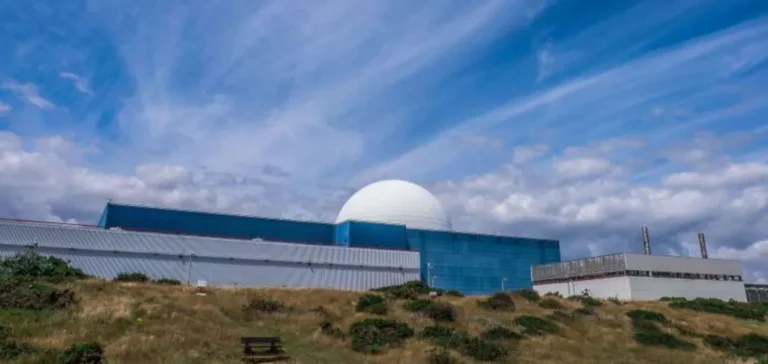
The government estimates that regulatory simplification could significantly reduce the levelised cost of electricity for future projects. By comparison, Hinkley Point C, built under the CfD scheme, operates on a guaranteed price of £92.50/MWh indexed to inflation, while Sizewell C, partially financed through the RAB model, aims for a cost 20 to 25% lower due to earlier remuneration and a reduced risk premium.

A more predictable regulatory framework could also improve the bankability of SMR projects, whose unit cost remains high at this stage. Rolls-Royce targets a cost range of £1.8 to £2bn per 470 MWe unit, contingent on securing sufficient domestic orders to justify construction of the module factory planned for 2026.

Framatome will replace several digital control systems at the Columbia plant in the United States under a contract awarded by Energy Northwest.
The conditional green light from the nuclear regulator moves Cigéo into its final regulatory stage, while shifting the risks towards financing, territorial negotiations and industrial execution.
The drone strike confirmed by the IAEA on the Chernobyl site vault exposes Ukraine to a nuclear risk under armed conflict, forcing the EBRD to finance partial restoration while industry standards must now account for drone threats.
Deep Fission is installing a 15 MWe pressurised reactor 1.6 km underground at Great Plains Industrial Park, under the Department of Energy’s accelerated pilot programme, targeting criticality by July 4, 2026.
EDF commits to supply 33 MW of nuclear electricity to Verkor over 12 years, enabling the battery manufacturer to stabilise energy costs ahead of launching its first Gigafactory.
The full-scope simulator for the Lianjiang nuclear project has successfully passed factory acceptance testing, paving the way for its installation at the construction site in China's Guangdong province.
A coalition of Danish industry groups, unions and investors launches a platform in support of modular nuclear power, aiming to develop firm low-carbon capacity to sustain industrial competitiveness.
The United Kingdom and TAE Technologies create a joint venture in Culham to produce neutral beams, a key component of fusion, with strategic backing from Google.
Texas-based developer Natura Resources receives new federal funding to test key components of its 100-megawatt modular reactor in partnership with Oak Ridge National Laboratory.
Reactor Doel 2 was taken offline, becoming the fifth Belgian reactor to cease operations under the country’s gradual nuclear phase-out policy.
Rolls-Royce SMR has expanded its partnership with ÚJV Řež to accelerate the deployment of small modular reactors, targeting the construction of several units in the Czech Republic and abroad.
The Indian government aims to amend legislation to allow private companies to participate in civil nuclear development, a move positioned as critical to achieving the country’s long-term energy targets.
The VVER-1200 nuclear reactor at Xudabao 4 in China has completed installation of its final passive water tank, marking the end of modular construction for the second phase of the project.
Ottawa and Edmonton commit to a nuclear production roadmap by 2050, through a memorandum of understanding also covering carbon capture and an Indigenous-led pipeline project.
Niamey asserts control over its uranium resources by authorising open market sales of Somaïr’s production, formerly operated by France’s Orano, amid ongoing legal disputes.
Equinix has signed a strategic agreement with French start-up Stellaria to reserve 500 MWe of advanced nuclear capacity to power its future European AI data centres starting in 2035.
Bishkek plans to host a RITM-200N small modular reactor supplied by Rosatom to address electricity shortages and deepen energy ties with Moscow, despite the risks posed by Western sanctions.
The Niigata prefectural assembly will vote on the restart of Unit 6, potentially marking TEPCO’s first reactor relaunch since the 2011 Fukushima disaster.
The Norwegian government has initiated a consultation with neighbouring countries on its modular nuclear power plant project in Aure and Heim, in accordance with the Espoo Convention.
Türkiye and South Korea have signed a memorandum of understanding to jointly explore nuclear power plant projects, marking a strategic step in the long-term development of Türkiye's energy infrastructure.

All the latest energy news, all the time

Annual subscription

8.25$/month*

*billed annually at 99$/year for the first year then 149,00$/year ​

Unlimited access - Archives included - Pro invoice

Monthly subscription

Unlimited access • Archives included

5.2$/month*
then 14.90$ per month thereafter

*Prices shown are exclusive of VAT, which may vary according to your location or professional status.

Since 2021: 30,000 articles - +150 analyses/week.