The Hydrogen Revolution: A Historic Gas Turbine
A new world of possibilities is opening up with the Hydrogen Revolution: the very first 100% hydrogen-powered gas turbine is a breakthrough that promises to transform the energy industry.
| Sectors | Hydrogen Energy, Green Hydrogen |
|---|---|
| Themes | Innovation & Transformation, Sector Innovation |
A world first
“We’ve just achieved the world first of injecting 100% hydrogen into a gas turbine to produce electricity,” enthused Frank Lacroix, Deputy CEO of Engie, at a press conference. This major project took place on the site of a paper mill near Limoges, highlighting the potential of hydrogen as a flexible means of electricity storage, similar to batteries.
According to the promoters of this innovation, hydrogen could play a key role in decarbonizing industrial sites with high CO2 emissions. Mr. Lacroix explains: “We are now capable of recovering excess electricity from renewable energies [sous forme d’hydrogène], storing it on site and converting it into electricity for industrial use.
Technical challenges
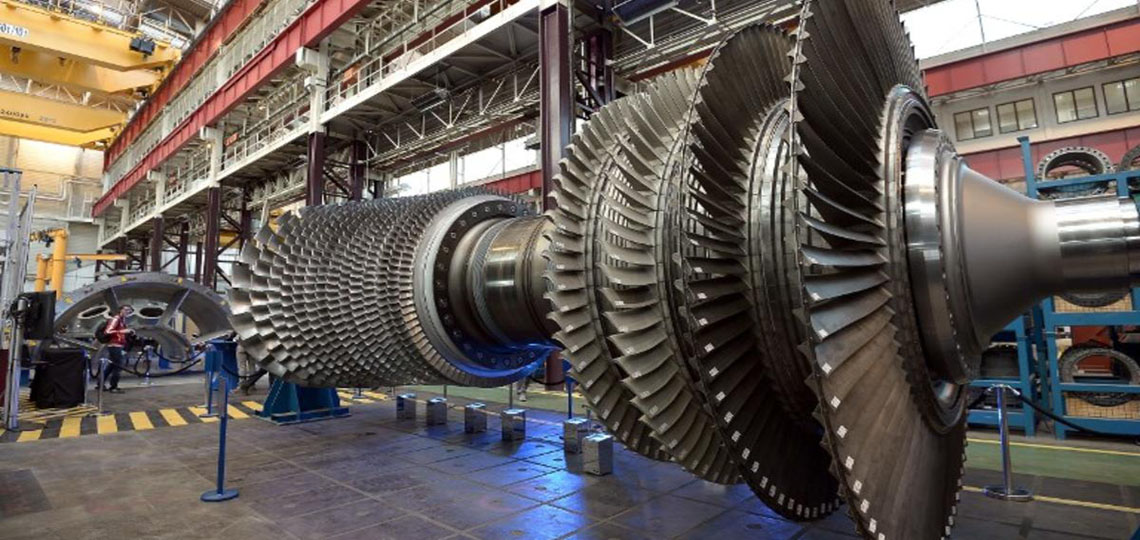
An electrolyzer on the Smurfit Kappa site produces the hydrogen used. It should be noted that this site is a manufacturer of paper packaging in Saillat-sur-Vienne. The experiment was carried out with a Siemens Energy SGT-400 gas turbine, whose combustion system was adapted for hydrogen. This adaptation required adjustments to control combustion, given the particular characteristics of hydrogen.
Eventually, this technology can be used to convert existing turbine fleets with simple modifications. The first sectors to be targeted are cement plants, the steel industry and refineries, where decarbonization is a complex challenge. The future could also see the use of this technology in heat production, as well as in heavy mobility, particularly in aviation and shipping.
An Innovative European Consortium
The consortium behind this breakthrough also includes European consultant Arttic, the German Aerospace Center (DLR) and four European universities. This project has received substantial funding from the European Union, underlining the importance of innovation in achieving global decarbonization targets.
This revolutionary advance represents a major step towards a cleaner future less dependent on fossil fuels. Hydrogen-powered gas turbines open up new possibilities for reducing CO2 emissions in industry, paving the way for a more sustainable, environmentally-friendly future.