The Future of the Oil Industry in Colombia

The move towards cleaner energy in Colombia is discussed, with assurances from Ecopetrol CEO Ricardo Roa that this does not mean the end of the oil industry.

Share:

industrie en colombie

Comprehensive energy news coverage, updated nonstop

Annual subscription

8.25$/month*

*billed annually at 99$/year for the first year then 149,00$/year ​

Unlimited access • Archives included • Professional invoice

OTHER ACCESS OPTIONS

Monthly subscription

Unlimited access • Archives included

5.2$/month*
then 14.90$ per month thereafter

FREE ACCOUNT

3 articles offered per month

FREE

*Prices are excluding VAT, which may vary depending on your location or professional status

Since 2021: 35,000 articles • 150+ analyses per week

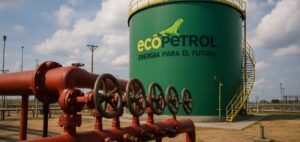
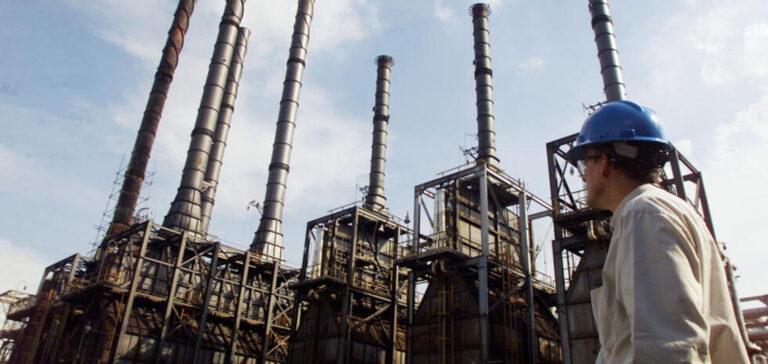
The Future of the Oil Industry in Colombia looks at the transition to cleaner energy and its impact on the country’s oil and gas industry. Ecopetrol CEO Ricardo Roa reassures us that this transition will not mean the end of theoil industry in Colombia.

Gustavo Petro’s Vision of the Presidency

The government of President Gustavo Petro, Colombia’s first leftist leader, aims to reduce the country’s dependence on hydrocarbons, mainly oil and coal, which are major drivers of the economy, in favor of renewable energies. Last December, Ecopetrol announced its intention to invest between 25.3 trillion and 29.8 trillion pesos (or between 6 billion and 7.1 billion dollars), focusing on the transition to renewable energies and ensuring energy self-sufficiency.

Reassurance about the future of the oil industry

“We never said we were going to end our traditional business in the oil and gas sector,” Roa told an industry forum in Cartagena, organized by the Colombian Petroleum Association (ACP).

Concerns of the Workers’ Union

The oil workers’ union, USO, said in a statement posted on social networks on Monday that Ecopetrol plans to cut its investment in exploration and production by more than 40%, from $4.5 billion this year to $2.5 billion in 2024, threatening the company’s future.

Investment scenarios

In response to the USO press release, Roa indicated that Ecopetrol is considering two investment scenarios for next year, a basic scenario and a more ambitious one. The baseline scenario calls for an investment of $3.5 billion to reach an average production of 720,000 barrels per day next year, said Roa. The high-investment scenario, on the other hand, would require $4.2 billion to approach 731,000 barrels per day.

Ecopetrol’s production targets

Ecopetrol hopes that production will reach a rate of 731,000 barrels per day by the end of this year, he added. A presentation provided by the company suggests average production of between 720,000 and 725,000 barrels per day. Last year, Ecopetrol produced an average of 709,500 barrels per day, according to a report published in February.

The Role of Fossils in the Energy Transition

“The oil and gas industry in the country is not going to disappear,” Roa asserted, pointing out that funds from fossil fuels will be essential to finance the transition to renewable energies.

It’s clear that Colombia faces major challenges in its energy transition, but that doesn’t mean the end of the oil industry. Ecopetrol’s investments in renewable energies demonstrate its commitment to a more sustainable future. However, it is also crucial to maintain stable oil and gas activity to support the transition. Prudence and strategic planning are essential to balance these objectives.

Ultimately, the future of Colombia’s oil industry will depend on its ability to adapt to the energy transition while preserving its assets and guaranteeing the country’s energy security. The decisions taken by Ecopetrol will have a significant impact on the sector and on the Colombian economy as a whole. The debate between reducing investment and preserving the oil industry has only just begun.

Venezuelan state oil group PDVSA claims it was targeted by a cyberattack attributed to foreign interests, with no impact on main operations, amid rising tensions with the United States.
BW Energy has signed a long-term lease agreement with Minsheng Financial Leasing for its Maromba B platform, covering $274mn of the project’s CAPEX, with no payments due before first oil.
Iranian authorities intercepted a vessel suspected of fuel smuggling off the coast of the Gulf of Oman, with 18 South Asian crew members on board, according to official sources.
Harbour Energy will acquire Waldorf Energy Partners’ North Sea assets for $170mn, increasing its stakes in the Catcher and Kraken fields, while Capricorn Energy settles part of its claims.
The Big Beautiful Gulf 1 sale attracted more than $300mn in investments, with a focused strategy led by BP, Chevron and Woodside on high-yield blocks.
The United States intercepted an oil tanker loaded with Venezuelan crude and imposed new sanctions on maritime entities, increasing pressure on Nicolas Maduro’s regime and its commercial networks in the Caribbean.
OPEC expects crude demand from its members to reach 43 million barrels per day in 2026, nearly matching current OPEC+ output, contrasting with oversupply forecasts from other institutions.
The United States seized a vessel suspected of transporting sanctioned oil from Iran and Venezuela, prompting a strong reaction from Nicolás Maduro's government.
The International Energy Agency lowers its global oil supply forecast for 2026 while slightly raising demand growth expectations amid improved macroeconomic conditions.
South Sudanese authorities have been granted responsibility for securing the strategic Heglig oilfield following an agreement with both warring parties in Sudan.
TotalEnergies acquires a 40% operated interest in the offshore PEL83 license, marking a strategic move in Namibia with the Mopane oil field, while Galp secures stakes in two other promising blocks.
BOURBON will provide maritime services to ExxonMobil Guyana for five years starting in 2026, marking a key step in the logistical development of the Guyanese offshore basin.
Viridien has launched a 4,300 sq km seismic reimaging programme over Angola’s offshore block 22 to support the country’s upcoming licensing round in the Kwanza Basin.
Shell restructures its stake in the Caspian pipeline by exiting the joint venture with Rosneft, with Kremlin approval, to comply with sanctions while maintaining access to Kazakh crude.
Shell acquires 60% of Block 2C in the Orange Basin, commits to drilling three wells and paying a $25mn signing bonus to PetroSA, pending regulatory approval in South Africa.
Malgré la pression exercée sur le gouvernement vénézuélien, Washington ne cherche pas à exclure Caracas de l’OPEP, misant sur une influence indirecte au sein du cartel pour défendre ses intérêts énergétiques.
Kazakhstan redirects part of its oil production to China following the drone attack on the Caspian Pipeline Consortium terminal, without a full export halt.
US investment bank Xtellus Partners has submitted a plan to the US Treasury to recover frozen Lukoil holdings for investors by selling the Russian company’s international assets.
Ghanaian company Cybele Energy has signed a $17mn exploration deal in Guyana’s shallow offshore waters, targeting a block estimated to contain 400 million barrels and located outside disputed territorial zones.
Oil prices moved little after a drop linked to the restart of a major Iraqi oilfield, while investors remained focused on Ukraine peace negotiations and an upcoming monetary policy decision in the United States.

All the latest energy news, all the time

Annual subscription

8.25$/month*

*billed annually at 99$/year for the first year then 149,00$/year ​

Unlimited access - Archives included - Pro invoice

Monthly subscription

Unlimited access • Archives included

5.2$/month*
then 14.90$ per month thereafter

*Prices shown are exclusive of VAT, which may vary according to your location or professional status.

Since 2021: 30,000 articles - +150 analyses/week.